
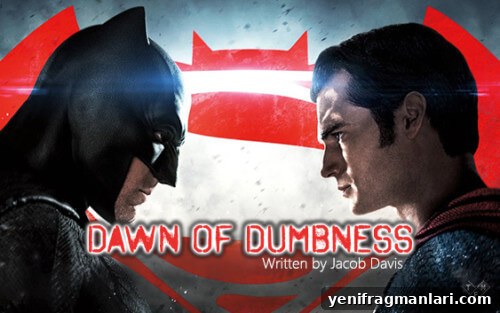
Revisiting Batman v Superman: Dawn of Justice — A Critical Retrospective
I still find it surreal that Batman v Superman: Dawn of Justice premiered only a few years ago. The film has distorted my sense of time, becoming an odd marker to divide eras: everything since that March release has felt like a cascade of missteps, from unsettling political developments to a sudden cultural overcorrection that treated straightforward, well-made films like Wonder Woman as if they were masterpieces simply for not being chaotic.
I left the theater that night stunned and bewildered. It didn’t feel like watching a finished film so much as viewing an unedited collection of ideas stitched together without adequate filtering. The movie packs an astonishing number of plotlines and visual set pieces into a runtime that often feels disjointed. Even calling it a film seems generous; it plays like a sequence of striking but poorly connected images. The existence of the longer, home-video release commonly called the Snyder Cut only highlighted the confusion: why did a cut like that need to exist at all, and what does it say about the original production and creative process?
Origins and Creative Control
The lineage of this project begins with David S. Goyer’s intention to create a grounded, modern Superman, shaped by the tonal approach of Christopher Nolan’s work on Batman Begins. That approach resulted in the 2013 film Man of Steel. Although Nolan ultimately declined to direct, he reportedly suggested Zack Snyder, who already had ties to Warner Bros. and a production arrangement through his production company.
Snyder’s involvement quickly shifted the trajectory. Where Goyer’s and Nolan’s original vision leaned toward a contained Superman trilogy, Snyder favored a broader plan that integrated Batman and other heroes into a shared universe. Snyder’s signature visual style and affinity for comic-book imagery are undeniable strengths, but his films have often suffered from excessive complexity and a tendency to overload narrative with symbolism and elaborate sequences. That visual flair can be impressive, yet it frequently comes at the expense of clarity and emotional focus.
For many fans and critics, a notable example of Snyder’s tonal choices is the controversial handling of certain character moments in Man of Steel, which carried over into Batman v Superman. Those choices transformed established characters in ways that alienated some viewers and hampered the emotional underpinnings that a more restrained approach might have preserved.
The Snyder Plan and the DCEU Ambition
According to many online discussions and interviews, Snyder envisioned a five-film arc that would expand the DCEU quickly and ambitiously. Rather than focusing on a trilogy of Superman films, he wanted to fold Batman and the broader Justice League mythology into the existing continuity. The outline often cited by fans included:
- Man of Steel — the foundation for Snyder’s world.
- Batman v Superman: Dawn of Justice — intended as a denser, more comprehensive entry than the theatrical cut.
- Justice League Part One — an assembly of heroes with Snyder’s visual and thematic signatures.
- Justice League Part Two — continuing the saga, darker and more ambitious in scope.
- A mysterious fifth installment that remained largely undefined, part of Snyder’s broader long-term strategy.
Whether Snyder hatched this plan independently or under executive pressure to compete with Marvel’s interconnected model is debatable. Studios do often prioritize the potential for franchise revenue, and it’s reasonable to suspect that corporate incentives influenced the push toward a shared universe. Still, the creative decision to use Man of Steel as the direct prequel to Batman v Superman was pivotal—and it shaped the tone and stakes in ways that would prove contentious.
Clashing Visions and Studio Cuts
Part of the film’s struggled reception stems from a clash of approaches. Marvel’s films tended to favor accessible humor, clear character beats, and steadily paced worldbuilding. By contrast, the early DCEU—especially under Snyder—often attempted to compress an enormous amount of exposition and thematic material into single films. The result is moments that feel tonally inconsistent: scenes that introduce characters as if audiences have the attention span and prior knowledge of comic lore, set against sequences of dark, operatic violence and symbolism that don’t always land emotionally.
Reports indicate roughly thirty minutes were cut from the theatrical release. Whether that shortening was thoughtful editing or studio interference, the outcome exacerbated problems with motivation and clarity. Characters sometimes act without convincing reasons, and sequences linger without contributing to a cohesive throughline. While some viewers find value in the Snyder Cut’s extended material, others see the very need for multiple cuts as evidence of a project that was never fully settled.
Personal Stance and Looking Ahead
On a personal level, I respect elements of Snyder’s craft—his eye for striking imagery and his fidelity to comic aesthetics. But I remain critical of the film’s structural and tonal decisions. For me, the theatrical cut’s shortcomings and the existence of a competing “definitive” cut are both symptoms of deeper alignment issues between creative vision and editorial discipline.
In a follow-up piece, I’ll examine the portrayals of Batman and Superman in this film and across the early DCEU, assessing how characterization choices affected audience reception. In the meantime, some fans found comfort in later casting changes and shifts in direction, though the debates about CGI and character fidelity continue to stir strong reactions.
Read Part 2 – “Batmeh v Supermeh” – here.