
Fullmetal Alchemist (2017)
Director: Fumihiko Sori
Screenwriters: Fumihiko Sori, Takeshi Miyamoto
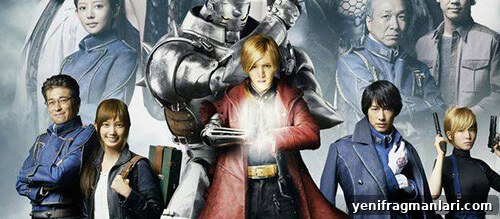
Starring: Ryôsuke Yamada, Tsubasa Honda, Dean Fujioka, Ryûta Satô, Misako Renbutsu, Yô Ôizumi
Live-action adaptations of beloved anime are always risky, and the 2017 Fullmetal Alchemist film is no exception. As a long-time fan of the original manga and anime, I approached this adaptation with a mix of curiosity and dread. The movie shows clear ambition: it tries to honor the source material, to translate key moments from the manga into a cinematic format, and to introduce the world of Amestris to a broader audience. Yet the results are uneven—some sequences capture the spirit of the series, while many other choices undermine the movie’s emotional and narrative impact.
At its core, the story remains the familiar and heartbreaking setup: brothers Edward and Alphonse Elric attempt forbidden human transmutation to resurrect their mother, paying a terrible price. Edward loses an arm and a leg, and Alphonse loses his entire body, his soul bound to a suit of armor. Their quest for a Philosopher’s Stone and the desperate desire to reclaim their bodies drive the film’s plot. These elements are faithful to the manga, but compressing a complex saga into a single feature-length film creates structural strain.
The film’s pacing and plot construction are the most problematic aspects. Condensing decades of serialized storytelling—52 episodes of anime and 27 manga volumes—into roughly two and a half hours forces the screenplay into truncation and abrupt transitions. Key character arcs and motivations are reduced to shorthand, and important connective tissue gets lost. Even viewers familiar with the source material may find themselves confused or disengaged at times, and newcomers could struggle to follow the emotional stakes fully.
Performances are mixed. Ryôsuke Yamada (Edward) gives moments of intensity, but the character’s onscreen portrayal is frequently undermined by an artificial wig and styling choices that pull the viewer out of the world. The cosplay-like hair and inconsistent makeup distracted me repeatedly, which is unfortunate because the actor does try to inhabit Edward’s impulsive, haunted nature.
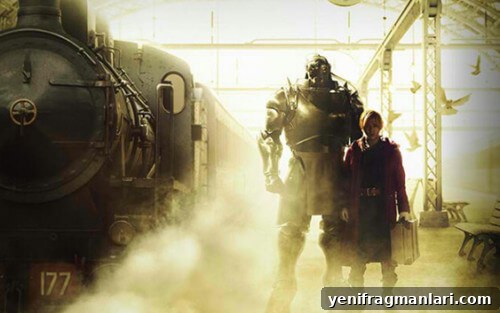
Conversely, the film’s depiction of Alphonse is a highlight. The CGI team clearly devoted significant resources to bringing Al’s armored form to life. His physical presence and fight choreography look polished, and the emotional resonance of his silent, protective relationship with Edward registers more effectively than many human interactions in the movie. The voice casting for Alphonse also tapped into nostalgia for longtime fans, which helps sell the character’s vulnerability despite his metallic exterior.
However, broader issues with dubbing and audio mixing interfere with immersion. In places the English audio appears badly balanced and thin, which makes otherwise solid dialogue feel flat and distracts from dramatic beats. Given that the main cast performs in Japanese, a clean subtitled version would likely be preferable for many viewers; poor dubbing choices only amplify the film’s unevenness.
Supporting characters often suffer from underdevelopment. Figures like Colonel Roy Mustang, Lieutenant Riza Hawkeye, and Winry Rockbell are present but given significantly less depth than in the anime. Mustang and Hawkeye, pivotal in the original story, feel notably diminished here, and Winry’s portrayal leans toward exaggerated emotional shtick rather than the nuanced, mechanically gifted character fans know. Maes Hughes and the Gates/Truth sequence are handled well, providing some of the film’s most resonant moments. The Shou Tucker arc, in particular, delivers genuine shock and distress—one of the adaptation’s most effective achievements—thanks to strong acting and unsettling visual effects for the chimera.
The film’s handling of antagonists and supernatural elements is inconsistent. The Homunculi are represented, but only a few—Lust, Greed, and Envy—receive focused screen time, with scant explanation for their nature or connection to the larger mythos. Combining or omitting characters, such as merging elements of Hohenheim’s story with other antagonists, reduces narrative clarity and robs key emotional beats of their full impact. When the movie does focus and commit—such as on the personification of Truth and the Gates scenes—it pays off, reflecting the manga’s philosophical undercurrents.
Visually, the film has strengths. The European-inspired sets and location shooting lend Amestris a convincing, lived-in look; some compositions and backdrops are genuinely beautiful. Certain action sequences and the armor design for Alphonse are well executed, and director Fumihiko Sori shows an ability to stage intense moments with flair. Yet other CGI elements feel cheap or incomplete, which creates an uneven aesthetic between standout effects and thinner digital work.
Tonally, the film struggles to balance the manga’s darker philosophical themes with its lighter, humorous moments. Fullmetal Alchemist is beloved for oscillating between heartfelt tragedy and sharp levity; this adaptation sometimes overemphasizes the comic beats, which undercuts the gravity of crucial scenes. Where the manga mixes pathos and humor to powerful effect, the movie occasionally tips too far toward juvenile gags, lessening the emotional resonance.
Overall, the live-action Fullmetal Alchemist has flashes of fidelity and brilliance but ultimately fails to cohere into a consistently satisfying adaptation. It honors certain iconic moments and gets key visual and thematic choices right, yet the compressed storytelling, inconsistent character work, and audio/CGI problems leave it feeling like a missed opportunity. Fans may appreciate seeing favorite scenes realized on screen, but newcomers might not receive a clear, compelling introduction to the world of Amestris.
9/24
There is a sequel in development, so expect more attempts to translate the manga’s scope to film. Given the strengths and shortcomings of this entry, future installments will need stronger script focus, cleaner audio and visual effects, and more careful character treatment to do true justice to the source material.