
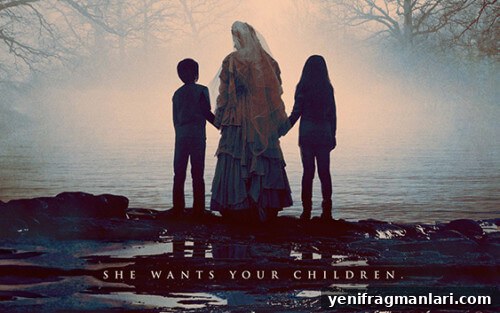
The Curse of La Llorona (2019)
Director: Michael Chaves
Screenwriters: Mikki Daughtry, Tobias Iaconis
Starring: Linda Cardellini, Raymond Cruz, Patricia Velasquez
The filmmakers behind The Curse of La Llorona had a rich source of material to draw from. The La Llorona legend exists across Central and South America in various forms, with roots that can be traced to pre-Colonial traditions and later regional folklore. Versions of the tale range from tragic domestic stories to mythic figures described in older indigenous narratives. That breadth of cultural history offered an opportunity to create a vivid, culturally grounded horror film that could explore grief, gender, and social context as much as deliver scares.
Instead, the film largely opts for familiar genre mechanics and conventional scares. Written by Mikki Daughtry and Tobias Iaconis and directed by Michael Chaves, the movie leans on well-worn ghost-story tropes rather than fully mining the complex folklore behind its titular spirit. The production had the potential to synthesize multiple versions of La Llorona into a story that felt both contemporary and resonant; ultimately the screenplay offers broad gestures toward themes like faith, family, and redemption without building satisfying emotional arcs for its central characters.
At the center of the film are performances meant to anchor the supernatural elements: Linda Cardellini and Raymond Cruz provide committed portrayals, and Patricia Velasquez brings gravitas to her role. Yet the characters are often sketched by suggestion rather than developed through clear motivations and meaningful change. Moments that should deepen our investment—parental guilt, moral conflict, or spiritual struggle—remain underexplored, leaving the audience with impressions instead of real narrative weight.
The movie’s scares follow a predictable pattern. Jump scares are used repeatedly, built on long stretches of tension that culminate in sudden visual and aural shocks. While jump scares can be effective, they depend on variation and creativity to remain impactful; here they often feel recycled. The film recycles familiar images—a mournful woman in a wedding dress, eerie sounds drawing characters into poorly lit rooms, and the reliance on both basements and attics as the go-to haunted spaces—which contributes to a sense of déjà vu rather than genuine dread.
One of the most notable weaknesses is the ghost’s logic. A compelling supernatural antagonist typically follows internal rules that the plot can explore and exploit; when those rules are inconsistent or opaque, the story suffers. The film’s central revelation, which unfolds only after considerable delay, underwhelms rather than surprises and opens narrative gaps that the script does not satisfactorily resolve. This structural weakness makes it harder to emotionally connect with the stakes on screen.
For viewers tracking the Conjuring Universe, The Curse of La Llorona is presented as part of that franchise, but it lacks the distinct tone or inventive set pieces that made other entries stand out. Where films like The Nun attempted a different, gothic approach—whether successfully or not—that same sense of risk-taking is missing here. The production feels conservative, relying on formulaic choices instead of embracing the deeper folkloric textures available in the source material.
There are moments where the film’s atmosphere and technical craft hint at what might have been: sound design that amplifies unease, measured cinematography that occasionally captures a chiaroscuro sense of dread, and performances that suggest unmined depth. Still, these elements are not woven into a cohesive whole. The result is a competent but uninspired horror film that will likely satisfy only casual viewers looking for a modest scare rather than audiences seeking a fresh reinterpretation of the La Llorona myth.
In short, The Curse of La Llorona offers a handful of effective moments yet fails to capitalize on its cultural inheritance or to develop its characters and supernatural rules in a way that feels original. For anyone interested in folklore-based horror, the movie is a reminder that source material alone does not guarantee a compelling cinematic experience; strong writing and a clear creative vision are essential to turn myth into something memorable on screen.
6/24