
Godzilla: King of the Monsters (2019)
Director: Michael Dougherty
Screenwriters: Michael Dougherty, Zach Shields
Starring: Kyle Chandler, Vera Farmiga, Millie Bobby Brown, Zhang Ziyi, Sally Hawkins, Ken Watanabe, Bradley Whitford, Thomas Middleditch, Aisha Hinds, O’Shea Jackson Jr.
Godzilla: King of the Monsters is visually striking and often stunning, but it suffers from a thin script and underdeveloped human drama. The film delivers spectacular spectacles of monster combat and large-scale destruction, yet struggles to provide a coherent moral center or plausible internal logic that explains why these titans exist or how humans are supposed to relate to them. The movie’s impressive surface sometimes feels at odds with its storytelling choices, leaving many of the narrative stakes and character motivations under-explored.
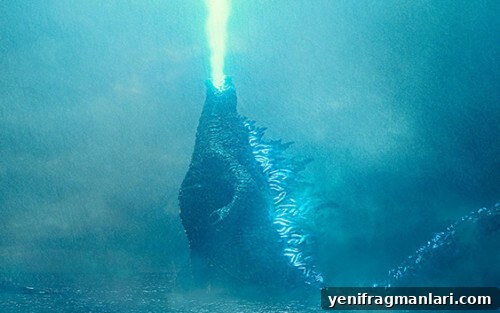
The film’s most evident strength is its visual design. The combined work of cinematographer Lawrence Sher, the VFX teams, and director Michael Dougherty results in effects that are frequently breathtaking. The CGI is polished and often comparable to leading tentpole productions of the period. Color design plays an important role: distinct palettes—blue for Godzilla, yellow for Ghidorah—signal mood, character presence, and major plot shifts. This use of color gives many sequences an extra layer of thematic meaning beyond spectacle.
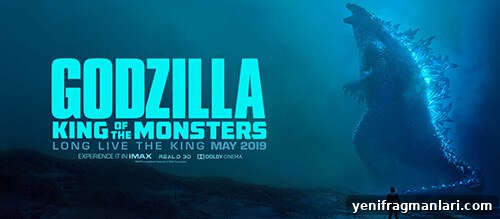
Some of the most memorable imagery evokes a Lovecraftian sense of scale: enormous, ancient beings dominating tiny human figures, with several underwater sequences amplifying that cosmic dread. Those moments successfully capture awe and insignificance, recalling the atmosphere of classic cosmic horror stories. However, where the film diverges from Lovecraft’s philosophy is in its insistence on keeping humanity at the center of the action. Rather than embracing human insignificance, the movie repeatedly returns to human perspectives and melodrama—often without providing depth or emotional payoff.
That focus on human characters exposes the film’s central weaknesses. Many of the human roles are thinly sketched or relegated to trope. The primary antagonist, Jonah, played by Charles Dance, is introduced largely through exposition and delivers a handful of memorable lines, yet is not given sufficient development to make his presence as consequential as the film implies. Similarly, protagonists such as Dr. Mark Russell (Kyle Chandler) are written as one-dimensional figures who react to the plot more than they drive it. Side characters intended for comic relief or scientific exposition—like Dr. Rick Stanton (Bradley Whitford)—rarely move beyond a single running gag or brief line of technobabble.
The screenplay struggles with internal consistency and worldbuilding. It offers few clear rules about the titans’ nature, motivations, or societal consequences, and it never satisfactorily explains why humanity has not eradicated these creatures or how it would realistically contend with them. At times the film relies on familiar blockbuster shortcuts—evacuations of city centers, minimal civilian casualties during catastrophic fights—that undercut dramatic tension by suggesting human lives are conveniently expendable for the sake of spectacle.
Another notable issue is the film’s moral framing. The narrative leans into the idea that some titans are “good” and others are “evil,” with human characters like Dr. Emma Russell (Vera Farmiga) asserting that Godzilla’s destruction restores balance while Ghidorah represents a corrupting foreign force. The film does not thoroughly justify how humans can distinguish the intentions of monsters or how moral judgements about them can be reliably made, which weakens any philosophical claim the movie tries to advance. At times the argument that destructive force can be justified to achieve balance reads as an uneasy, undercooked allegory rather than a fully formed thesis.
Where the movie truly succeeds is in its action set pieces. When the focus narrows to monsters clashing—roaring, smashing, and unleashing devastating energy—the film delivers exactly what many audiences come to see. Those sequences are kinetic and often ingeniously staged, with scale and sound design amplifying the sense of destructive grandeur. The real missed opportunity is that the film does not let those moments dominate more of the runtime; fewer, longer monster confrontations with clearer stakes would likely have made the overall experience more satisfying.
In sum, Godzilla: King of the Monsters is a visually rich and technically accomplished entry in the modern monster-movie canon that falls short on storytelling. Its cinematography and visual effects are frequently excellent, but the screenplay’s shallow character work, questionable moral framing, and inconsistent worldbuilding reduce the emotional impact of many scenes. The film works best when it embraces pure spectacle—less human drama, more titans fighting—because that is where it finds its greatest strengths.
11/24