
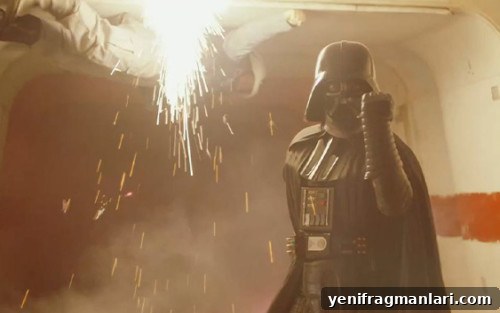
It. Pet Sematary. Halloween. Raw. The Conjuring. Insidious. These recent horror films are well known for terrifying audiences and standing out as some of the decade’s best. Each of them carries memorable moments of dread, but when you try to name the single most frightening scene from recent cinema, the answer can be unexpected. After revisiting many contenders and weighing atmosphere, craftsmanship, and pure, visceral fear, one sequence stood out above the rest: Darth Vader’s hallway massacre in Rogue One: A Star Wars Story.
The scene begins amid the chaos of a world-ending explosion. Rebel fighters are scrambling, clutching the stolen Death Star plans—their desperate escape seemingly succeeding against impossible odds. Adrenaline fuels their movements; the mission has worked, and a single data disk becomes the hinge of hope. Victory feels within reach—until the hallway door sticks.
At first, the jammed door reads like a small complication. It opens only a few inches, then refuses to budge. Lights flicker and drop to near-darkness. An alarm pierces the air, adding urgency—but also creating a spine-tingling audio backdrop that primes the viewer for something far worse than a mechanical failure. Cinematically, that small obstruction becomes an ominous sign: the tension shifts from frantic escape to dread.
When the rebels finally turn toward the corridor’s shadow, the score cuts. Blasters are raised. Through the ranks the camera glides, intimately tracking each crushed hope and hopeless face. Then, over the hiss of a respirator, a single, unmistakable breath arrives. The sound signals an arrival more terrifying than any of the exterior battlefield set pieces: Darth Vader.
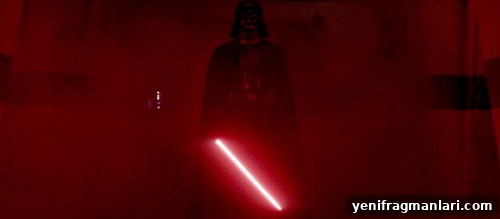
Vader’s crimson blade flares, bathing the corridor in hellish light. The door hasn’t jammed by accident—he’s holding it closed. He created the trap. What follows is an efficient, brutal execution of dominance: blaster shots disintegrate under his power; men are lifted, thrown, and cut down; guns are ripped from hands and discarded as if they were toys. The rebels change from pleading for help to a stunned, final surrender. There is no escape. Those outside can only watch, paralyzed by fear, as their comrades are slaughtered.
This is Vader at his most primal and terrifying. The character has long been a cinematic icon, but here he is framed not as a distant menace but as a stalking predator: patient, playful, and remorseless. The scene reduces the men in the corridor to prey. Seeing him wait—observing fear build before he moves in—transforms the sequence into a ritual of terror. In the minds of ordinary people within the galaxy, Sith are indistinguishable from myth; this scene turns that myth into a tangible nightmare, the kind children imagine beneath the bed.
Director Gareth Edwards deploys several simple but devastating techniques to amplify the horror. The camera’s tracking movement through the rebels feels like foreshadowing—an almost surgical rhythm that pushes each person out of the frame as if marking them for death. The timing between those edits and the lightsaber’s sudden arrival is precise and chilling. That deliberate choreography echoes masterful cinematic moments—subtle visual cues that shift a scene from suspenseful to searingly horrific.
Lighting and sound do the rest. The lightsaber becomes the corridor’s only practical source of light, casting stark, shifting shadows that make every motion unpredictable. The score leans into a modern, epic choir sound that elevates menace into cathedral-scale dread, and the physical performance—brought to life by the actor inside the suit—gives Vader a heavy, unstoppable presence. All elements combine to create a sequence that resonates like a primal fear: close, inescapable, and final.
Why does this scene feel scarier than typical horror set pieces? Because it compresses scale into intimacy. Instead of a sweeping battle, it forces us into a narrow space where every sound and movement counts. It makes the impossible enemy real and personal. By the time the lightsaber appears, inevitability has already settled in; the corridor becomes a crucible of helplessness. That concentrated terror—executed with careful pacing, precise camera work, and impeccable sound design—makes the hallway massacre in Rogue One the standout frightening moment of the 2010s.