

One of cinema’s greatest pleasures is watching countless creative elements—wardrobe, makeup, lighting, set design, camera angle and lens, music, and performance—converge in a single moment to reveal a character. A well-crafted introduction can instantly establish tone, motivation, and theme, sometimes defining a character or even an entire film in a single scene. From high-speed action to quiet exchanges, musical numbers to sly winks at the audience, the best character openings tell us everything we need to know, fast.
Inspired by Ioanna Micha’s original piece on iconic openings, here are 5 more of the best character introductions in movie history, each chosen for how effectively it uses cinematic tools to present a person in a single, memorable sequence.
1. Trinity
They Call Me Trinity (1970)
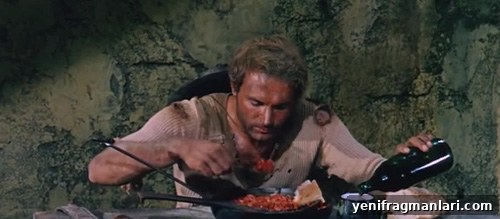
The opening image of They Call Me Trinity is deceptively simple: a pistol dragging across the dirt. Trinity himself is introduced as a disheveled, sleepy cowboy who rides in a sled attached to his horse and naps even as they cross a river. He looks like a harmless oddball—lazy, unthreatening—until the film begins to peel back the layers.
When bounty hunters mock him in a stagecoach stop, Trinity’s laid-back demeanor hides a lethal skill set. He calmly eats a whole skillet of beans, introduces himself, and the taunting men realize too late who he is: “The Right Hand of the Devil,” the fastest gun in the West. Trinity accepts their bounty but refuses boasting; when they draw on him, he shoots without turning his head. The quiet confidence, dry humor, and deadly precision revealed in that short scene capture the character completely.
Though the filmmaking can feel rough around the edges, this Spaghetti Western introduction is tightly written and remarkably effective. It uses visual shorthand and a single well-staged confrontation to establish Trinity’s contradictions—slovenly yet skilled, humorous yet merciless—and does so in a way that lingers long after the credits roll.
2. Deadpool
Deadpool (2016)

Deadpool’s introduction wastes no time: it tells you immediately who he is and what kind of movie you’re watching. We meet Wade Wilson sitting on the side of a freeway, doodling a crayon drawing of himself killing his nemesis, then he turns to address the camera. Breaking the fourth wall, delivering relentless jokes, and being a brutal, inventive killer are the three pillars of his character—and Ryan Reynolds’ performance makes the tone land perfectly.
The sequence transitions into a tightly staged car fight where Deadpool punctuates violence with crude humor—announcing the blows, mocking foes, and using whatever’s at hand to dispatch enemies in gruesome, creative ways. The scene is chaotic, audacious, and self-aware, a compact lesson in who Deadpool is: funny, unpredictable, and ruthlessly efficient. This is a textbook example of a character introduction that matches tone, performance, and action to create a clear and instantly recognizable persona.
3. The Dude
The Big Lebowski (1998)
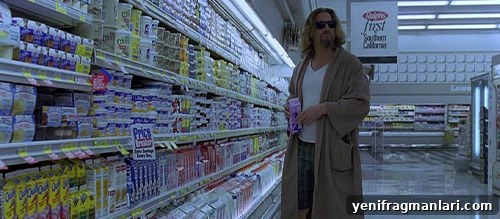
The Big Lebowski opens with Sam Elliott’s mellifluous narration set to “Tumbling Tumbleweeds,” framing The Dude as the quintessential driftwood of early-1990s Los Angeles. The narration and song together introduce the film’s tone and the protagonist’s mindset: a man who prefers to go with the flow rather than fight the current.
The Dude first appears in a grocery store wearing a bathrobe, shorts, sandals, and sunglasses. He buys half-and-half for White Russians, sniffs the carton, and nonchalantly writes a check for $0.69 dated “Sept. 11, 91.” That small action—postdating a trivial check—sums up his character beautifully: absent-minded, unambitious, and utterly content to drift through life. The clothes are iconic, but it’s the tiny details, the casual detachment and deadpan rhythm, that make this one of the best character introductions in modern comedy.
“Cares of the past are behind / Nowhere to go, but I’ll find / Just where the trail will wind / Drifting along with the tumblin’ tumbleweeds”
4. Vito Corleone
The Godfather (1972)
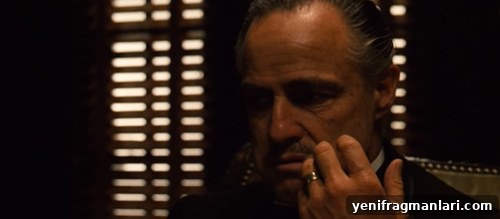
Don Vito Corleone’s first scene is a masterclass in subtle, cinematic characterization. The film opens in almost complete darkness with a single voice—Bonasera’s plaintive “I believe in America”—setting up a contrast between the conformist American ideal and the Italian code of honor embodied by the Don.
The camera starts tightly on Bonasera and slowly reveals Vito Corleone as the man listens. Vito’s presence is calm and imposing; he offers a drink, listens intently, and speaks with measured authority. His economy of words, physical stillness, and quiet gestures communicate power, compassion, and a strict moral code. That two-and-a-half-minute exchange conveys far more about who Vito is—an honorable, family-first patriarch who rules through respect and fear—than pages of exposition ever could. It remains one of cinema’s most powerful character introductions.
5. Xander Cage
xXx: Return of Xander Cage (2017)
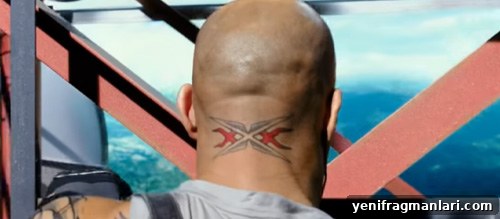
“We need someone who can walk into a tornado and come out the other side like it was a damn gentle breeze.” — Jane Marke, moments before Xander Cage’s entrance.
As a reintroduction of a franchise hero released years after the originals, Return of Xander Cage leans into spectacle and bravado. Xander’s opening sequence is pure stunt-driven showmanship: he climbs a tower with a DEFCON countdown, straps on skis, leaps off, and skis down rocky terrain before being handed a longboard by cheering children and riding into a village to secure a soccer broadcast for the locals. He’s celebrated, rewarded, and unmistakably larger than life.
This scene deliberately prioritizes tone over realism. It positions Xander as an adored, risk-taking showoff—an action-hero archetype designed to excite and entertain. The introduction’s inventiveness, humor, and indulgent stunts tell the audience exactly what kind of movie and protagonist to expect: bold, absurd, and built to thrill.
Great character introductions do more than showcase a performer—they use the full language of cinema to make us understand who a person is in an instant. Whether it’s quiet composure, anarchic humor, driftwood detachment, principled menace, or over-the-top heroics, each of these five sequences communicates character with clarity and style, earning their place among the most memorable openings in film history.