
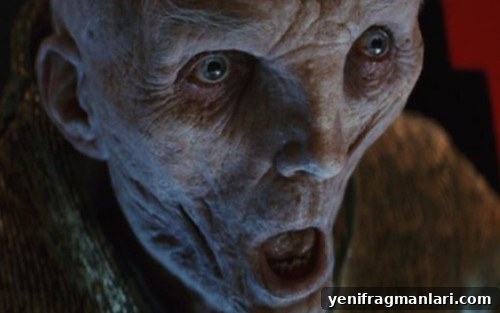
A recent Reddit post on /r/StarWars ignited a heated discussion about Snoke’s lack of on-screen backstory and whether that omission weakens the current Star Wars saga. Frustration among fans centers on how this mysterious antagonist, who clearly influences the Sequel Trilogy, has been given so little exposition in the films. One user, /u/agoddamnjoke, summed up the sentiment in a blunt comment:
“Snoke is such a joke. I can’t believe people defend how little depth he’s gotten. He is the crux of everything that happened in the ST. Has intimate knowledge of the main characters from the OT. And yet gets cut down monologuing like a Bond villain.
Why didn’t Luke do anything about him? What was he doing during the OT. What was he doing after? Don’t give me we didn’t know about the emperor either because that isn’t the same thing. OT was our first introduction into the universe. We knew what we needed to. Then we got background. But we’re not getting prequels to the sequels lol.
And this comic still didn’t offer any background. TRoS is going to have to pull out all the stops to have to try and explain everything and move the story forward.”
The typical responses to this criticism fall into two camps: those who say “wait for The Rise of Skywalker before judging,” and those who argue “the Original Trilogy didn’t need the Emperor’s backstory, and the Sequels don’t need Snoke’s.” That split reveals a broader shift in modern fan expectations about lore and worldbuilding, especially for a franchise like Star Wars.
The Film Magazine on Reddit: r/TheFilmMagazine.
To understand the difference in expectations, compare how films handled worldbuilding in earlier eras to how they’re examined now. Back when Robert Zemeckis and Bob Gale made Back to the Future, filmmakers weren’t challenged by today’s level of scrutiny around multiverse logic or every plot inconsistency. Viewers now enjoy dissecting rules and spotting contradictions. For example, the original Back to the Future time-travel logic—where Marty’s actions could seemingly erase his own existence—provoked debate that later films and modern blockbusters, such as Avengers: Endgame, addressed by reframing the mechanics of time travel. Audiences today actively look for these rulebooks, treating continuity and internal logic as part of the experience.
Star Wars has evolved in that same direction. Since the release of The Phantom Menace in 1999, both the franchise and its fandom have expanded dramatically. Hardcore fans were already deep into the Expanded Universe by the late 1990s, with novels and series like the Thrawn trilogy, Jedi Academy trilogy, X-Wing books, and other tie-ins that made Star Wars feel more like an elaborate, ongoing saga rather than just three films. This appetite for extended lore changed fan expectations: viewers increasingly want more context, more connective tissue, and more explanations for characters and events.
Yet the Original Trilogy is built on a different principle: economy. The core story in Star Wars (1977), The Empire Strikes Back and Return of the Jedi focuses on Luke, Leia, Han and their struggle against the Empire. The films deliver essential context through brief, powerful exchanges—Obi-Wan and Yoda provide enough history about the Jedi, the Clone Wars and Vader without turning the narrative into an encyclopedia. That minimal approach let viewers learn what mattered in the moment and fill in the rest later, if they chose to explore the Expanded Universe.
The Prequel Trilogy, by contrast, aimed to expand the cosmos and provide background. Episodes I–III introduce numerous characters, political machinations, and lore-heavy concepts like midichlorians. That broader sweep enriched the universe for fans invested in detail, but to many viewers it complicated the story and diluted emotional impact. Characters like Qui-Gon Jinn and minor political figures serve a structural purpose, but their presence underscores the PT’s emphasis on worldbuilding over the tight, character-focused storytelling of the OT.
Snoke fits this debate perfectly. In the Sequels, his role primarily advances other characters’ arcs—especially Kylo Ren’s—while leaving much of his history to be explored outside the films. Some fans resent that absence and expect films to supply fuller explanations. Others accept that movies are limited in runtime and scope, and that supplementary media—comics, novels, TV shows—will fill in the gaps. Indeed, the Reddit post that sparked this discussion included comic material hinting at more about Snoke, suggesting that answers may already exist in expanded media or will appear in future projects.
Visually, the Prequels were praised for spectacle and technical achievement, while the Sequels, under J.J. Abrams and Rian Johnson, worked to blend visual excellence with a return to the OT’s emotional clarity. The Force Awakens reintroduced the archetypal elements of Star Wars—heroes from humble beginnings, mentors, and the mystical side of the Force—while The Last Jedi explored Jedi philosophy and character growth more directly. Rey’s arc, combining classic motifs with modern storytelling, exemplifies that marriage: she begins on a desert world like Luke, discovers her power through visions and training, and grows organically alongside new allies and foes.
Recommended for you: 5 Most Profound Moments from ‘Star Wars’ (1977)
Disney’s stewardship has expanded the franchise beyond films into TV series, comics, games and novels, giving fans many avenues to explore lore. Characters from the Expanded Universe, like Thrawn, have been reintegrated into current canon. Shows such as The Mandalorian, the Obi-Wan project, Andor, and the final season of The Clone Wars provide more context and satisfy viewers who want deeper dives. For fans who want Snoke’s backstory, that expanded content promises possible answers without requiring every detail to appear in the theatrical releases.
Ultimately, modern Star Wars is balancing nostalgia with an appetite for richer worldbuilding. Some fans see sequel-era storytelling as pandering to nostalgia, while others appreciate the careful blend of old and new. The debate over Snoke highlights a broader tension in contemporary fandom: films can be both memorable, self-contained experiences and gateways to extended mythologies. Movies cannot always include every piece of lore, and in the digital age many viewers expect to seek additional detail in tie-in media. Whether that approach feels satisfying depends on what each fan hopes to get from the galaxy far, far away.