
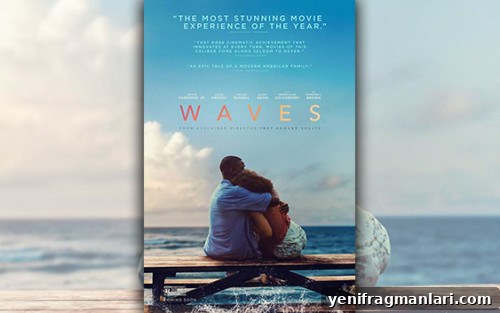

Waves (2019)
Director: Trey Edward Shults
Screenwriter: Trey Edward Shults
Starring: Taylor Russell, Sterling K. Brown, Kelvin Harrison Jr., Alexa Demie, Lucas Hedges, Bill Wise, David Garelick, Justin R. Chan
A24 continues to establish a distinctive presence in contemporary independent cinema, and Trey Edward Shults’ Waves stands as one of the company’s most emotionally ambitious releases. Set in the humid subtropics of South Florida, the film explores the pressures and fractures within an upper middle class African American family. It presents a portrait of love, grief, and the fragile exchange between parents and children, told in a style that is as sensory as it is intimate.
Kelvin Harrison Jr. takes the lead as Tyler, a charismatic high school athlete whose outward success masks inner turmoil. Early sequences introduce Tyler’s life through kinetic camerawork: the camera orbits, glides and punctuates his world in pulses synced to a modern soundtrack. These opening scenes deliver an intoxicating rush—an arrangement of sight and sound that pulls viewers into Tyler’s whirlwind of popularity, athletic accomplishments, and a high-profile relationship with Alexis (played by Alexa Demie).
Beneath that surface energy, the film gradually discloses mounting pressures. Tyler wrestles with expectations from his father, portrayed with bracing intensity by Sterling K. Brown, while also coping with a debilitating shoulder injury. His attempts to manage pain with stolen medication escalate the sense of precarity surrounding his character. Shults guides the narrative so that tension grows almost imperceptibly, until a pivotal event changes the family’s trajectory and alters the film’s emotional center.
The second half of the film shifts focus, and in that choice lies one of Waves’ most daring moves. After a devastating turning point, the story follows Tyler’s sister, Emily, in a performance by Taylor Russell that feels earned and quietly powerful. Russell’s portrayal is restrained but deeply affecting: she conveys bewilderment, resilience and the slow accrual of hope as the family navigates trauma. Lucas Hedges appears as a tender, patient love interest for Emily, and his chemistry with Russell helps ground the film’s quieter, more reflective moments.
Visually, Waves is adventurous. The cinematography favors saturated colors and intimate framing, with bold, stylized sequences that will invite comparisons to contemporary TV aesthetics. Still, style always serves substance here. Shults’ writing probes difficult themes—masculinity and its pressures, substance misuse, teen pregnancy, forgiveness and the consequences of poor communication—without reducing characters to archetypes. Instead, he presents their vulnerabilities in ways that feel lived-in and painfully familiar.
The film’s soundscape, which includes modern R&B and alternative touchstones, reinforces its emotional beats. Music is woven into the film’s fabric to amplify mood rather than simply decorate it, creating moments of exhilaration and quiet heartbreak. At its core, Waves functions as a cautionary tale about the costs of miscommunication and emotional isolation in an era where constant digital contact can paradoxically deepen personal disconnection.
Shults demonstrates striking control over tone and rhythm for a filmmaker of his age. He balances moments of intense drama with softer, more contemplative passages, allowing the audience to inhabit the characters’ interior lives. The result is a film that feels both immediate and carefully composed: visually ambitious, emotionally raw and intimately observed.
21/24
Written by Pagan Carruthers
Make sure to support Pagan in the following places:
Twitter – @PaganCarruthers
Letterboxd – /pagancarruthers