
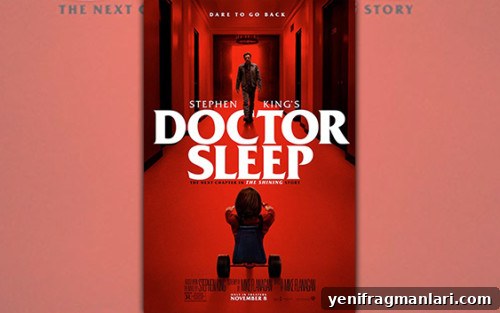
Doctor Sleep (2019)
Director: Mike Flanagan
Screenwriter: Mike Flanagan
Starring: Ewan McGregor, Rebecca Ferguson, Kyliegh Curran, Cliff Curtis, Zahn McClarnon, Emily Alyn Lind
Mike Flanagan’s Doctor Sleep arrives as a unique cinematic attempt to reconcile two powerful influences: Stephen King’s novel and Stanley Kubrick’s enduring film adaptation of The Shining. Where King’s book revisits the haunted legacy of the Overlook Hotel and its survivors with clear emotional intentions, Kubrick’s film redefined horror itself with surreal, iconic imagery. Flanagan, a devoted admirer of both creators, navigates this fraught territory by crafting a movie that is thoughtful and reverent, though not without shortcomings.
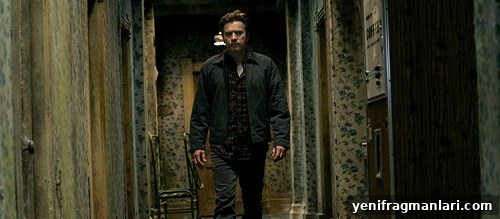
The story follows Danny Torrance (Ewan McGregor) decades after his childhood trauma at the Overlook. Now grown, Danny is a man weighed down by alcoholism and memories he cannot escape, drifting from place to place. His path crosses with Abra Stone (Kyliegh Curran), a young girl whose prodigious telepathic ability—“the shining”—makes her both powerful and deeply vulnerable. They face the True Knot, a sinister group led by Rebecca Ferguson’s charismatic and malevolent Rose the Hat, who prey on children with the shining to extend their own lives.
Flanagan’s screenplay focuses on emotion and character, emphasizing quieter, human moments over nonstop scares. The scenes in which Danny uses his gift to comfort the dying are among the film’s most affecting, providing a maturity and grace that contrast with more conventional horror beats. These interludes ground the film and make Danny’s personal redemption arc the emotional engine of the story.
Casting is a definite strength. McGregor convinces completely as a grown Danny: weathered, haunted and capable of tenderness. Kyliegh Curran brings a compelling mix of defiance and vulnerability to Abra, creating a believable bond with McGregor’s character. Rebecca Ferguson is magnetic as Rose the Hat, delivering a performance that blends charm, menace and dark amusement; she dominates many of her scenes and gives the True Knot real menace. Supporting players such as Cliff Curtis, Zahn McClarnon and Emily Alyn Lind add texture and color, even when the screenplay cannot always give them extended development.
Adaptation presents the film’s chief challenges. Flanagan largely follows King’s narrative but reshapes the climax and several structural elements to acknowledge Kubrick’s influential film rather than contradict it outright. That choice produces moments of nostalgic homage—some subtle, some overt. For viewers who cherish Kubrick’s version, these callbacks will feel like deliberate conversation; for others who prefer King’s book, the alterations may feel like compromises. The film reduces and condenses subplots, combining characters and streamlining events, which benefits pacing but also removes certain emotional complexities from the novel.
Visually, the movie excels in original moments: the surreal way minds connect across distance, the unsettling depiction of the True Knot’s feeding, and other supernatural effects are well realized and often striking. At the same time, the decision to recreate iconic imagery from Kubrick’s film—occasionally down to lookalike shots and set pieces—produces a mixed effect. Some recreations land as powerful tributes; others risk feeling derivative, as if the film leans on audience recognition rather than entirely trusting its own visual language.
Production design and cinematography are strong across the board. The Overlook Hotel is reconstructed with care and craftsmanship, evoking memory and dread at once. While some viewers may find more emotional resonance in earlier reconstructions of the Overlook in other films, here the set functions well within Flanagan’s aesthetic and supports both intimate and grander sequences.
What ultimately limits Doctor Sleep as a horror experience is its uneven commitment to fear. The film frequently opts for emotional reflection and character beats, which enrich the story but reduce sustained terror. The result is an ambitious, technically accomplished film that often feels more like a meditative ghost story than a relentless horror picture. It delights in moments and performances but rarely achieves the sustained dread or the visceral impact that made The Shining a cultural milestone.
In trying to honor two distinct visions—King’s narrative intent and Kubrick’s cinematic iconography—Flanagan creates a film that will satisfy viewers for its performances, thematic depth and moments of genuine originality, while leaving others wishing for a bolder horror edge. For fans of the source material and actors alike, Doctor Sleep offers much to admire even as it struggles to fully reconcile its many influences.
12/24