
This review was written exclusively for The Film Magazine by The CineBlog’s Sophie Butcher.
Charlie’s Angels (2019)
Director: Elizabeth Banks
Screenwriters: Elizabeth Banks, Evan Spiliotopoulos, David Auburn
Starring: Kristen Stewart, Ella Balinska, Naomi Scott, Elizabeth Banks, Patrick Stewart
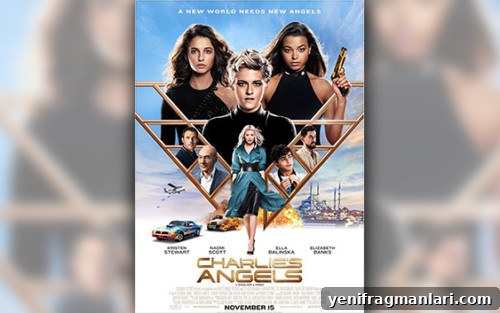
In Elizabeth Banks’ 2019 take on Charlie’s Angels, the Townsend Agency has expanded into a global network. Angels and Bosleys operate in cities around the world, using disguise, intelligence and combat skills to handle threats that conventional law enforcement can’t. This version introduces a new trio of operatives: Sabina (Kristen Stewart), a rebellious, wealthy prankster; Jane (Ella Balinska), a focused former MI6 operative and trained fighter; and Elena (Naomi Scott), a brilliant programmer whose work on a sustainable energy system called Calisto draws dangerous attention from those who would weaponize it.
From the opening line the film makes its intentions clear: it wants to celebrate female capability. That theme—women can do anything—saturates the script and visual choices, sometimes to the film’s detriment. The movie frequently spells out its messages rather than trusting its characters and actions to convey them. Moments that could have been shown subtly are instead explained through quips or exposition, undercutting the strength of the ideas on screen. The result sometimes feels like commercialized empowerment, packaged in broad gestures and obvious lines rather than earned moments.
Still, the film has strengths. Kristen Stewart brings a mischievous, carefree energy to Sabina that is infectious; she clearly enjoys playing the role and it’s one of the film’s most compelling elements. Her portrayal also gives clear representation to a queer-coded character without relegating orientation to casual subtext, which is refreshing in a mainstream action movie. Ella Balinska’s Jane anchors the team with physicality and discipline, while Naomi Scott’s Elena provides the emotional and intellectual core of the plot as a target whose invention raises the stakes.
Action sequences largely succeed on a functional level. Choreography often imagines how women might fight differently from the usual cinematic template—using leverage, improvisation, and situational awareness—but the editing can be jagged, with quick cuts that sometimes disrupt the flow. There are visual moments of interest, though: overhead compositions during a café brawl, framed pauses after a narrow escape, and a striking shot of the Angels in a field that conveys both relief and distance. These glimpses suggest a director looking for fresh ways to stage familiar material, even if the film rarely commits to a unique directorial signature.
The screenplay’s tone fluctuates between broad comedy and earnest drama. Some jokes land, others feel forced. The decision to foreground contemporary social commentary—gender dynamics, workplace inequities, and representation—works best when it emerges organically from character actions. When the film resorts to didactic lines or repetitive man-versus-woman comparisons, it can feel clumsy and juvenile. This is especially noticeable because male-led action franchises have historically been allowed to coast by on conventional tropes; female-fronted films are still often judged for how forcefully they make a statement about equality.
That criticism aside, Charlie’s Angels offers an accessible, fun-filled adventure aimed primarily at a younger audience. For girls who have grown up seeing female characters confined to romantic or passive roles, this movie—despite its imperfections—hands them a different narrative: women who are resourceful, brave and central to the story. That representation matters, and it’s worth recognizing even when the execution is uneven.
The film is not a masterpiece, and some negative responses are warranted. However, judged on its intended audience and ambitions, it has redeeming qualities. It is light, occasionally silly, and often energetic—qualities that can make for an enjoyable pop-culture outing if you’re willing to accept the film’s flaws. The cast has chemistry, and with tighter writing and more confident direction, a future installment could refine the concept into something sharper and more memorable.
Ultimately, whether this incarnation of Charlie’s Angels succeeds for you will depend on how much you value spirited performances and representation over polished storytelling. There is fun and heart beneath the surface, and the film feels like a step—imperfect but promising—toward a wider range of mainstream female-led action stories.
12/24
By Sophie Butcher