
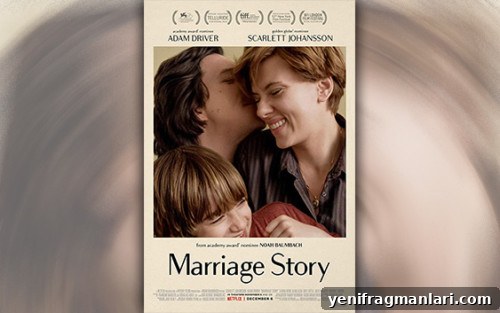
Marriage Story (2019)
Director: Noah Baumbach
Screenwriter: Noah Baumbach
Starring: Scarlett Johansson, Adam Driver, Laura Dern, Ray Liotta, Julie Hagerty, Merritt Wever, Alan Alda
Noah Baumbach’s Marriage Story examines love, family and divorce with frankness and tenderness. The film moves between quiet intimacy and legal ferocity, tracing how a marriage that once brimmed with creative energy and mutual admiration slowly unravels. Baumbach captures both the tender moments that bind people together and the sharp ruptures that pull them apart, crafting a portrait of separation that feels lived-in and real.
The story follows Nicole (Scarlett Johansson) and Charlie Barber (Adam Driver), a married couple who share a son and lives largely devoted to theatre. Early on we see them reading aloud a list of things they love about one another—an opening that earns the audience’s sympathy for both characters and sets up the painful contrast to come. What unfolds is not a melodrama but a patient, often uncomfortable study of two people disentangling their lives and identities.
Baumbach foregrounds emotional truth while allowing moments of dark humor and industry satire to surface. Nicole’s memory of auditioning for a hyper-serious “space movie” that takes itself absurdly seriously is a small, wry touch that punctures pretension. The screenplay blends witty dialogue with raw, human detail, and Baumbach’s direction keeps scenes grounded in the characters’ interiority.
The film’s theatrical roots are clear: it features rehearsals, performances and the rhythms of stage life, and many scenes are staged with the precision and intensity of a play. The camera often holds back, allowing long takes to unfold in real time and giving actors space to inhabit their emotions. This approach pays off in scenes built around physical layout and movement—an early sequence in which Nicole asks her sister Cassie (Merritt Wever) to serve Charlie with papers depends on where everyone sits and what they’re doing, and the tension emerges from those small spatial details.
As the couple moves from mediation into formal divorce proceedings, the film opens onto the American legal system’s minefield. Baumbach depicts the process as dehumanizing and brutal—a “street fight” in legal garb—where representation and resources become weapons. Laura Dern’s Nora Fanshaw is a take-no-prisoners attorney, and Charlie’s ordinary lawyer, Bert Spitz (Alan Alda), is soon replaced by the louder, more aggressive Jay Marotta (Ray Liotta). For viewers unfamiliar with adversarial divorce litigation, this escalation can appear theatrical, but the movie portrays it as a grim reality for many families.
What remains most affecting are the private scenes in which Nicole and Charlie confront what has been lost. Outside courtrooms, they can still be civil, and their small gestures—shared parenting moments, the remnants of affection—remain believable. Yet the big, recurring conflicts that eroded their relationship persist without the filters they once used to protect each other. Those moments, raw and unvarnished, linger long after the film ends.
Scarlett Johansson and Adam Driver deliver performances of remarkable depth, exploring the nuances of regret, stubbornness and longing. Both actors balance restraint and intensity, and under Baumbach’s steady hand their portrayals avoid caricature. Laura Dern is powerful and magnetic as the lawyer who upends the dynamic, while Merritt Wever provides humane counterpoint as Nicole’s sister. Alan Alda and Ray Liotta add texture to the legal wrangling, representing different strategies and temperaments within the divorce machine.
The film’s score, including contributions from Randy Newman, adds an emotional thread without overwhelming scenes. Baumbach also finds quieter musical moments that serve as emotional punctuation: each lead receives a short, contrasting musical sequence that reflects where they land after the upheaval, underscoring the film’s bittersweet tone.
Marriage Story doesn’t hand out tidy resolutions. It resists the impulse to sentimentalize or simplify, instead offering a humane, complicated look at two people who tried to build a life together and then had to learn to live apart. For viewers interested in character-driven drama, nuanced performances and a candid exploration of modern relationships, the film is both a sobering and deeply empathetic experience.
21/24