
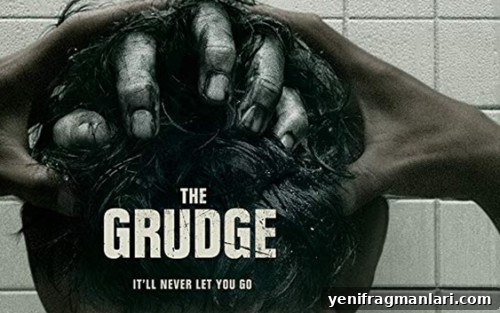
The Grudge (2020)
Director: Nicolas Pesce
Screenwriter: Nicolas Pesce
Starring: Andrea Riseborough, Demian Bichir, John Cho, Betty Gilpin, Lin Shaye, Jacki Weaver
Nicolas Pesce introduced his 2020 reimagining of The Grudge at New York Comic Con by promising “a deeper, human character narrative.” That intention—placing inner conflict and character evolution at the center of a horror film—sets an interesting goal. Horror often externalizes internal fears, guilt, and grief, and when it succeeds the genre can become a powerful vehicle for emotion as much as scares. Pesce’s film attempts that balance, but its fragmented structure and scattered focus keep it from fully delivering a character-driven experience.
The film opens by introducing Detective Muldoon (Andrea Riseborough), a grieving officer who lost her husband to cancer three months earlier. The script gives Muldoon a small, humanizing routine—reassuring her child with a simple coping exercise of closing their eyes and counting to five—but beyond these moments her arc never gains the depth it needs. Early scenes have her pulled toward an old, unsolved case connected to the Landers house, but the investigation often feels perfunctory rather than urgent. Exposition arrives clumsily through other characters, and Muldoon’s motivations and investigative choices remain underdeveloped.
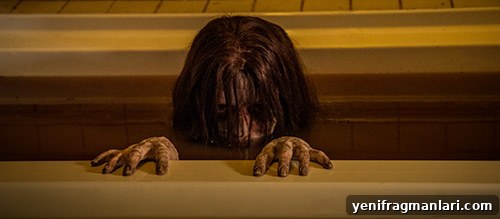
Pesce divides the film among three separate families, each encountering the film’s supernatural force in the same haunted house. One thread follows the Landers family’s property and a real estate agent whose own life is strained by a wife facing a possible diagnosis of ALD. The movie gestures toward difficult ethical questions—reproductive choice and the weight of medical uncertainty—but it rarely lingers long enough to explore them meaningfully. John Cho appears in this strand, spending much of his arc in quiet, tense moments with the ghost of the dead child in the house. Those scenes are evocative, but they feel like isolated set pieces rather than part of a unified emotional journey.
The third narrative thread centers on the Matheson family. Lin Shaye stands out here, delivering the film’s most committed and memorable performance as Mrs. Matheson, an elderly woman who speaks to spirits and challenges the family’s plan to seek an assisted death. The movie touches on the ethical and emotional complexities of end-of-life decisions but ultimately retreats into standard haunted-house tropes, choosing spooky exchanges over sustained moral or psychological inquiry.
One of the film’s core problems is structural: by splitting time among three families across different years, The Grudge never allows any single character adequate screen time to change or grow. The anthology-like approach robs the audience of someone to fully inhabit or root for, and it reduces several potentially rich conflicts to brief episodes of fright. The supernatural force at the center of the film—a curse with origins that the movie references but does not meaningfully connect to each character—becomes a backdrop rather than an organic extension of the protagonists’ emotional states. When the external threat has no clear, personal stake in these particular people beyond their being in the same physical space, the promise of a character-driven horror story falls short.
Despite these narrative shortcomings, Pesce and his team achieve some effective technical results. The film’s sound design frequently opts for silence and naturalistic noises—heavy breathing, floor creaks, the small ambient sounds of a house at night—rather than an undulating orchestral score. That choice heightens tension in extended sequences where characters simply search dark rooms, and it proves more unsettling than expected precisely because it avoids familiar string sweeps. Cinematography favors deep shadows and off-frame darkness, keeping viewers unsure of what might be lurking beyond the edge of the frame. Practical makeup and creature design are also noteworthy: decay, scars, and other physical effects are handled with care and contribute convincingly to the film’s unsettling atmosphere.
Ultimately, The Grudge (2020) is a mixed return for a long-running horror property. It contains strong moments—particularly Lin Shaye’s performance, the thoughtful sound work, and the production design—but its decision to spread its focus across multiple, loosely connected storylines undermines its central claim of being character driven. The movie borrows the contemporary aesthetic of post-James Wan horror yet lacks the psychological cohesion and thematic daring of films like Hereditary or Get Out. For viewers who appreciate mood, atmosphere, and carefully executed practical effects, there is value here. For those expecting a tightly woven, character-first horror drama, this version of The Grudge is likely to feel shallow and scattershot.
11/24