
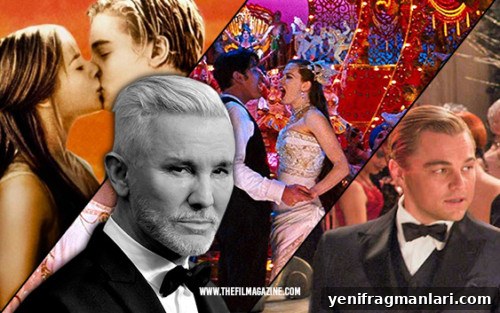
Baz Luhrmann’s Postmodern Trilogy: Romeo + Juliet, Moulin Rouge!, The Great Gatsby
As Jay Gatsby famously declares, “Can’t repeat the past? Well of course you can!” That line captures the spirit of Baz Luhrmann’s distinctive filmmaking: bold, theatrical, and unapologetically postmodern. Luhrmann, an Australian director known for his flamboyant visual style and inventive adaptations, has created a body of work that frequently blends past and present, high art and pop culture. Three of his films in particular—Romeo + Juliet (1996), Moulin Rouge! (2001), and The Great Gatsby (2013)—form a loosely connected postmodern romantic-tragedy trilogy that showcases his approach to adaptation, music, and mise-en-scène.
Romeo + Juliet updates Shakespeare’s play by transplanting the doomed lovers into a stylized 1990s setting dubbed Verona Beach. Starring Leonardo DiCaprio and Claire Danes, the film preserves Shakespeare’s original dialogue while surrounding it with modern iconography, rapid editing, and vivid color. The result is not a straightforward period piece but a pastiche that reimagines the familiar story for a contemporary audience. DiCaprio and Danes embody youth, innocence, and the intensity of first love, and Luhrmann’s production design and camera work amplify those qualities through a highly theatrical lens.
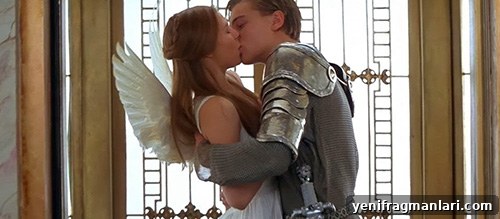
Luhrmann punctuates Romeo + Juliet with layered references to theatre itself. A derelict theatre arch—the Sycamore Grove—and extravagant costume parties remind viewers that they are watching an adaptation of a staged text. Small, deliberate details, such as Juliet’s angel costume echoing Romeo’s line “O, speak again, bright angel,” create a dialogue between the original play and this modern interpretation. Those deliberate visual callbacks are essential to the film’s postmodern identity; they function as pastiche rather than mere imitation.
Moulin Rouge! translates postmodern pastiche into musical form. Drawing inspiration from myths like Orpheus and Eurydice and operatic narratives such as La Bohème, Luhrmann assembles a kaleidoscopic fusion of styles, popular songs, and theatrical spectacle. The film’s core themes—truth, beauty, freedom, and love—form the bohemian creed that drives the story and the characters’ actions, while darker undercurrents such as illness, exploitation, and mortality quietly complicate the romantic façade.
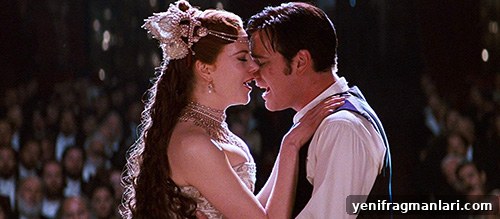
Music in Moulin Rouge! is a deliberate act of reinvention. Almost every song in the soundtrack is a reworking of familiar pop or rock tunes, reshaped to serve the film’s emotional and narrative goals. The only wholly original love song, “Come What May,” stands apart amid a score built largely from well-known material. By repurposing popular songs, Luhrmann embraces postmodern strategies—pastiche and parody—to create moments that feel both nostalgic and newly charged within the film’s turn-of-the-century Paris setting.
The Great Gatsby brings Luhrmann’s aesthetic to 1920s New York, transforming Fitzgerald’s Jazz Age into an electrified, contemporary spectacle. Casting Leonardo DiCaprio as Jay Gatsby offers a glamorous, modern face to a classic literary figure, while narrative choices—such as foregrounding Nick Carraway’s role as a writer and situating some of his recovery from alcoholism in a sanatorium—alter perspective enough to feel inventive without rewriting the source material. Visual excess and surreal set pieces intensify the sense of both wonder and disorientation that define Gatsby’s world.
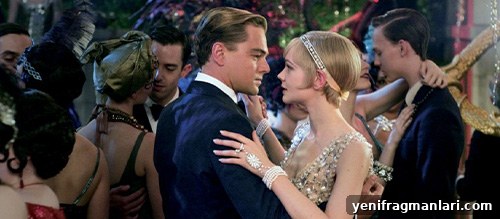
Luhrmann often uses exaggerated, almost storybook visuals to reflect his characters’ interior states. In The Great Gatsby, sequences that resemble pop-up books and intentionally artificial exteriors heighten the sense that Nick is navigating an intoxicating, unfamiliar city. These stylized choices—foregrounding musicians, flattening perspectives, and emphasizing color and ornament—create a mise-en-scène that communicates emotional truth through artifice. Rather than undermining authenticity, the theatricality in these films reveals inner realities and amplifies the dramatic stakes.
Taken together, these three films illustrate Luhrmann’s recurring concerns: the collision of past and present, the reworking of canonical narratives, and the use of music and design to evoke feeling. His postmodern approach does not merely borrow from earlier texts; it intentionally layers cultural references, musical fragments, and theatrical visuals to create new experiences that are at once familiar and surprising.
Watching Romeo + Juliet, Moulin Rouge!, and The Great Gatsby as a set makes it easier to recognize the director’s stylistic through-lines: romantic tragedy rendered through bold production design, kinetic editing, and music that reframes the emotional life of each story. Luhrmann’s films ask viewers to accept artifice as a means to reach something more emotionally direct, and in doing so they have become distinctive contributions to contemporary cinema.
You can support Sophie Cook through her social profiles and blog: Twitter @sophbc_, Instagram @sophbc_, Blog sophiebeatricesblog