
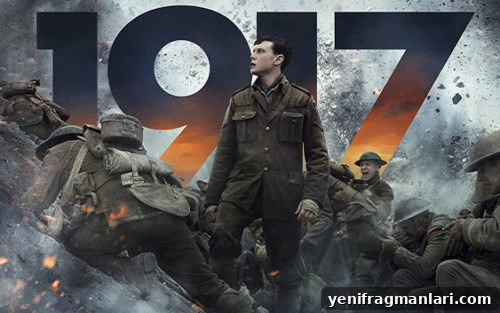
1917 (2020)
Director: Sam Mendes
Screenwriters: Sam Mendes, Krysty Wilson-Cairns
Starring: George MacKay, Dean-Charles Chapman, Colin Firth, Benedict Cumberbatch, Mark Strong, Andrew Scott, Richard Madden
The horrors of the First World War are hard to render honestly without slipping into cliché or sentimentality. Sam Mendes’s 1917 confronts that challenge directly, delivering a tense, immersive wartime drama that aims to honor the scale of sacrifice while focusing tightly on two young soldiers and the single mission that could save hundreds of lives.
Set in April 1917, the story follows Lance Corporals Blake (Dean-Charles Chapman) and Schofield (George MacKay). Tasked with a perilous delivery, they must cross enemy territory to reach another British unit and stop an imminent attack that would send 1,600 men into a prepared German ambush. The premise is simple and urgent: time is short, the terrain is hostile, and every choice could be fatal.
Mendes co-wrote the screenplay with Krysty Wilson-Cairns, and the film is clearly personal—partly inspired by Mendes’s own family history. Rather than sprawling across multiple viewpoints, 1917 keeps us almost exclusively with the pair as they navigate trenches, shell-shocked landscapes and abandoned villages. The production design and background performances quietly suggest the wider human toll: each passing soldier hints at a life interrupted, and subtle props and details imply origin, personality and exhaustion without ever getting in the way of the main narrative.
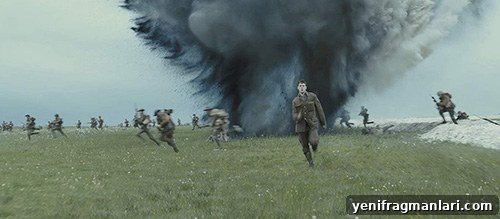
Visually, the film is driven by Roger Deakins’s breathtaking cinematography. Deakins and editor Lee Smith construct a seamless flow that gives the impression of a continuous take, a technical feat that heightens the immediacy of every step, sprint and stumble. The camera’s fluid motion keeps us beside the protagonists, making terrain, weather and debris feel like active threats. At key moments the imagery becomes almost painterly—ruined towns backlit by fires, rivers clogged with the dead—showing how cinematography can elevate raw horror into potent, memorable compositions.
Where Peter Jackson’s documentary-reconstruction approach in They Shall Not Grow Old returns archival reality to life, 1917 chooses a different route: it crafts a heightened, cinematic realism that avoids obvious artifice. Mendes’s direction and the cast’s restrained performances work together to sustain that tone. George MacKay anchors the film with a naturalism that carries much of the emotional weight. Dean-Charles Chapman, meanwhile, gives Blake a mix of youthful urgency and personal stakes that propel the mission forward.
The supporting cast includes several well-known names in smaller but memorable roles. Andrew Scott offers a standout appearance as a weary officer representative of the exhausted leadership of the time, while brief turns from Colin Firth, Benedict Cumberbatch, Mark Strong and others punctuate the narrative without distracting from the central journey. Rather than undermining the film, these cameos underscore the scale and hierarchy of the war while keeping the focus where it belongs.
Director Mendes and cinematographer Deakins do not shy away from the physical reality of death. Unlike many war films that hide casualties offscreen, 1917 makes the presence of the dead unavoidable—horses in No Man’s Land, bodies strewn in rivers, and the omnipresent signs of decay and destruction. These elements are handled with stark honesty, amplifying the stakes and emotional fallout of each decision the protagonists make.
Thomas Newman’s score is subtle but vital. Often pared back to a somber piano motif, the music supports the film’s tense atmosphere without overwhelming it. At critical moments the score swells to full orchestral power, lending an urgent, almost devotional tone to the final sequence and reinforcing the viewer’s investment in the outcome.
Technically impressive and emotionally resonant, 1917 is not an attempt to redefine the war film so much as to perfect a particular cinematic approach to it. The narrative occasionally leans into dramatic license for impact, and the continuous-shot illusion sometimes requires editorial sleight of hand, but those choices serve a clear purpose: to immerse the audience in a single, harrowing mission and, by extension, to honor the countless individual stories of World War I.
With meticulous production design, superb cinematography and committed lead performances, 1917 stands as a powerful example of contemporary war filmmaking—an homage to personal courage amid mass tragedy and a reminder of the human cost behind historic headlines.
20/24