
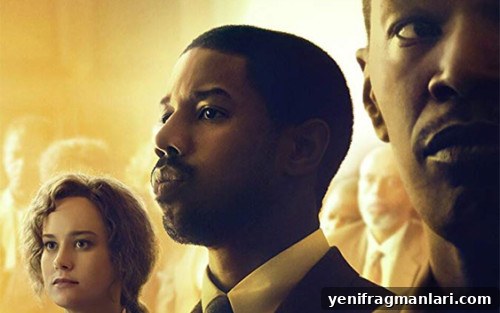
Just Mercy (2020)
Director: Destin Daniel Cretton
Screenwriters: Destin Daniel Cretton & Andrew Lanham
Starring: Michael B. Jordan, Jamie Foxx, Brie Larson, Rafe Spall, Tim Blake Nelson
Just Mercy, adapted from the memoir of attorney Bryan Stevenson, follows Stevenson’s early legal work on behalf of people on death row, focusing closely on the case of Walter “Johnny D” McMillian, an African American man wrongfully convicted of murder. The film centers on themes of racial injustice, the fallibility of the legal system, and the moral duty to fight for the wrongly accused. Michael B. Jordan portrays Stevenson with steady resolve, and the film’s dramatic core rests on the relationships he forms while navigating a hostile justice system.
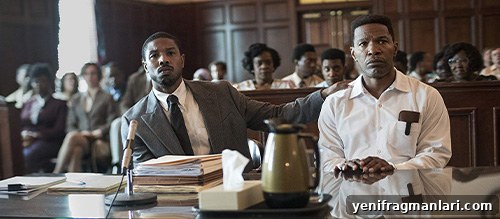
The cast is uniformly strong. Jamie Foxx brings quiet dignity to the role of Walter “Johnny D” McMillian, delivering a performance that earned awards attention and praise from many critics. Brie Larson provides a grounded, empathetic presence as a fellow advocate whose humanity complements Stevenson’s determination. Supporting actors such as Rafe Spall and Tim Blake Nelson fill out the world with convincing detail. The performances are the film’s most reliable asset: the actors inhabit their roles fully and make the story feel immediate and personal.
Despite the cast’s strengths, the film struggles with familiar biopic conventions. Much of the storytelling relies on procedural beats—document reviews, courthouse scenes, and discovery montages—that feel derivative. These sequences are meant to convey the slog and patience of legal work, but the visual shorthand often drifts toward cliché. Rather than finding new cinematic language for legal investigation, the film defaults to montage and expository dialogue, which can undercut suspense and reduce complex developments to simple plot markers.
Another limitation is the film’s tendency to soften or simplify conflict. Key antagonists rarely pay a convincing price for the injustices they enforce; the consequences for those responsible for wrongful convictions are muted, which blunts the moral urgency the subject deserves. One notable exception is the portrayal of a local lawman, played by Rafe Spall, whose character is drawn with broad strokes and leans into a stereotypical depiction of Southern hostility. That characterization can feel heavy-handed and less nuanced than the real-life complexities the story calls for.
Stylistically, the movie often aims for tension without always achieving it. Several scenes are staged to build suspense, and the marketing emphasized the ethical stakes—what happens when the system convicts an innocent person. Yet the screenplay sometimes opts to tell rather than show, using characters as mouthpieces for exposition instead of letting dramatic situations reveal the stakes naturally. When a significant discovery is made, the film frequently pauses for explicit explanation, which diminishes the emotional payoff.
Still, the film succeeds at drawing attention to urgent issues. Its depiction of the structural and racial inequities that lead to wrongful convictions is a necessary reminder of ongoing injustices in the criminal justice system. By putting faces and stories to the statistics, the movie invites viewers to consider the human cost of systemic failure. While it may not reach the stylistic heights of other contemporary dramas dealing with race and justice, it performs a vital public service by bringing Bryan Stevenson’s work to a mainstream audience.
For viewers interested in courtroom drama grounded in real events, Just Mercy is worth seeing for its performances and its heartfelt advocacy. The film’s emotional center is strong enough to carry it through moments of conventional storytelling, and its core message—about compassion, second chances, and the responsibility to seek justice—remains affecting. With a tighter script and more daring cinematic choices, this material could have been unforgettable; instead, it is reliable, earnest, and sometimes frustratingly familiar.
8/24