

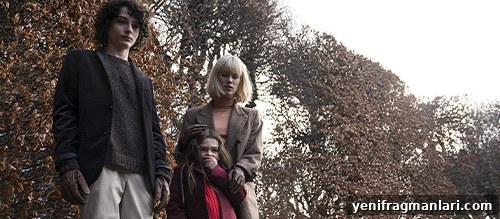
The Turning (2020)
Director: Floria Sigismondi
Screenwriter: Carey W. Hayes, Chad Hayes
Starring: Mackenzie Davis, Finn Wolfhard, Brooklynn Prince
The Turning, directed by Floria Sigismondi and released in 2020, is a gothic-leaning horror film that aims to blend period atmosphere, psychological unease, and conventional haunted-house scares. The film is visually striking: production design, costume choices, and cinematography create a consistent, brooding mood that often elevates the material above its narrative shortcomings. For viewers who prioritize style, mood, and craft in horror, The Turning will likely be engaging; for those who need narrative clarity, the film can feel frustratingly incomplete.
Set in April 1994, the story follows Kate (Mackenzie Davis), who arrives to serve as a governess for two wealthy siblings living in an isolated, grand estate. The young girl is withdrawn and possibly agoraphobic, while her brother Miles (Finn Wolfhard) returns home after being expelled from boarding school. Strange occurrences and unsettling behavior escalate as Kate tries to keep the household afloat. The film raises questions about what is real and what is imagined, but its final act becomes ambiguous to the point of incoherence, leaving the audience uncertain about how much of the haunting is objective and how much is filtered through an unreliable perception.
Visually, The Turning is its strongest asset. The house and grounds are photographed to emphasize scale and decadence: statuary, architecture, and unsettling sculptures are framed against an overcast sky to produce a bleak, gothic atmosphere. A standout location is the mental hospital where the protagonist’s mother is confined; the set design and color palette establish a recurring association between blue tones and instability. Costume design is restrained and authentic to the 1990s, avoiding the exaggerated clichés often seen in period horror. The film also uses monochrome sequences and varied artistic styles to underline emotional beats and hint at character histories, lending texture to the storytelling even when plot elements remain incomplete.
Surprisingly effective are the film’s jump scares and use of suspense. Sigismondi and her collaborators demonstrate a clear understanding of timing and misdirection: they play with audience expectations, sometimes setting up obvious scares and then subverting them by delivering shocks in quieter, more unexpected moments. Camera placement, sound design, and editing work together to create genuine jolts without relying on cheap, obvious tricks. Many sequences build tension through diegetic noise and careful framing, which keep the viewer engaged even when narrative logic falters.
The performances by the younger cast are noteworthy. Finn Wolfhard and Brooklynn Prince bring unsettling credibility to their roles as the household children. Wolfhard’s Miles embodies a privileged, entitled youth whose motivations are opaque but menacing; the performance captures a type of affluenza-based cruelty without becoming a cartoon. Brooklynn Prince is captivating as the younger sibling, delivering a mix of vulnerability and eerie detachment. Mackenzie Davis does steady work as Kate, though the character is written with limited complexity; she remains essentially a kind, decent woman, and the script does little to expand her inner life beyond that baseline.
“From infancy through young adulthood, members of the upper class receive a distinctive education… This separate educational system is important evidence for the distinctiveness of the mentality and lifestyle that exists within the upper class because schools play a large role in transmitting the class structure to their students… As a retired business leader told one of my research assistants: ‘At school we were made to feel somewhat better [than other people] because of our class. That existed, and I’ve always disliked it intensely. Unfortunately, I’m afraid some of these things rub off on one.’”
The film gestures at a critique of privilege and entitlement but never fully commits to a sustained social commentary. Characters like Miles suggest a satire of upper-class upbringing, yet the screenplay stops short of developing that thread into a meaningful critique. As a result, thematic opportunities remain underexplored.
The Turning’s single largest flaw is its ending. The film drifts into ambiguity in its final minutes to a degree that undermines narrative cohesion. Ambiguity in horror can be rewarding when it feels purposeful, but here the conclusion reads as unfinished rather than deliberately mysterious. Editing choices and the final cut leave viewers with the sense that additional scenes or clearer connective tissue were necessary to make sense of what the film was trying to say. Walking away from the theater, many will feel there should have been more time to clarify whether events were supernatural or psychological and how the film’s motifs tie together.
Despite these problems, The Turning has redeeming qualities that make it worth watching for certain audiences. Its visual style, effective use of sound and camera, and strong child performances can provide sustained chills and a memorable atmosphere. The film’s strengths lie in cinematic presentation more than in storytelling; if you value mood, craft, and the mechanics of horror—particularly well-executed jump scares and production design—you will find much to appreciate. If narrative clarity and thematic payoff are most important to you, The Turning may disappoint.
The Turning is uneven but not without merit. With a more coherent final act or a few strategic reshoots, it could have turned into a clearer, stronger work. As it stands, the film is a striking example of how cinematography and editing can carry a project even when the script lacks full cohesion. For viewers seeking gothic atmosphere and effective scares, The Turning delivers enough to make it worth a look.
12/24