
Walk, Run, Cha-Cha (2019/2020)
Director: Laura Nix
“Before I learned dancing, I could only use my body to walk, to swim, to run. Today I can use my body to reach another level of freedom.”
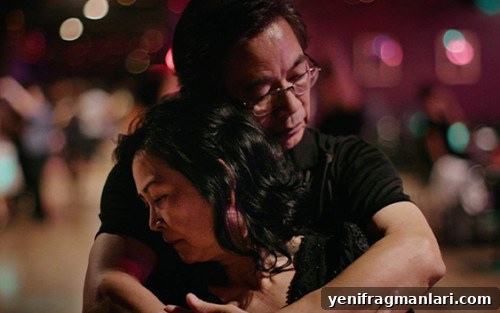
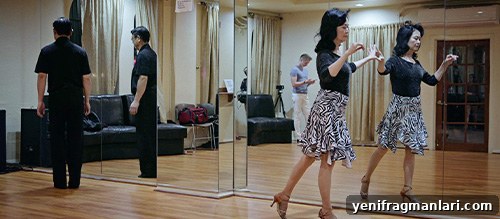
Walk, Run, Cha-Cha is a short documentary directed by Laura Nix that follows Millie and Paul Cao, a Vietnamese immigrant couple who rediscover joy, companionship, and self-expression through ballroom dancing late in life. Nominated for the 2020 Academy Award for Best Documentary Short Subject, the film introduces viewers to two warm, philosophical protagonists whose personal histories and present-day devotion to dance make the film emotionally engaging even when its formal choices feel uncertain.
At its best, the film presents intimate conversational moments and candid reflections from Millie and Paul that reveal a lifetime of resilience, sacrifice, and quiet humor. Their chemistry is the documentary’s heart: the couple’s gentle banter, mutual support, and thoughtful observations bring human depth beyond the choreography. These scenes offer insight into the immigrant experience in the United States—memory, adjustment, and the search for meaning—without reducing those experiences to tidy narratives or broad generalizations.
Yet the film struggles with a clear thematic focus. It sits uneasily between two impulses: to explore the Caos’ immigrant journey and to document the competitive and social world of ballroom dance. The film repeatedly juxtaposes reflective interviews with rehearsal and performance footage, but it rarely commits to exploring either thread fully. The inclusion of the couple’s dance teachers in prominent credits suggests a narrative emphasis on the dance community, but the teachers remain peripheral to the emotional core centered on Millie and Paul.
This indecision affects pacing and structure. The documentary offers evocative lines—like the quote featured above—about bodily freedom and transformation, but it often fails to translate those moments into a cohesive cinematic argument. Dance sequences are pleasant and occasionally graceful, yet they feel more illustrative than revelatory, serving as evidence of the couple’s hobby rather than as a cinematic language that amplifies their inner lives. Conversely, the film hints at the broader cultural and generational dimensions of the Caos’ story without pursuing them in depth.
Still, the film’s strengths are considerable and should not be understated. Millie and Paul are charismatic on-screen subjects: sincere, reflective, and full of small details that reveal character. Their humility and willingness to speak candidly about aging, marriage, and identity make many of the film’s quieter moments resonate. When the camera lingers on the pair together—walking, chatting, gently teasing one another—the film finds a natural rhythm that feels authentic and unforced.
Director Laura Nix’s observational approach yields moments of real tenderness, but the film could have benefited from stronger editorial focus. A clearer decision—either to commit to a portrait of immigration and personal history or to examine dance as a transformative discipline with its own stakes—would have sharpened the emotional payoff. As it stands, the documentary presents a mosaic of moments that, while often touching, do not cohere into a fully realized argument about art, aging, or cultural adaptation.
Visually, the film favors straightforward compositions and close-ups that foreground expression rather than spectacle. The cinematography and sound design support the intimate tone, allowing the viewer to linger on the subjects’ faces and the subtle physical communication that defines their relationship. These choices align with the film’s strengths—character-driven storytelling—yet they leave the dance sequences less dynamically integrated than they might be in a film that chose to foreground movement as a central dramatic element.
In summary, Walk, Run, Cha-Cha is not a flawless documentary, but it is far from unsuccessful. Its charm rests largely on the presence of Millie and Paul Cao: two people whose warmth and honesty elevate the material. The film offers glimpses of emotional truth and small epiphanies about aging, partnership, and the pleasures of learning something new. While the documentary’s lack of a decisive organizing principle prevents it from reaching its full potential, it still succeeds as a portrait of two lives touched by dance and by the dignity of ordinary perseverance.
10/24