
This article was written exclusively for The Film Magazine by Sophie Cook of Sophie Beatrice’s blog.

The Rhythm Section (2020)
Director: Reed Morano
Screenwriter: Mark Burnell
Starring: Blake Lively, Jude Law, Sterling K. Brown, Daniel Mays, Raza Jaffrey
Blake Lively’s transition from the airy, upper-east-side socialite of Gossip Girl to a darker, lethal protagonist in The Rhythm Section highlights her range as an actress. The film centers on Stephanie, a young woman devastated by the loss of her parents and pulled into a self-destructive spiral that includes substance abuse and prostitution. When she discovers evidence suggesting the plane crash that killed them was a deliberate terrorist strike, she commits herself to uncovering the truth and exacting revenge.
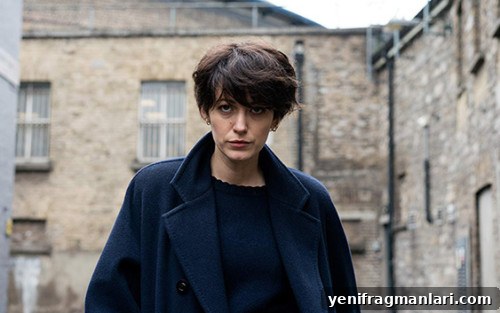
Reed Morano frames the story as an action-thriller that also aims to probe grief and identity. The script, adapted by Mark Burnell, gives Lively a demanding, multi-layered role: Stephanie moves from fragile mourner to determined avenger, then to a practised killer who adopts false identities to carry out her mission. Lively convincingly sells each stage of that transformation. Subtle changes in her appearance—shorter, unkempt hair after the tragedy, then carefully applied disguises and dyed hair as she embraces the persona of “Petra”—help track her psychological journey. Her performance supplies the emotional ballast the film often lacks on the narrative level.
Jude Law plays the enigmatic trainer known as “B,” a shadowy figure who teaches Stephanie how to survive and fight. Law’s performance leans into a steely toughness at times and a softer, more inscrutable side at others, which leaves his character perpetually ambiguous. The film uses this ambiguity to create tension, but at moments the character feels underwritten; it is not always clear whether B is a reliable mentor or a manipulative force, and Law’s oscillation between menace and geniality can feel uneven. Nonetheless, the chemistry between Lively and Law anchors many of the film’s quieter training scenes.
The title, The Rhythm Section, is more literal than it first appears. Rather than referring to music, it signals the discipline of breath and heartbeat control that Stephanie must learn to steady herself during violent encounters. The repetition of breath and pulse sounds is used deliberately: those sonic cues punctuate scenes of training and combat, making the audience aware of the physical costs of violence and the fragile control the protagonist tries to maintain. This focus on breath becomes a motif that links the film’s action sequences to its emotional core.
One of the film’s strengths is its sense of place. Shot across a range of international locations, it uses setting to underline the story’s global stakes. Inverness, Scotland, with its remote beauty and isolation, stands in for a place of withdrawal and hard-earned training, while Tangier’s textured streets and faded grandeur offer a visual metaphor for decay—both of cities and of the protagonist’s inner life. The cinematography often leans on muted palettes and close framing to convey Stephanie’s claustrophobia and single-mindedness.
Structurally, the film alternates between linear and non-linear sequences. While the chronology remains accessible, the editing tries to mirror the protagonist’s fragmented state. At times the narrative beats follow an expected vengeance arc: discovery, training, infiltration, and confrontation. That predictability is a familiar aspect of revenge thrillers and means the plot rarely surprises, though a handful of unexpected deaths and plot turns do provide occasional jolts.
Supporting performances are solid if not always fully explored. Sterling K. Brown, Daniel Mays and Raza Jaffrey bring texture to their roles, but the script gives them limited space to develop beyond functional plot points. The film’s pacing sometimes suffers as it balances character-driven scenes with action set-pieces; a more disciplined screenplay might have tightened the thrust of the central revenge story while preserving the emotional depth that Lively brings.
Overall, The Rhythm Section is a mixed but watchable film. It succeeds most clearly as a vehicle for Blake Lively, whose committed performance raises material that otherwise skates close to conventional thriller tropes. Elements such as its attention to breath as a motif, atmospheric locations, and moments of genuine tension help the film maintain momentum. With sharper narrative focus and a few structural refinements, it could have been a more gripping entry in the genre. As it stands, the movie delivers some strong sequences and a compelling central turn, even if the whole does not entirely cohere.
14/24
You can support Sophie Cook in the following places:
Twitter – @sophbc_
Instagram – @sophbc_
Blog – sophiebeatricesblog