
The Invisible Man (2020)
Director: Leigh Whannell
Screenwriter: Leigh Whannell
Starring: Elisabeth Moss, Oliver Jackson-Cohen, Harriet Dyer, Aldis Hodge, Storm Reid, Michael Dorman
Please be warned: if you have experienced an abusive relationship, some scenes and themes in this film may feel distressingly familiar.
Universal’s iconic monsters have been reimagined many times in recent years, often with mixed results. This modern take on The Invisible Man, reworked for 2020 by writer-director Leigh Whannell and produced with Blumhouse’s characteristic lean, focused style, avoids the pitfalls of clumsy franchise-building and instead delivers a tense, emotionally grounded thriller that reinterprets the classic premise for contemporary concerns.
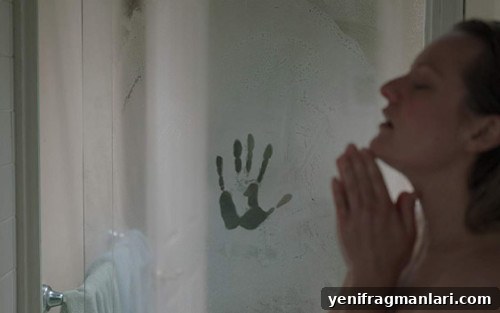
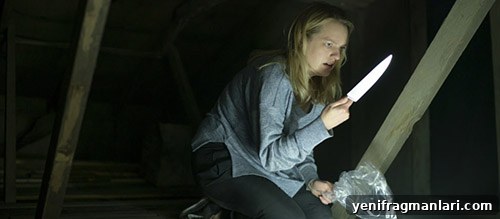
The story centers on Cecilia Kass (Elisabeth Moss), a woman trapped in an abusive relationship with Adrian Griffin (Oliver Jackson-Cohen), a brilliant but controlling tech billionaire. After a risky escape, Cecilia believes she has finally freed herself when Adrian apparently dies. Her relief is short-lived: inexplicable events begin to suggest an invisible presence is stalking her, and those around her grow increasingly doubtful as her life falls into chaos.
Unlike the chatty antagonist of the 1933 film, this Invisible Man is frightening precisely because it is mostly wordless. The absence of a voice turns the menace into something psychological and invasive. Small sounds—a whisper, a creak—become profoundly unsettling. Whannell’s approach trades grandiose monologues for sustained dread, letting silence and implication do the heavy lifting.
Elisabeth Moss gives a remarkable, layered performance. She carries much of the film on her shoulders, portraying Cecilia’s vulnerability, fear, and determination in a way that feels real and empathetic. Much of the drama hinges on her being disbelieved by friends and family; Moss’s reactions—her tension, exhaustion, and flashes of defiance—convey the emotional truth of many real-world abuse survivors. The physicality of scenes where she appears to struggle with an invisible foe is convincing and emotionally resonant, a testament to both her craft and Whannell’s direction.
The filmmakers make exceptional use of space to sell the invisible threat. Wide, open locations that should offer safety instead become arenas of anxiety because there is nowhere to hide from something you cannot see. The camera and production design consistently leave room in the frame for the unseen presence; the composition invites the audience to search every background, every doorway, creating constant tension. Stefan Duscio’s steady cinematography and Andy Canny’s precise editing, combined with careful sound design, transform the unseen into a palpable terror.
The film builds slowly in its opening act, lulling the viewer into a sense of routine before escalating into sudden, effective jolts. Whannell demonstrates control over pacing: a quiet porch scene or a casual conversation in a crowded restaurant can become terrifying through small, expertly placed details. While the film does not rely on nonstop jump-scares, the moments that are used hit hard because they are earned by the mounting unease.
Benjamin Wallfisch’s score alternates between near-silence and intense, synth-driven bursts, amplifying the film’s extremes. This contrast—between domestic normalcy and heightened thriller intensity—keeps the audience off balance. Fans of Whannell’s earlier work will recognize his ability to stage escalating action sequences even within a concept that could have been purely introspective, and the film occasionally employs kinetic camera moves reminiscent of his past films.
Beyond its technical accomplishments, The Invisible Man resonates because it makes a clear statement about power and control. It refuses a false equivalence between abuser and victim; the film does not seek sympathy for the perpetrator. Instead, it frames real-world abuse as monstrous and dangerous, exploring how manipulation and gaslighting can isolate a survivor from those who could help. That thematic clarity gives the horror weight beyond shocks and set pieces.
This is a horror film that lingers. After viewing, certain images and sounds stay with you—testament to both the craft on display and the film’s effective focus on dread and atmosphere. It is a tightly made modern adaptation of a classic monster story, reshaped to speak to current anxieties about intimate violence, surveillance, and the ways technology can extend a perpetrator’s reach.
22/24