
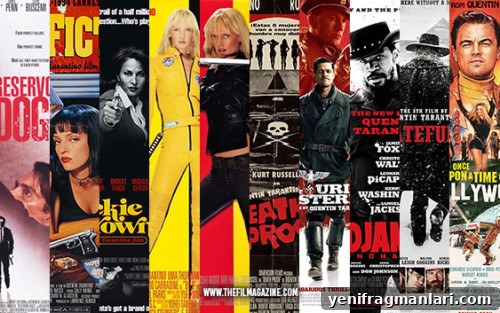
Film lovers often polarize over Quentin Tarantino, but few dispute the enormous influence his films have had on modern cinema and popular culture over the past three decades.
Tarantino rose to prominence by blending nonlinear storytelling, carefully curated soundtracks, and strikingly stylized violence into films that have become both commercially successful and culturally resonant. He has repeatedly worked with major stars such as Leonardo DiCaprio, Samuel L. Jackson, Uma Thurman, and Brad Pitt, and has contributed scripts and creative energy to projects alongside other directors. His distinctive voice and cinematic trademarks—sharp dialogue, pop-culture references, and bold visual choices—are woven through his filmography.
In this special ranked edition, we examine all ten films directed by Tarantino, counting Kill Bill as two separate entries. Each film is evaluated for artistic merit and cultural significance, from noteworthy to essential.
Follow @thefilmagazine on Twitter.
10. Once Upon a Time… in Hollywood (2019)
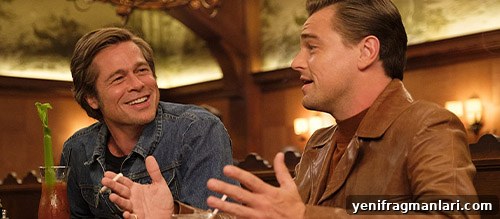
Set in 1960s Los Angeles, Once Upon a Time… in Hollywood is Tarantino’s affectionate homage to the films and performers that shaped his cinematic imagination. The film entwines fiction and nostalgia, following characters played by Leonardo DiCaprio and Brad Pitt while presenting Margot Robbie as Sharon Tate in a tender, idealized portrait. Tarantino employs his trademark tonal shifts and period detail to create a lush, sometimes unsettling fairy tale of Hollywood’s past—one that will appeal differently depending on how familiar you are with his previous work.
9. Death Proof (2007)

Originally part of the double-feature Grindhouse, Death Proof is Tarantino’s throwback to 1970s exploitation cinema. Presented as a modern-day thriller with deliberately rough edges and pulpy touches, it follows a group of women who turn the tables on a dangerous stunt driver played by Kurt Russell. The film is deliberately provocative and gory, leaning into exploitation aesthetics while demonstrating strong technical craft and an appreciation for genre history.
8. Jackie Brown (1997)
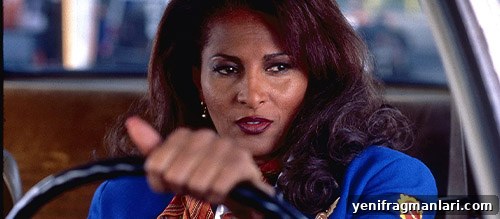
Tarantino’s adaptation of Elmore Leonard’s Rum Punch, Jackie Brown finds him working in a more measured register after the burst of Pulp Fiction. Anchored by Pam Grier in the title role and featuring Samuel L. Jackson, the film blends sharp dialogue, moral complexity, and a reverence for the blaxploitation era that inspired much of Grier’s early fame. It’s a rich, character-driven thriller that showcases Tarantino’s narrative range and respect for source material.
7. The Hateful Eight (2015)
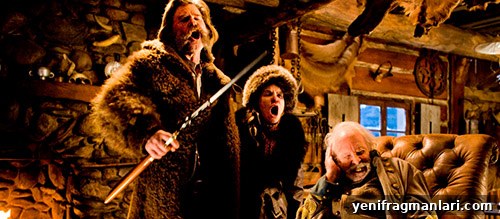
A chamber piece with the sweep of an epic, The Hateful Eight is largely confined to a single location yet manages to evoke the grandeur of classic Westerns. The film is intense, often brutal, and driven by extended, electrifying dialogue scenes that allow its ensemble—led by Samuel L. Jackson—to develop vivid, combustible personalities. Combining tension, dark humor, and violence, it revisits themes and motifs Tarantino explored in earlier work while offering a fresh, theatrical spin on the Western.
6. Kill Bill Vol. 2 (2004)

Volume 2 continues The Bride’s quest for vengeance and leans more heavily into character and resolution than its predecessor. Uma Thurman’s performance remains central, and the film delivers memorable fight choreography alongside quieter, emotionally satisfying moments. Though it lacks some of the surprise and kinetic energy of Vol. 1, Vol. 2 completes the saga with strong filmmaking and a cathartic conclusion.
5. Kill Bill Vol. 1 (2003)
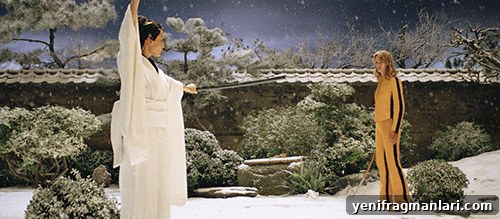
Bold, stylistically adventurous, and immediately iconic, Kill Bill Vol. 1 introduced The Bride in her yellow jumpsuit and a series of unforgettable action set pieces. The film’s blend of genre influences—from samurai cinema to spaghetti westerns—its sharp soundtrack choices, and its striking visuals all helped cement Tarantino’s status as a director capable of shaping contemporary pop culture. Vol. 1’s energy and imagery made a lasting cultural impact.
4. Inglourious Basterds (2009)

Inglourious Basterds is an audacious alternate-history thriller that pairs dark comedy with tense, suspenseful set pieces. The film interweaves two plots aimed at assassinating Nazi leaders, with standout performances from Brad Pitt and Christoph Waltz—the latter earning wide acclaim for his role. By shifting between English, German, and French dialogue, Tarantino expands his cinematic palette and delivers some of his most suspenseful, memorable scenes.
3. Reservoir Dogs (1992)
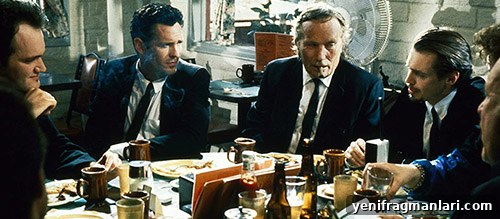
The film that announced Tarantino’s arrival, Reservoir Dogs is a tightly constructed, provocative ensemble drama about a robbery gone wrong. Featuring Tim Roth, Harvey Keitel, Steve Buscemi, Michael Madsen, and Tarantino himself, it established his talent for razor-sharp dialogue, nonlinear structure, and pop-culture-inflected moments. With its lean storytelling and a distinctive 1960s soundtrack, Reservoir Dogs remains a landmark independent film.
2. Django Unchained (2012)

Django Unchained expands Tarantino’s ambitions with a sprawling, operatic Western that confronts brutal chapters of American history through a revisionist lens. Drawing on spaghetti-western influences and a mix of visceral action and humor, the film features powerful performances from Jamie Foxx, Christoph Waltz—whose work received significant recognition—and Leonardo DiCaprio in a notably chilling turn. Its lengthy runtime allows Tarantino to balance character development, moral stakes, and cinematic spectacle.
1. Pulp Fiction (1994)
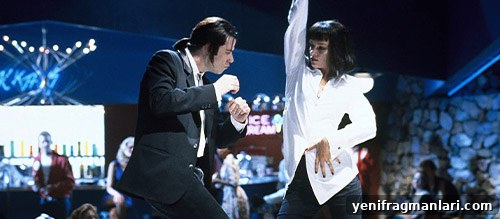
Pulp Fiction is arguably the film most synonymous with Tarantino’s name. Released to immediate acclaim, it became a cultural phenomenon through its witty dialogue, interlocking nonlinear stories, and unforgettable scenes that have influenced filmmakers and audiences alike. The film elevated John Travolta’s career, showcased Samuel L. Jackson’s commanding presence, and cemented Uma Thurman as a memorable female action figure. Pulp Fiction’s blend of humor, violence, and style makes it a definitive entry for anyone exploring Tarantino’s work.
Recommended reading: Paul Thomas Anderson Films Ranked
How would you reorder these films? Share your thoughts in the comments. For more curated movie lists and film analysis, follow The Film Magazine on social media.