
My Neighbours the Yamadas (1999)
Director: Isao Takahata
Screenwriter: Isao Takahata
Starring: Toru Masuoka, Yukiji Asaoka, Hayato Isohata, Naomi Uno, Masako Araki
Isao Takahata’s My Neighbours the Yamadas is a gentle, observant portrait of family life that stands apart within the Studio Ghibli catalogue. While Hayao Miyazaki often takes audiences on sweeping, mythic journeys, Takahata preferred the everyday — and in this film he explores the ordinary with an inventive, visually freewheeling style. The result is a low-key, affectionate series of vignettes about a single family, stitched together into a warm and quietly funny whole.
The Yamada household is wonderfully ordinary: Takashi Yamada is the father, Matsuko the mother, Noboru and Nonoko their children, and Grandma Shige rounds out the household. The film follows them through small but telling moments—squabbles over the TV remote, arguments about chores, workplace frustrations, childhood mishaps and the gentle eccentricities of an extended family. None of these incidents contains dramatic cliffhangers or high stakes; instead their accumulation creates a textured, humane portrait of domestic life.
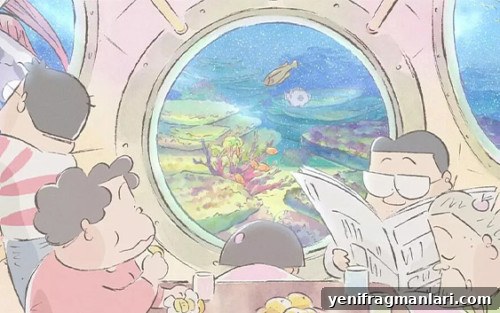
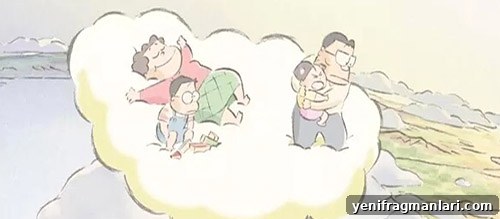
Visually, the film is arresting. Takahata’s animation here is deliberately sketchy and painterly, often resembling storyboard drawings brought to life. The technique feels handmade and intimate, even though the production has the distinction of being Studio Ghibli’s first feature to be fully computer-animated. Surreal, dreamlike interludes punctuate the realistic scenes: newlyweds mount a motorbike that transforms into a bobsled and then a boat; babies emerge from cabbages or bamboo in a playful nod to folk imagery; a family outing becomes a sequence of metamorphoses that celebrate imagination within the mundane. These flights of fancy add levity without undermining the film’s grounded, domestic core.
Structurally the film is an anthology of short stories — small comic set pieces and tender moments rather than a single, linear plot. This approach gives the film a rhythm that fluctuates between brisk humor and gentle reflection. One vignette finds the family refusing to interrupt a TV program for the first snowfall, forcing the father into an awkward attempt to take a family photo from outside in the cold. In another, Grandma takes it upon herself to confront a noisy biker gang. Each anecdote is compact and character-driven, revealing personality through gestures, domestic routines and the recurring warmth that keeps the family connected.
For some viewers the film’s leisurely pace may feel meandering; Takahata’s films are often unhurried, and here that quality is pronounced. The conflicts presented are small-scale — a child briefly lost at a mall is found safe by a neighbor, a father struggles with work, a teenager wrestles with the awkwardness of adolescence — and none of these lead to lasting calamity. That lack of dramatic peril is intentional: the film finds its emotional power in the accumulation of ordinary moments and the gentle resilience of family life, rather than in melodrama.
There is a distinct comedic sensibility throughout, often grounded in observation and affectionate satire. The Yamadas bicker, forgive, fluster and celebrate in ways that will be familiar to many viewers. Takahata’s direction favors empathy over judgment, and his screenplay invites the audience to appreciate the small absurdities that make everyday life memorable. The film’s tone is soothing and humane, and much of its pleasure comes from how recognisable the scenes feel — the little defeats and victories of home, the rituals, the rhythms.
Ultimately, My Neighbours the Yamadas is a comforting, witty exploration of family life that rewards patience. It’s ideal viewing when you want something warm, unassuming and humane: a film that doesn’t demand grand emotions but offers sustained, observant amusement and reassurance. The combination of Takahata’s compassionate eye and the film’s inventive, handmade visuals makes it a distinctive entry in Ghibli’s body of work — a small, steady celebration of the everyday.
21/24