
A Field in England (2013)
Director: Ben Wheatley
Screenwriter: Amy Jump
Starring: Reece Shearsmith, Michael Smiley, Richard Glover, Ryan Pope, Peter Ferdinando, Julian Barratt
Ben Wheatley has established himself as one of Britain’s most distinctive and prolific contemporary filmmakers. His body of work is uncompromising, often brutal, and defiantly difficult to categorize, making him a divisive figure among cinephiles and an unsettling discovery for the casual viewer. Wheatley frequently blends and subverts genre conventions—moving between gangster drama, hit-man thrillers, black comedy, horror and speculative satire—and his films are consistently marked by a bold visual style and a willingness to disorient the audience.
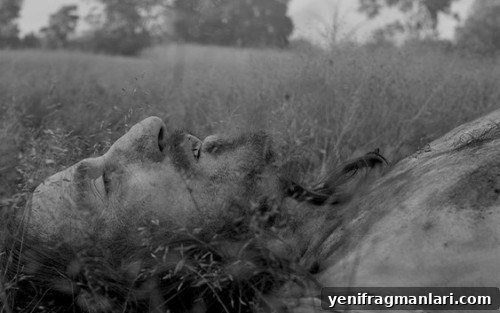
Released in 2013, A Field in England is a compact but intense example of Wheatley’s singular approach. Presented as a hallucinatory historical piece, the film relocates his trademark intensity to an austere patch of 17th-century English countryside and embraces a deliberately strange, near-avant-garde aesthetic. The result is an unsettling trip that demands close attention; even attentive viewers may find themselves lost amid its bleak atmosphere and surreal turns.
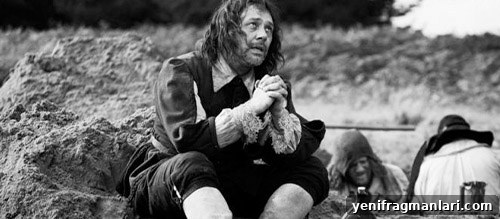
Set against the aftermath of the English Civil War, the story follows Whitehead (Reece Shearsmith), an astrologer’s assistant and deserter who flees the battlefield but feels obligated to complete a mission assigned by his master. He falls in with three other deserters and eventually finds the man he was ordered to apprehend, a volatile figure named O’Neil (Michael Smiley). Rather than submit, O’Neil forces the group into a compulsive dig for a rumored treasure buried in an otherwise unremarkable field—an expedition that quickly dissolves into something far stranger.
Wheatley’s influences are visible throughout the film. The economical staging of battle aftermaths recalls Ridley Scott’s early work, where smoke, sound design and committed performances deliver convincing chaos on a modest budget. Wheatley also channels the formal precision and temporal playfulness of Stanley Kubrick and the dreamlike, fractured storytelling of Nicholas Roeg, using editing and perspective to warp both time and character perception. These references are filtered through Amy Jump’s sharp, often unsettling screenplay, which gives Whitehead a florid, literate voice that contrasts with his companions’ earthier, more immediate speech.
A Field in England pivots from a quasi-historical chase to a full-on psychedelic descent when the men begin consuming mushrooms and their reality destabilizes. Ordinary objects and actions take on symbolic weight: the group’s tugging at a rope, the sudden appearance of characters in the dirt, and strange, repeated tableaux in which the actors freeze in poses like Restoration-era portraits while the frame itself seems to shiver. The film flirts with the occult and the paranormal, though Wheatley intelligently leaves open whether these events are supernatural or the product of intoxication, collective hysteria or guilt-driven psychosis.
One sequence in particular has become notorious among viewers for its intensity and ambiguity. In a tent, O’Neil subjects Whitehead to a harrowing encounter—an episode heavy with blood, screaming and ritualistic overtones—that culminates with Shearsmith’s character emerging transformed: attached to a rope, grinning in a way that suggests something broken or rewired. O’Neil then uses Whitehead as an uncanny instrument to locate what the men are digging for, as though the victim has been turned into an involuntary, human metal detector. The scene is a fulcrum for the film’s unsettling blend of physical cruelty and metaphysical suggestion.
Shot largely in monochrome and edited with surreal, jarring techniques, the film often reads like moving performance art. Even on a small screen, the film’s sound design, stark cinematography and the actors’ committed performances—especially by Reece Shearsmith and Michael Smiley—are hypnotic. The movie’s second half becomes increasingly elliptical and difficult to parse, and that opacity is part of its power: whether or not every beat is logically decipherable, the emotional and sensory experience remains compelling.
A Field in England also experimented with distribution in a way that presaged later release strategies. It premiered on cinema screens, on television and on disc on the same day, reflecting Wheatley’s apparent indifference to platform in favor of ensuring his work reaches an audience. This method anticipated similar multi-platform releases that would later become more common across the industry.
Ultimately, A Field in England is not an easy watch, but it is a striking one. Its deliberate ambiguity, hallucinatory imagery and brutal set pieces will divide viewers, yet the film’s unique visual language and the quality of the central performances make it essential viewing for anyone interested in daring contemporary British cinema. Whether you read it as historical allegory, psychedelic horror or formal experimentation, it remains one of Ben Wheatley’s most singular achievements.
Score: 22/24