

When people talk about the greatest sequels—films like The Godfather Part II, The Empire Strikes Back, and The Dark Knight—they mean follow-ups that deepen themes, shift tone, and show familiar characters in surprising, meaningful ways. By contrast, some sequels exist merely to trade on a name, leaving audiences wondering why they were made beyond profit. Star Mountain Pictures’ Romance in the Outfield: Double Play (also referenced in some materials as a follow-up to Pitching Love and Catching Faith) feels squarely in that second camp: it recycles a handful of ideas without developing them into a coherent, emotionally convincing movie.

Marketing materials for the original title, Pitching Love and Catching Faith 2. The poster invites more questions than answers.
Double Play splits into two parallel storylines: Tyler, a former professional baseball player sidelined by an injury who now coaches high school softball, and his sister Tiffany, a bride who runs away from her wedding and complicates relationships within her small social circle. The film leans heavily on baseball metaphors—the title’s double meaning is literal and thematic—but never clarifies the emotional stakes those metaphors are meant to carry. Is the film arguing that competitiveness and romantic love are incompatible? That a sporting ambition threatens intimacy? The script never pins down an answer.
Plot summary (condensed)
Tyler returns home after an injury threatens his career and reluctantly coaches a high-stakes softball game opposite his ex, Kenzie. They have unresolved history, and the film revisits their past in a series of flashbacks. Meanwhile, Tiffany flees her wedding and meets Chase, a free-spirited stranger who complicates her faith and commitments. As the two arcs intersect, Tyler must confront grief from his past, decide whether to pursue baseball or love, and confront the messy web of loyalties around him.

Tyler and Kenzie
There are kernels of drama here—grief, temptation, forgiveness—but the film struggles to turn them into layered characters or convincing plot mechanics. Tyler, played by Derek Boone, is hard to buy as a current professional athlete but believable as a softball coach. The script, however, undercuts him by introducing an injury and a Major League backstory without consistent timeline or medical realism. The baseball details are often wrong or ambiguously presented, and administrative realities of professional sports are treated casually, which erodes credibility for viewers who notice such errors.
Kenzie is earnest and likable in performance, but her character is sketched mostly by a single trait: competitiveness. That trait is repeated rather than explored, so her emotional arc rarely deepens beyond predictable quarrels and reconciliations. Tiffany’s storyline—running from a wedding dress into the arms of a handsome stranger—begins with a compelling image but does not land, because the film spends too much time on improvised-sounding dialogue and not enough on establishing believable character motivations or consequences.
The movie’s pacing and editing multiply these problems. Scenes often feel like warm-up takes left in place: characters flounder for a line, repeat information, or forget names (a recurring continuity hiccup). Flashbacks are used intermittently to signal a past between Tyler and Kenzie, but those memories rarely add insight; they tend to reiterate what the present scenes are already failing to dramatize. Supporting characters—Tyler’s best friend Brandon, the trainer Amanda, and a vaguely defined agent figure—sometimes seem to exist only to supply exposition or to trigger conflict, rather than to complicate the protagonists’ choices in meaningful ways.

RIP Heather
One of the film’s most problematic moves is the late revelation that Tyler blames himself for the death of a past girlfriend—an element that could have supplied a rich emotional core if introduced and handled with care. Instead, it appears abruptly and is used mainly as shorthand to justify Tyler’s indecision. That approach flattens genuine grief into a plot device and invites uncomfortable theological implications when the film implies suffering is divinely orchestrated to steer personal choices.
The film’s dialogue frequently sounds improvised, producing stilted exchanges and repetitive monologues. Attempts at romantic or spiritual reflection often become platitudes. When the story tries to ask whether love requires sacrifice—between a job, ambition, or faith—it rarely develops a persuasive argument. Instead, the resolution arrives cleanly and quickly: Tyler simply decides he loves Kenzie more than baseball, and the community around them celebrates. That tidy ending undercuts any real moral complexity the film might have pursued.
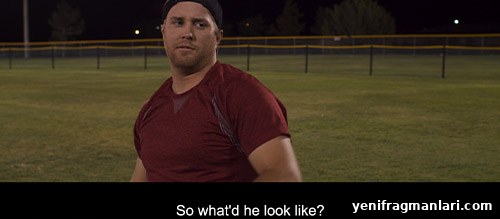
Always focused on the important stuff.
Technically, the film shows moments of competence—several softball sequences feel authentic and the production occasionally finds pleasing light and composition—but these bright spots only emphasize the larger failings in script, character, and structure. Costume, production design, and camera choices rarely advance the narrative or clarify theme; instead the movie relies on broad gestures and symbolic props (a purity ring, a lucky bat) to telegraph emotional beats the screenplay hasn’t earned.
There are also continuity and characterization problems that distract: names are shuffled, relationships are revealed offhand, and the two central storylines are juxtaposed without thematic synthesis. The result is a movie that frequently frustrates rather than engages: you can see the intention behind it—a Christian-leaning romantic drama anchored around sports and redemption—but the execution never coheres.
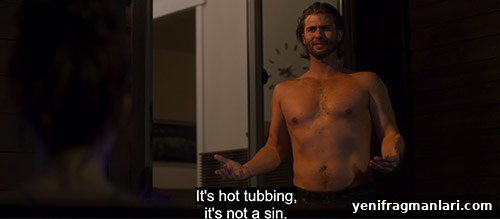
A hot-tub scene that plays for chemistry but lands unevenly.
Ultimately, Romance in the Outfield: Double Play is useful as a study in pitfalls to avoid. It demonstrates how reliance on improvisation, unclear stakes, weak plotting, and inconsistent character motivation can undermine a project with sincere intentions. For viewers interested in “so bad it’s good” cinema, the film supplies plenty of examples: awkward dialogue, strange continuity, and a conclusion that flattens messy questions into a tidy romantic payoff. For audiences seeking a thoughtful, polished sequel that deepens its theme, this film will likely disappoint.
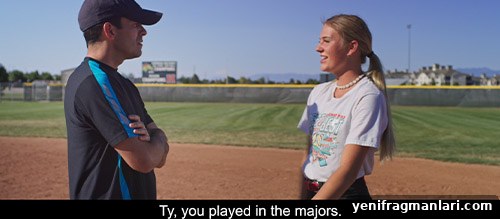
He almost married your sister and is currently your coach…
In short: the movie has ambition and a few effective moments, but its sloppy script, uneven performances, and muddled moral framing make it a case study in how not to turn an idea into a convincing sequel. It’s a reminder that good intentions and a few heartfelt scenes aren’t enough; coherent structure, carefully written dialogue, and consistent characterization are essential to make themes land and a sequel worth its salt.