
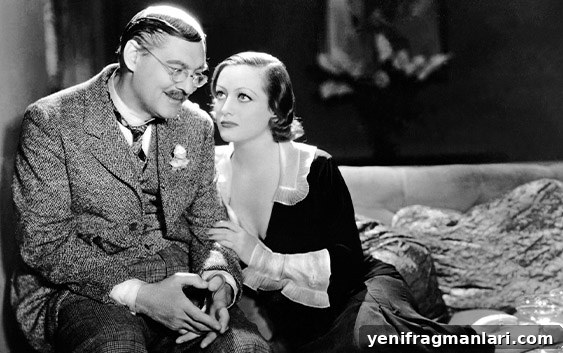
Grand Hotel (1932)
Director: Edmund Goulding
Screenwriter: William A. Drake
Cast: Greta Garbo, John Barrymore, Lionel Barrymore, Joan Crawford, Wallace Beery
Released in 1932 by Metro-Goldwyn-Mayer and directed by Edmund Goulding, Grand Hotel became one of the biggest box-office hits of its year and won the Academy Award for Best Picture. The film’s tight script by William A. Drake, confident performances from an ensemble cast and a polished production design give it a professionalism that still resonates nearly a century later. Though it’s often dismissed today as merely a “star vehicle,” Grand Hotel is a standout of the pre-Code era: it delivers human drama with restraint and credibility instead of melodramatic excess.
Drake’s screenplay interweaves several characters’ lives over two nights in a busy Berlin hotel. The hotel setting—transient, anonymous and intensely social—becomes a microcosm for human desire, ambition and loneliness. The film also occupies a transitional moment in cinema history. Coming after the early, awkward years of sound, and before the Production Code’s strict enforcement, Grand Hotel benefits from a period when filmmakers were experimenting with dialogue-driven stories and more frank depictions of adult themes. Its willingness to treat sex and mortality without moralizing or stagey punctuation keeps it feeling modern and believable.
Although the story is set in Berlin during the Great Depression and just before the rise of Adolf Hitler, the film largely avoids explicit political commentary. That deliberate choice makes the narrative feel timeless and portable: it could easily occur in any city at any time. Within the hotel’s walls the characters’ private struggles take center stage while the greater world remains a distant backdrop—captured, as Lewis Stone’s World War I veteran doctor dryly observes, in the line “People coming, going…nothing ever happens.”
From the outset Grand Hotel was promoted as a gathering of Hollywood’s biggest names. Contemporary coverage celebrated the array of stars assembled for the project, and the film’s premiere drew an A-list crowd. That intense publicity may have contributed to later critical snobbery, wherein prestige and success are equated with shallowness. But watching the film today, the ensemble feels less like a commercial stunt and more like a deliberately cast chorus of distinct, fully realized characters.
John Barrymore anchors the picture as Baron von Gaigern, a charming but desperate former nobleman who relies on wits and daring to survive. His performance captures the weariness of a man who once had everything and now claws to regain dignity. Lionel Barrymore, his older brother in real life, delivers the film’s most affecting turn as Mr. Kringelein, a terminally ill bookkeeper who chooses to spend his remaining weeks in comfort. Lionel’s warmth and restrained optimism provide the movie’s emotional core.
Wallace Beery plays the brutish Mr. Preysing, Kringelein’s employer. Beery’s imposing presence makes the character credible as an antagonist, yet the screenplay allows him humanizing moments that complicate a simple villain label. Joan Crawford, cast as Flaemmchen, is the ambitious stenographer whose social climbing and sexual agency reflect both the era’s economic pressures and a shifting portrait of female desire on screen. Her role helped cement Crawford’s star status, portraying a woman who uses her resources pragmatically while remaining empathetic and strong.
Greta Garbo appears as Grusinskaya, a fading Russian prima ballerina—an image in many ways consistent with her public persona: aloof, enigmatic and intensely private. Grand Hotel gives Garbo rare opportunities for lighter, more comic moments alongside her signature intensity. Her famous line, “I want to be alone,” though often associated with Garbo and repeated in other films, functions here as a compact expression of a weary celebrity’s longing for privacy.
At the fifth Academy Awards, Grand Hotel achieved the unusual distinction of winning Best Picture without nominations in any other category—a unique feat that has not been repeated. That omission has puzzled many modern viewers who find the film’s direction, art direction and performances exemplary. Each actor contributes a layered interpretation rather than a showcase solo, and Goulding’s direction emphasizes ensemble dynamics over individual showboating.
The film’s climax—an abrupt, heartbreaking death—shocks precisely because it refuses melodrama. Rather than staging a long, sentimental farewell, Grand Hotel treats mortality with matter-of-factness that feels both modern and humane. Life carries on: new arrivals will take rooms, new dramas will begin, and memory will fade. The film’s economy of emotion and trust in the audience’s intelligence make this ending both poignant and believable.
From costume and set design to the measured performances, Grand Hotel radiates refinement. Its pre-Code frankness and structural confidence have, unfairly, been overshadowed by changing tastes and critical fashions. Reassessing the film reveals a work that balances glamour and grit, celebrity and solitude—an ensemble drama that remains emotionally true and technically assured.
22/24
Written by Eve O’Dea
You can support Eve O’Dea in the following places:
Website – eveonfilm.com
Twitter – @EveOnFilm