

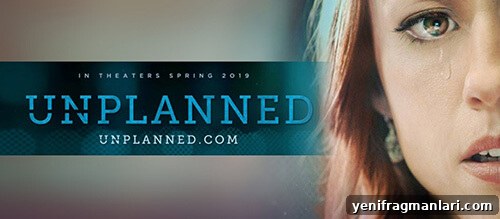
Unplanned (2019)
Director: Chuck Konzelman, Cary Solomon
Screenwriters: Chuck Konzelman, Cary Solomon
Starring: Ashley Bratcher, Brooks Ryan, Robia Scott
My opening reaction to this film was a small, telling detail: a ridiculous fake Texas license plate. It’s a minor flaw on its face, but it also feels emblematic of the production as a whole — an awkward imitation of lived reality that sets the tone for a movie more constructed than observed.
Unplanned adapts the memoir of Abby Johnson, a former women’s healthcare worker who becomes an outspoken anti-abortion activist. The film positions itself as a revelation, yet the narrative often reads like carefully arranged advocacy rather than nuanced storytelling. Early in the film, an abortion is staged to appear monstrous and theatrical: staff speak of the fetus in dehumanizing terms, a doctor adopts an exaggerated, maniacal delivery, and the sequence cuts to images meant to provoke horror. These choices make the scene feel sensationalized rather than persuasive.
The movie functions largely as propaganda for viewers already predisposed to its political stance. Characters who support abortion rights are portrayed one-dimensionally, reduced to caricatures of cruelty or greed. Abby’s former supervisor, the Planned Parenthood executive, is written as an almost cartoonish villain motivated by profit. That reductive portrayal undercuts the possibility of meaningful engagement with the moral and practical complexities the subject truly demands.
Where the film does attempt to acknowledge pro-choice arguments, it handles them superficially. Lines about women’s rights are recited but not interrogated; questions about fetal development are posed but never explored with nuance. Time and again the script favors moral certainty over conversation, which leaves both sides flattened into predictable roles. Abby’s own history — including two abortions — is framed in confessional language that aims for emotional weight but often feels forced. Phrases like “sacrificed her babies on the altar of convenience” are meant to be revelatory, but instead reveal the filmmakers’ limited empathy for the complicated circumstances many women face.
The structure of the film makes following Abby’s life unnecessarily difficult. The narrative opens with a dramatic event, then jumps back eight years, then two, then drops forward four years with a title card. These leaps are left poorly signposted, so the audience spends effort recalculating chronology rather than absorbing character development or thematic progression. If the intention was to build mystery or highlight transformation, the execution misfires; instead, the pacing feels scattered, and the editing disproportionately bloated. Scenes that should have ended at the film’s emotional climax linger far too long, stretching the runtime without adding meaning.
Visually and tonally, the movie includes several scenes that verge on the surreal: a man praying over a container of discarded fetal tissue, playful handling of fetal models, and a chemically induced abortion presented with the dramatic intensity of an exorcism. These moments read less like careful documentary reconstruction and more like a montage of inflammatory images intended to provoke outrage. The film also makes rhetorical leaps — for example implying that presence outside clinics directly reduces abortion numbers — without examining other explanations or empirical nuance.
Performances vary. Ashley Bratcher anchors the film with a committed lead turn; she conveys conviction and crisis in ways that make the audience feel the stakes of her character’s decisions. Supporting performances, however, are often underwritten, serving more as mouthpieces for ideology than as fully formed human beings. This one-note characterization weakens dramatic tension and makes the film’s message feel relentlessly prescriptive.
Ultimately, Unplanned reads like a curated sequence of arguments and images assembled to persuade an already sympathetic crowd rather than to invite critical engagement from a wider audience. The film’s rhetoric is blunt, its editing awkward, and its approach to contested facts and lived experience often simplistic. For viewers willing to take its claims at face value, it will land as confirmation; for those seeking a more balanced, probing treatment of a complex issue, it will likely feel unsatisfying and one-sided.
1/24
Listen to the 2nd Cut Podcast episode on Unplanned (audio available via related podcast platforms).