
The Old Dark House (1932)
Director: James Whale
Screenwriter: Benn W Levy
Starring: Boris Karloff, Melvyn Douglas, Charles Laughton, Lilian Bond, Ernest Thesiger, Eva Moore, Raymond Massey, Gloria Stuart
It is unfortunate that The Old Dark House is not better known beyond dedicated Gothic horror circles. Mismanaged rights and studio decisions limited its wider exposure, yet this film remains a distinctive high point in James Whale’s career. Many fans and historians argue it’s Whale’s most accomplished work, arguably surpassing his better-known Frankenstein films, and it stands out as one of Universal’s darkest, most unsettling entries in the studio’s early horror cycle.
The film’s setup is classic and immediately compelling: caught in a violent storm, a mismatched band of travelers takes refuge in an isolated mansion in the Welsh hills. They become the unwilling guests of the strange and secretive Femm family, and as night falls the house reveals its hidden tensions, eccentricities and menacing secrets. That simple premise—strangers trapped together under one roof—creates a pressure cooker of character and atmosphere that Whale exploits with cinematic intelligence.
Drawing on Gothic literature and the visual language of German expressionism, Whale makes the house itself a character. He uses shadow, candlelight and inventive camera movement to reveal small domestic horrors in a way that feels modern even decades after the film’s release. A memorable early sequence shows a barbed conversation growing more bitter as faces warp in cracked mirrors; the image lingers and unsettles in a way few films of the period manage.
The cast plays to the heightened tone of the picture: performances tilt toward melodrama, almost pantomime, yet remain entirely engaging. Ernest Thesiger’s Horace is deliciously flamboyant—comic, fussy and exquisitely delivered down to every syllable. Eva Moore’s Rebecca, who is hearing impaired, balances pathos and eccentricity, giving their odd household a tragic, comic core. Charles Laughton, Lilian Bond and others contribute vivid character work that keeps the film lively whenever the narrative risks becoming too schematic.
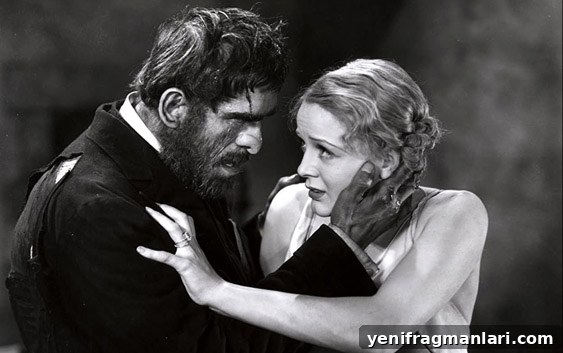
Boris Karloff provides one of the film’s most intriguing transformations: from sympathetic, childlike figure to the hulking, violent butler Morgan. The contrast between pity and menace in his performance adds moral ambiguity and shock value to the house’s revelations. The Femm family’s other secrets—an absent but talked-about brother and the slow, sustained buildup to his revelation—pay off in a theatrical but effective “rug pull” that still surprises.
Whale’s direction is confident and singular. Unlike some studio directors who worked strictly to formula, Whale brings a bold visual sensibility: mobile camera placements, expressive lighting and framing that emphasize psychological disquiet. The film’s atmosphere relies less on overt gore and more on mood, silhouette and implication; these choices make the scares linger. It is this control of tone—equal parts black comedy, camp and genuine menace—that gives the film its lasting power.
There are elements that have aged unevenly. The depiction of mental illness is simplified, following period conventions rather than modern sensibilities, and some plot devices reflect the era’s melodramatic instincts. Yet those choices also sit coherently within the film’s heightened style. The result is a work that blends fright and farce, grotesque and comic, carving out an unusual place in the Universal Horror catalog.
All told, The Old Dark House rewards repeated viewing. Its combination of strong, idiosyncratic performances, inventive camerawork, and an atmosphere of claustrophobic dread mark it as a classic of early 1930s Gothic cinema. For anyone exploring James Whale, Boris Karloff beyond Frankenstein, or the darker side of Universal’s early output, this film is an essential and deeply satisfying discovery.
22/24