
This article was written exclusively for The Film Magazine by Sophia Patfield.
The Invitation (2015)
Director: Karyn Kusama
Screenwriters: Phil Hay and Matt Manfredi
Starring: Logan Marshall-Green, Emayatzy Corinealdi, Michiel Huisman, Tammy Blanchard
“I am different. I’m free. All that useless pain, it’s gone. It’s something anyone can have Will, and I want you to have it too.” On the surface, this sounds like a comforting wish for someone’s happiness. But in Karyn Kusama’s 2015 psychological thriller The Invitation, that line becomes chilling when delivered by an ex-wife who vanished for two years into a cult and whose “freedom” is tied to the death of her child.
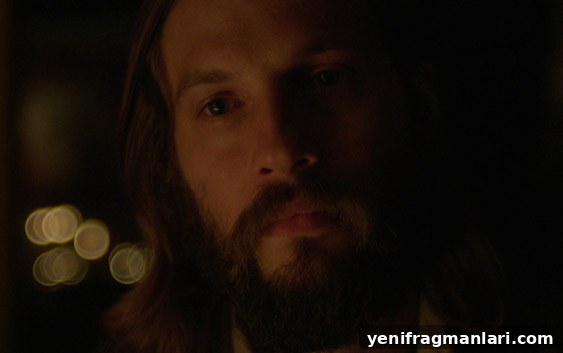
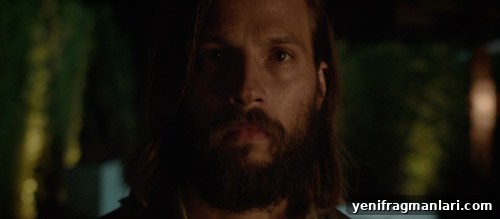
This review examines The Invitation as a standout in modern psychological horror: a slow-burning, claustrophobic film that relies on tone, performance and craft rather than jumpy shocks alone. Will (Logan Marshall-Green) and his girlfriend Kira (Emayatzy Corinealdi) accept an invitation to a dinner hosted by Will’s former wife Eden (Tammy Blanchard) and her new partner David (Michiel Huisman). Will’s fear of returning to the house where his son died two years earlier anchors every moment, and that unease quickly spreads through the group to produce a tense, dread-filled evening marked by secrets, strange behavior and escalating menace.
One of the film’s greatest strengths is its sound design. From the outset, audio acts as a psychological instrument: small, uncomfortable noises—chewing, the scrape of silverware, distant murmurs—are amplified to make ordinary moments feel threatening. White noise and carefully placed silence push the audience into Will’s perspective, where ordinary sounds become triggers for memory and anxiety. Composer Theodore Shapiro’s minimal score supports this approach, adding atmosphere without overwhelming the subtleties of the mix. The title sequence, with disorienting visuals paired to eerie music, sets an unsettling tone that echoes throughout the film.
Cinematography by Bobby Shore contributes equally to the film’s emotional impact. Rather than illuminate everything, the camera lingers in shadow, revealing only fragments of the truth and heightening suspicion. Characters and corners are frequently half-hidden, and lighting choices reflect the narrative’s psychological ambiguity: as more is revealed about the characters’ motives, the house itself grows darker. A recurring motif—figures appearing at the end of hallways, bodies blocking light—visually reinforces the idea that clarity remains out of reach until the final act.
Structurally, the film leans on atmosphere and character to build tension, using well-timed flashbacks and memory triggers to explain the past trauma between Will and Eden. These flashbacks are not presented as exposition-heavy sequences but as organic intrusions tied to physical actions—glances, noises, the simple act of washing one’s hands—that believably mirror how trauma resurfaces in real life. That realism strengthens the emotional core; we care about Will’s grief, and that investment makes the growing sense of threat more affecting.
Performances are crucial here, and the cast delivers. Marshall-Green anchors the film with weary, simmering fear; Tammy Blanchard’s Eden walks a careful line between serenity and something more unsettling; Michiel Huisman and the supporting ensemble maintain an unnerving ambiguity that keeps viewers guessing about who to trust. The dynamics among the guests feel lived-in and familiar, which makes the slow escalation toward violence all the more disturbing.
While The Invitation is modest in scale, it is precise in execution. Its pacing rewards patience: what begins as an awkward reunion becomes a study in how grief, guilt and belief can corrode trust and rationality. For viewers who appreciate psychological horror grounded in character and craft rather than obvious jump scares, the film delivers steady, accumulating terror. Its final revelations broaden the story in a way that lingers after the credits, inviting discussion about belief, manipulation and the social dynamics that enable dangerous ideas to take hold.
In short, The Invitation is an underrated psychological thriller that deserves attention for its sound design, cinematography, performances and emotional honesty. Fans of intelligent, character-driven horror will find much to admire here.
18/24
Written by Sophia Patfield