
This review was originally published at SSP Thinks Film by Sam Sewell-Peterson.
The Shining (1980)
Director: Stanley Kubrick
Screenwriters: Stanley Kubrick, Diane Johnson
Starring: Jack Nicholson, Shelley Duvall, Danny Lloyd
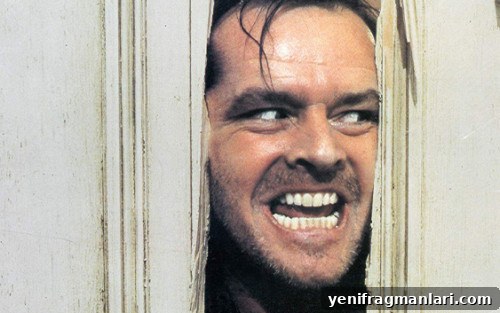
Stanley Kubrick’s The Shining is one of the most instantly recognizable films in modern horror. Images from the movie — the Grady twins in their matching dresses, the terrified woman in the tub, Jack Torrance bursting through a door with an ax — have become embedded in popular culture in a way few other genre moments have achieved. Even so, the film remains a complex, controversial adaptation of Stephen King’s novel, one that divided audiences and critics when it was released and continues to inspire debate today.
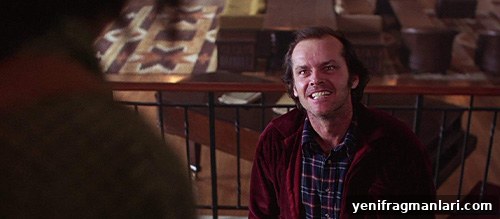
Kubrick’s version departs from King’s novel in important ways. Stephen King famously disliked this interpretation, particularly the shift that makes Jack Torrance feel more like an antagonist from the start. Yet that approach has strong dramatic logic: Jack (Jack Nicholson) arrives already frayed at the edges, an unstable man whose brittle confidence — “nobody’s saner than me,” said with Nicholson’s unsettling grin — masks deeper problems. The supernatural forces of the Overlook Hotel intensify his existing weaknesses rather than creating them out of whole cloth. In this reading, the hotel’s accumulated atrocities function as a catalyst, amplifying what is already present in human nature. That idea — that humans are more dangerous to themselves than external evils — gives the film its long-lasting emotional bite.
The performances are intentionally heightened, almost operatic. Nicholson’s Jack is a simmering psychosis: at once charismatic and terrifying, a proto-Joker figure who oscillates between charm and menace. Shelley Duvall’s Wendy is fragile, tightly wound, and frequently on the verge of collapse; Kubrick pushed her hard in production, and while the methods are now contentious, the result is an unnerving authenticity to her fear. Danny Lloyd’s portrayal of Danny Torrance is quietly remarkable — one of the more layered child performances in the genre, conveying vulnerability, intuition and the uncanny awareness of a child who perceives more than adults do.
Technically, The Shining is a masterclass. Almost every interior of the Overlook was constructed at Elstree Studios, where production design assembled a labyrinthine hotel that feels both lavish and claustrophobic. Because no single real building contained everything Kubrick wanted, sets were combined and tailored into a hybrid hotel that amplifies disorientation; the result is a place that feels plausible yet slightly off-kilter. The corridors, rooms and stairways were built to Kubrick’s meticulous standards, producing a physical environment that becomes another character in the film.
The film’s cinematography and sound design are central to its power. Kubrick made extensive use of the Steadicam — still a relatively new invention at the time — to follow Danny’s small figure as he rides his toy tricycle through long corridors. Garrett Brown, the Steadicam’s inventor, even operated the rig himself on some sequences, creating those fluid, haunting shots that glide down empty hallways and follow the boy’s exploration. The camera’s stillness and precision deny the viewer easy escape; there’s a clinical quality to the way scenes are composed that heightens unease.
Equally effective is the film’s manipulation of ordinary sounds and images. Mundane noises and everyday spaces become sources of dread: the click-clack of Danny’s trike across changing floor surfaces, the eerie silence of a hotel at night, the hum of heating and the distant echoes of unknown activity. Kubrick and his collaborators use music sparingly and often disrupt expectations with silence or jarring soundscapes. That unpredictability — you don’t always know when the cue for terror will arrive — keeps the audience on edge.
Beyond scares and set pieces, The Shining works because it treats horror as psychological and social as much as supernatural. The Overlook exposes and accelerates the Torrance family’s fractures, turning private tensions into public catastrophe. The film suggests that monstrous acts are born from human failures: pride, alcoholism, anger, and neglect. Ghosts and psychic phenomena are part of the atmosphere, but the film’s enduring chill comes from its insight into human weakness; as one character notes in a different cultural text referenced in the film’s commentary, “madness is like gravity: all it takes is a little push.”
There are moments of pure cinematic brilliance — the eerily symmetrical framing, the escalating isolation of the hotel, the sudden eruptions of violence — and moments that frustrate some viewers who prefer a more literal adaptation of King’s novel. Yet Kubrick’s film has stood the test of time because it is both stylistically uncompromising and emotionally resonant. It remains a landmark of horror cinema for its technical innovations, its haunting imagery, and its uncompromising view of human nature.
22/24
Original review source: SSP Thinks Film — Sam Sewell-Peterson