
This article was written exclusively for The Film Magazine by Craig Sheldon.
Few film genres depend on music as completely as horror. A well‑timed score can elevate routine on‑screen violence—say, a woman attacked in the shower—into an iconic, unforgettable cinematic moment. A few dissonant strings, a scraping cello, or a single repeated interval can turn a simple scene into pure dread.
Great horror soundtracks do more than accompany images: they amplify emotion, guide audience expectation, and make jump scares land harder. Many of the genre’s most enduring films owe as much of their power to the music as to the visuals. From the earliest experiments in cinema to contemporary psychological scares, the soundtrack acts like a hidden character, shaping tone, tension, and memory.
Our story begins in late 19th‑century Paris, where one of the first films to flirt with horror—whether intentionally or not—was created. The short silent film Le Manoir du Diable (The Manor of the Devil) presented a hero battling supernatural forces in an eerie mansion. At roughly three minutes, it was lengthy for its era, and, like many early screenings, it was accompanied by live music to give the modest visuals a richer, more atmospheric presence.
Nosferatu (1922)
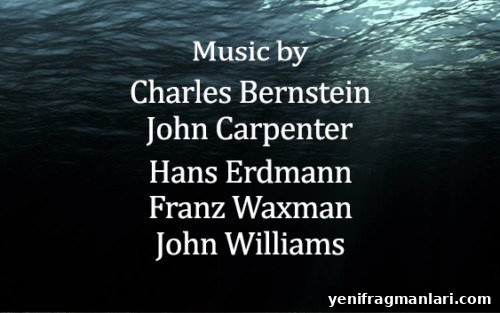
One of the first true milestones in horror cinema is F. W. Murnau’s Nosferatu (1922). This silent German expressionist masterpiece used stark shadows and uncanny imagery to create dread. Although the original score by Hans Erdmann has not survived intact, numerous reconstructions and new orchestral accompaniments over the years have helped deliver the eerie weight the film needs. In the silent era, live music—either improvised by theater musicians or drawn from existing suites—was essential to the audience’s experience.
With the arrival of synchronized sound in the late 1920s, the relationship between music and picture changed forever. The ability to lock a score precisely to film frames opened new possibilities for emotional control and narrative emphasis. The breakthrough fully flowered in the 1930s: films like King Kong (1933) demonstrated how an original, tailored score could intensify character and spectacle and help audiences connect more deeply with what they saw.
Universal’s Bride of Frankenstein (1935) marked a turning point: Franz Waxman’s original score was among the first in mainstream horror crafted specifically for a film, and it helped set a standard. From that moment on, original scoring became increasingly central to filmmaking, and horror benefited perhaps more than any other genre. Music gave filmmakers the means to orchestrate fear with precision—manipulating timing, mood, and audience expectation in ways images alone could not.
Consider the power of a minimal motif. John Williams’ two‑note theme for Jaws (1975) is a textbook example. Whether you classify Spielberg’s film as horror or thriller, those two notes became synonymous with inescapable menace. Spielberg himself credited the score with being responsible for much of the film’s success. The theme acts like a Pavlovian trigger: once you hear it, dread follows, even if nothing is yet onscreen.
Jaws (1975)
John Carpenter’s Halloween (1978) shows how a simple, character‑driven theme can make an antagonist feel omnipresent. Carpenter, who scored his own film, created a relentless, hypnotic motif that mirrors Michael Myers’ emotionless persistence. The music destabilizes the audience from the outset and never lets them fully relax, reinforcing the idea that this killer is unstoppable and always nearby.
The 1980s brought a wave of electronic scoring. Synthesizers provided new, otherworldly textures that composers used to evoke modern anxieties and altered realities. Horror embraced these sounds: in A Nightmare on Elm Street (1984), Charles Bernstein’s score uses eerie, synthetic timbres to blur the line between dream and waking life, amplifying the film’s nightmare logic. Those electronic colors—unnerving, elastic, and unfamiliar—helped define a generation of genre soundtracks.
In the 21st century, horror scoring has diversified further. Some films return to lush orchestral approaches to build haunting atmosphere and urgency—The Ring (2002) is a notable example—while others combine classical elements with contemporary production techniques to reflect changing tastes and darker subject matter, as in Saw (2004), which married orchestral and modern textures to underscore its psychological and physical brutality.
When used thoughtfully, music in horror is more than background: it’s a storytelling device that shapes the viewer’s emotional journey. From the whispered motif of Friday the 13th to the unsettling tubular bells of The Exorcist, memorable themes linger long after the lights come up. Try watching a horror film without its soundtrack and you’ll immediately feel what’s missing: the guiding force that manufactures tension, primes our imagination, and makes fear repeatable and addictive.
Written by Craig Sheldon