
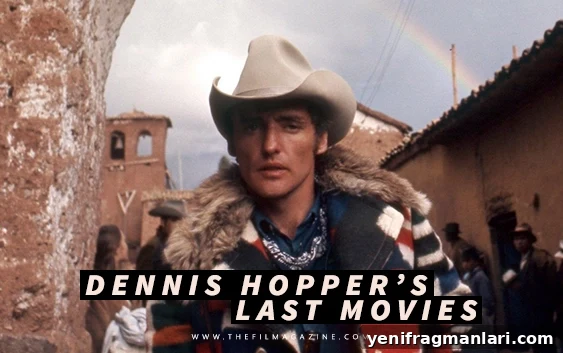
In 1971, American actor and director Dennis Hopper released his second film as director, The Last Movie. After the breakthrough success of Easy Rider (1969), audiences and studio executives alike eagerly awaited Hopper’s follow-up. Easy Rider had become a cultural touchstone for the 1960s counterculture, and Hopper—one of the leading figures of New Hollywood—was granted considerable freedom and a healthy budget to pursue bold, unconventional projects.
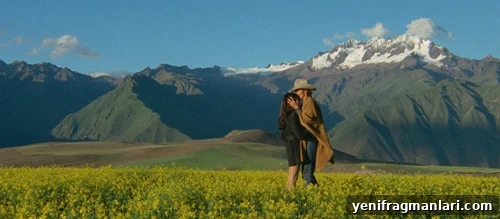
The Last Movie proved divisive. Rather than offering a conventional narrative with a memorable rock soundtrack like Easy Rider, Hopper delivered a fractured, non-linear audio-visual collage. The film serves as a satirical indictment of Hollywood’s exploitative practices and a critique of American imperialism and cultural interference. Universal Studios, which had entrusted Hopper with a million-dollar budget and creative autonomy, reacted poorly. The film received an extremely limited release—just a few weeks in select theaters and drive-ins—effectively burying it despite recognition abroad, including the Critics Prize at the 32nd Venice International Film Festival. The failure of The Last Movie led many to declare Hopper’s directing career finished; he retreated to New Mexico and endured a long period of personal struggle.
During the 1970s, Hopper continued to work primarily as an actor in both American independent films and international productions. Highlights from this period include Mad Dog Morgan (1976), Tracks (1977), and The American Friend (1977). He also appeared in lesser-known European projects that did not enhance his reputation. But Hopper’s directorial voice resurfaced when he took over the Canadian production Out of the Blue (1980). Initially envisioned as a family-friendly TV movie, Hopper retooled the project into a raw, confrontational drama about a suburban family destroyed by drugs, alcohol, and abuse. Like The Last Movie, Out of the Blue was controversial and received only limited distribution, obscured for years despite its intensity and social relevance.
In subsequent decades both The Last Movie and Out of the Blue have undergone reassessment. Restorations, reissues on home video, festival screenings, and scholarly attention have revived interest in Hopper’s more iconoclastic directorial work. Those films are now often discussed alongside his better-known career highlights.
Hopper’s professional revival began in the mid-1980s. Clean, sober, and actively working again, he delivered a trio of striking performances in 1986—Blue Velvet, River’s Edge, and Hoosiers—that reintroduced him to a new generation of moviegoers and reminded earlier fans of his forceful presence. That resurgence led to new directing opportunities. He returned behind the camera with Colors (1988), then Catchfire (1990), The Hot Spot (1990), and finally Chasers (1994). These films show Hopper’s competence as a mainstream filmmaker. While they lack the incendiary cultural critique of his early directorial trio (Easy Rider, The Last Movie, Out of the Blue), they reveal his ability to shape genre films and appeal to contemporary audiences, notably using music—hip-hop in Colors—to signal cultural context.
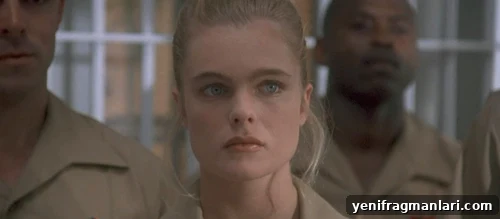
Chasers, a bawdy sex-comedy, marked the end of Hopper’s career as a director of feature films. Yet he returned to the camera twice more in shorter formats: the digitally shot short Homeless (2000) and the high-end advertisement Pashmy Dream (2008), starring Gwyneth Paltrow. Both pieces differ sharply from his earlier work, but they provide valuable insight into Hopper’s late creative priorities.
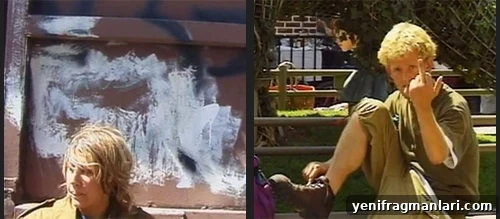
Homeless presents a brief, observational study of a young unhoused woman pushing a shopping cart through a California coastal town. Through stark flashbacks, Hopper contrasts her former life as an exotic dancer—glamorous, noticed—with her present invisibility. Shot in grainy, flat digital imagery, Homeless favors a documentary-like intimacy and resists romanticizing its subject. The film was created for an online film festival that Hopper and Quentin Tarantino had planned to judge; when the festival was cancelled, Homeless found a place within Hopper’s broader artistic practice and was screened as part of his exhibitions alongside paintings and photographs.
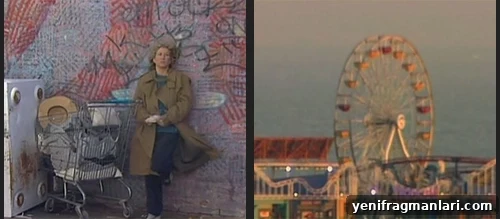
Hopper had long expressed an interest in socially minded stories; as early as 1988 he mentioned wanting to make a “little, De Sica-like film about the homeless in Los Angeles,” referencing Italian neorealist director Vittorio De Sica. Homeless aligns with Hopper’s continued focus on marginalized figures—the counterculture in Easy Rider, indigenous exploitation in The Last Movie, suburban collapse in Out of the Blue, and urban gang dynamics in Colors—even if the short’s limited runtime and budget constrain its ambitions.
Pashmy Dream, by contrast, is a polished short advertisement that reimagines Cinderella as a modern fable: Gwyneth Paltrow plays a version of herself, and the lost glass slipper is replaced by a luxury Tod’s pashmy bag. Set amid an Italian marketplace and an extravagant wrap party, the short follows a journalist who scampers through the city calling, “Gwyneth, your bag!” until he reunites her with the accessory. The film embraces theatrical production values—music, ensembles, elaborate sets—and showcases Hopper’s ability to manage larger-scale shoots, even if the piece ultimately functions as stylish branded content rather than social critique.

A recurring motif across Hopper’s directing career is his penchant for fiery finales. Easy Rider closes on a burning motorcycle; Out of the Blue ends amid a truck cabin ablaze; The Last Movie repeatedly returns to a protagonist going “down in flames.” Even the glossy Pashmy Dream concludes with a fire-breather’s flame crossing the frame—an apt final image for a filmmaker who often declared, “All my films end in fire.”
While Homeless and Pashmy Dream are minor works compared with Hopper’s better-known features, they are essential to understanding the director’s late-career interests. Homeless gestures toward a humane, socially engaged cinema that lacked the runtime or resources to develop fully into a major statement; Pashmy Dream demonstrates Hopper’s capacity to orchestrate high-production visuals and handle commercial demands. Both works complement his larger body of films and underscore his restless creativity.
Dennis Hopper’s output spanned acting, filmmaking, photography, painting, and collecting. He moved effortlessly between high art and popular culture, from independent shockers to studio films, and from intimate gallery exhibitions to tabloid exploits. Although he directed only seven films over four decades, those projects—especially Easy Rider, The Last Movie, Out of the Blue, and Colors—left a lasting impression. Hopper himself regretted missed opportunities to direct more, but his varied career confirms his role as a singular and influential voice in American culture. Even his smallest cinematic efforts reward close study for what they reveal about his interests in marginality, spectacle, and the relationship between art and commerce.
Written by Stephen Lee Naish
Stephen Lee Naish (he/him) is a writer and visual artist. His work explores film, politics, and popular culture, often examining the political undercurrents in cinema and their potential for social commentary. He has written essays for a range of journals and periodicals and is the author of books including Create or Die: Essays on the Artistry of Dennis Hopper, Deconstructing Dirty Dancing, and Riffs and Meaning. His latest book is Screen Captures: Film in the Age of Emergency. He lives in Kingston, Ontario, Canada.
Linktree: Ste L Naish
Twitter: @RiffsandMeaning