
This article was written exclusively for The Film Magazine by Paul A J Lewis of paul-a-j-lewis.com.
‘The filmmaker must […] attack on all fronts!’ – José Mojica Marins (1936-2020)
“Making a film in Brazil is like building a spaceship and sending it to the moon. We have no resources. The filmmaker must invent a persona. He must attack on all fronts!” This proclamation, spoken by José Mojica Marins in his film O Ritual dos Sádicos (Awakening of the Beast, 1970), encapsulates much of his approach to cinema.
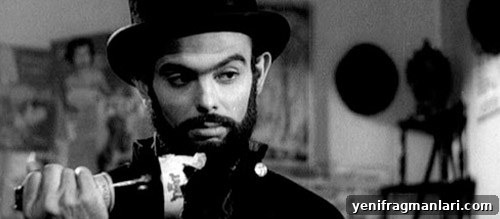
Marins—commonly known simply as Mojica—created one of Brazilian cinema’s most enduring and controversial figures: Zé do Caixão (Coffin Joe). Wearing a black suit, cape and top hat, this nihilistic undertaker became Mojica’s cinematic alter ego and appeared across film, television and print. Coffin Joe emerged from Mojica’s fevered imagination and developed into a uniquely Brazilian monster, akin in cultural impact to Freddy Krueger or Michael Myers for other audiences.
Mojica’s films combine populist appeal with esoteric, deeply personal visions. He often put himself on-screen, engaging directly with Coffin Joe and probing the boundary between artist and creation. His work is stylistically diverse and formally experimental, shaped by extreme resourcefulness: Mojica made strange, otherworldly atmospheres from limited budgets and non-professional actors. The films range from camp and exploitative to philosophical and surreal, with intentional and sometimes accidental moments of absurdity—inviting comparisons with figures such as Jess Franco, John Waters or Roberta Findlay.
Mojica literally grew up in cinema: his father ran a local picture house in Vila Anastácio, São Paulo, and Mojica began shooting silent 16mm shorts as a child. Though the Coffin Joe films gained a cult international audience only decades later, within Brazil they provoked controversy, censorship and legal trouble. Bans on films such as Awakening of the Beast damaged his finances and ability to make new work; there are accounts that his studio was shut down and that he was questioned by Brazil’s military authorities during the dictatorship era (1964–1985).
José Mojica Marins in At Midnight I’ll Take Your Soul (1964)
Mojica was affiliated with São Paulo’s Cinema da Boca do Lixo (often translated as ‘trash cinema’), a loose grouping of filmmakers who reacted against the intellectualized Cinema Novo movement. While Cinema Novo, influenced by Italian neorealism and the French New Wave, promoted a politically charged, aestheticized realism, Boca do Lixo directors focused on working-class milieus and exploitation genres—often producing hybrids of sexploitation, noir and street-level crime films. That movement’s aesthetics, economies and confrontational spirit shape Mojica’s output.
Some of the Boca do Lixo productions courted censorship and moral panic, especially under the military regime. When censorship eased in the 1980s, several directors—including Mojica—made explicit films to survive financially. Mojica’s late-1980s titles, such as A 5ª Dimensão do Sexo (Fifth Dimension of Sex, 1984), 24 Horas de Sexo Explícito (1985) and 48 Horas de Sexo Alucinante (1987), are provocative and often extreme, blending eroticism with Mojica’s characteristic metafictional provocations.
Awakening of the Beast (1970)
Awakening of the Beast remains one of Mojica’s most significant films. It frames lurid vignettes—about drugs, prostitution, criminality and social decay—within a fictional television discussion where Mojica appears as a guest. The film intercuts stark interview footage with sensational dramatizations, and only in its final act does Coffin Joe appear to link the threads. Brazilian authorities banned the film, reportedly alarmed that it exposed social problems the regime preferred to ignore.
Asked on-screen how his films contribute to Brazilian cinema, Mojica replies bluntly: “By creating jobs and giving audiences what they want.” Despite their populist aims, many sequences in Mojica’s films—built from low budgets and non-professional actors—bear visual affinities with European art cinema. Close-ups of ordinary faces and raw, street-level detail sometimes recall Pasolini’s early work, and both filmmakers explored faith, morality and the social power of Catholicism from an atheist perspective.
Coffin Joe first appeared in a photo-comic, “O Estranho Mundo de Zé do Caixão,” co-created with Rubens Francisco Lucchetti. The films established a consistent mythos: Joe preaches the “immortality of blood,” rejecting Christian doctrine in favor of a brutal, Nietzschean belief in lineage and strength. In At Midnight I’ll Take Your Soul (1964) he murders lovers and mockingly attacks faith; in This Night I’ll Possess Your Corpse (1967) he becomes a mad scientist figure who tortures and tests women to find a “superior” mother for his child. Across the series Coffin Joe’s misogyny and brutality are explicit, and by later films he evolves into a demonic figure presiding over Hellish spectacles.
At Midnight I’ll Take Your Soul (1964)
The boundary between Mojica and Coffin Joe often blurs. From Awakening of the Beast onward, Mojica inserts himself into narratives to insist he is not his creation, even as society—and the censors—treat Coffin Joe as a cultural scapegoat. Films like Delírios de um Anormal (Hallucinations of a Deranged Mind, 1978) and Exorcismo Negro (Bloody Exorcism, 1974) explore this meta-layer in different ways. Hallucinations recycles earlier footage to investigate obsession and identity, while Bloody Exorcism—perhaps Mojica’s most formally accomplished horror—has the director confronting his creation directly in a narrative that mixes supernatural terror with self-reflexive commentary.
Hallucinations of a Deranged Mind (1978)
In Bloody Exorcism Mojica stages a film-within-the-film that shifts from urban seediness to a remote country house, where supernatural disturbances escalate into a ritualistic finale. The movie interrogates belief, the creative act and responsibility: Mojica the director insists Coffin Joe was only a vehicle for ideas, yet must face the monstrous consequences of that invention. The film mixes Gothically charged imagery with unsettling practical effects and a strong sense of mise-en-scène.
Bloody Exorcism (1974)
Mojica’s filmmaking is often freeform and experimental—shaped less by formal training than by instinct and a do-it-yourself ethic. Visually, his early monochrome films use sudden eruptions of lurid color to represent Hell or supernatural visions, a technique that creates deliberate dissonance and a Brechtian distance. The recurring arc in the Coffin Joe cycle is instructive: Joe’s materialist nihilism is spectacularly punished, often culminating in Hellish imagery that reinscribes moral boundaries even as the films challenge taboos.
There is audacity—and sometimes recklessness—in Mojica’s choices. He famously filmed his own eye surgery in the 1977 feature Inferno Carnal (Hellish Flesh), integrating real surgical footage into a lurid revenge melodrama. Financially, Mojica admitted he often worked to survive rather than to profit, a factor that explains his later pivot into explicit material during the 1980s.
Critically, Mojica’s body of work is uneven, with some titles more successful than others. Yet when viewed as a whole, his films form a distinct creative project: a persistent interrogation of faith, violence, identity and spectacle made under constraint. Like other transgressive filmmakers who worked under repressive regimes, Mojica used shock, exploitation and myth to resist and to provoke. He may be hard to fit into neat categories, but his influence on cult horror, Brazilian popular culture and the global landscape of transgressive cinema is undeniable.
Written by Paul A J Lewis
You can support Paul A J Lewis in the following places:
Website – paul-a-j-lewis.com
Twitter – @Krycek_Facility