

*Spoilers Ahead
Over the past months, the simple pleasure of settling into a dark auditorium with a tub of popcorn to experience a new blockbuster has felt distant. With cinemas in the UK reopening, audiences have been eager to return to the big screen. Yet, Christopher Nolan’s latest, Tenet, asks moviegoers to do more than sit back and be entertained. It demands attention, patience and a willingness to actively engage with its dense mechanics.
From the start, Tenet was presented as a mystery: trailers teased time reversal, covert organizations and the threat of global catastrophe, while cast interviews admitted confusion about Nolan’s intricate plot. That sense of enigma primed audiences to expect a puzzle, and reactions have been sharply divided. Some hail the film as a bold cinematic achievement; others find it needlessly convoluted. The core question is whether Nolan asks too much of his viewers this time.
Recommended for you: Tenet (2020) Review
Nolan has long required active participation from his audience. Instead of treating films like a passive rollercoaster ride, he often asks viewers to help build the narrative. Memento inverted the storytelling process and forced audiences to reconstruct events in reverse. Interstellar introduced complex scientific concepts that challenged comprehension and emotion. Inception left its finale open to interpretation, making the viewer choose what to believe. Even Dunkirk played with non-linear timelines. Compared with those works, Tenet is the most hands-on and demanding exercise yet.
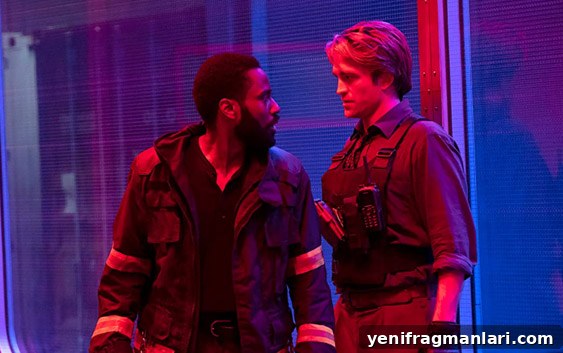
From the opening sequence Nolan throws us in at the deep end and offers a piece of advice through the film itself: “Don’t try to understand it, feel it.” That directive comes during the film’s most expository scene, where John David Washington’s character—known simply as the Protagonist—receives the basics of time inversion. Nolan suggests that trying to control or fully decode every element will be futile and that emotional and sensory experience should guide us instead. Many viewers resist that approach, preferring to catch every detail and solve the puzzle outright.
For those willing to commit to repeat viewings or to study its structure closely, Tenet rewards patience: individual pieces begin to fit into a coherent whole. But the film’s complexity makes it easy to miss small but crucial cues—an overlooked red tag, a brief gesture—so deciding when to pay close attention is part of the challenge. Far from a straightforward code-cracking exercise, Tenet can be read as a trust experiment between filmmaker and audience. Nolan provides enough to suggest meaning, while asking viewers to supply motivation and context.
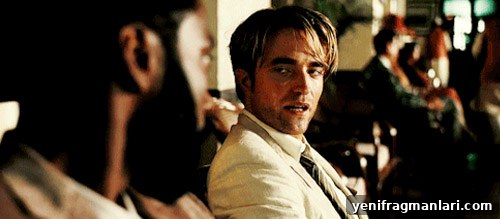
That approach has a downside: emotional connection. The film lacks a clear emotional core beyond a few standout moments—Elizabeth Debicki’s Kat, for example, conveys a convincing human vulnerability. The Protagonist, however, often feels aloof, driven more by duty than by personal stakes. Robert Pattinson’s Neil brings warmth and mystery, hinting at a deeper bond with the Protagonist, but Nolan deliberately leaves much unsaid. This restraint can feel like underwritten character work, or it can be seen as an invitation to imagine the backstory yourself.
Arguably, Nolan intentionally withholds exposition so audiences must fill in the gaps. He goes beyond “show, don’t tell”; sometimes he neither shows nor tells, offering only hints and expecting viewers to assemble the rest. This makes Tenet part blueprint, part sketch: it supplies striking outlines and striking moments, trusting the audience to color them in. Whether that choice succeeds depends on each viewer’s appetite for interpretive effort.
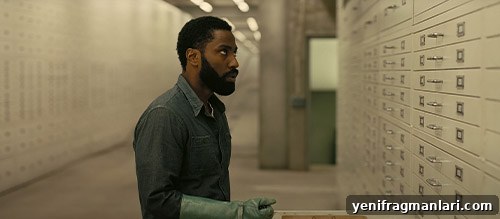
Technically, Tenet is impressive. Cinematography, set pieces and action design showcase Nolan’s command of scale. Palindromic motifs recur throughout: sequences that play forwards and backwards, references to the Sator Square, push-ups that look identical in either direction, and the striking image of an inverted 747. These devices function as satisfying Easter eggs for attentive viewers and emphasize the film’s thematic focus on time and causality.
But Nolan complicates comprehension on purpose. Ludwig Göransson’s thunderous score often overwhelms dialogue, making it harder to catch spoken exposition. At times this feels like an intentional red herring: dialogue becomes difficult to parse just when we most want clarity, pushing us to search for answers elsewhere. The scientific framework for time inversion is fictional and technical; viewers instinctively attempt to decode it, though complete mastery is neither necessary nor always possible in a single viewing.
Ultimately, Tenet asks us to accept a looped causality: events must happen because they always have. In a key exchange, Neil explains the Grandfather Paradox to the Protagonist, underlining that they operate within a closed causal loop. Actions taken in the present and the future inform one another, and the characters often act based on knowledge drawn from both directions of time. That conceptual knot is part of the film’s fascination—and its frustration.
Where you land with Tenet will hinge on your willingness to engage with its demands. If you relish puzzles and enjoy filling in narrative blanks, the film offers rich material. If you prefer an emotionally driven, clearly signposted story, it may feel cold and needlessly opaque. The film’s flaws and strengths are intertwined: its refusal to be fully explainable is both its most daring quality and the source of many viewers’ dissatisfaction.
In the end, Nolan hands you a complex, beautifully crafted mechanism and asks you to operate it. He gives you a conclusion and challenges you to work backwards to create the beginning and middle. You can accept that challenge, revisit the film, imagine the untold histories and relationships, and find reward in the process. Or you can walk away frustrated. Either way, Tenet won’t let you be a passive spectator.
Recommended for you: Christopher Nolan Films Ranked