

Never Gonna Snow Again (2020)
Directors: Malgorzata Szumowska, Michal Englert
Screenwriters: Malgorzata Szumowska, Michal Englert
Starring: Alec Utgoff, Maja Ostaszewska, Agata Kulesza, Weronika Rosati, Katarzyna Figura, Lukasz Simlat, Andrzej Chyra
Polish film Never Gonna Snow Again, co-written and co-directed by Malgorzata Szumowska and Michal Englert, blends a quiet, measured surrealism with a pointed social critique. It borrows stylistic echoes from the work of Andrei Tarkovsky—particularly in its contemplative pacing and occasional metaphysical imagery—while simultaneously reframing the superhero figure within a narrowly insulated, upper-middle-class suburb. The result is a film that feels both familiar and strange: at once an homage and a reinvention, alternately soothing and unsettling.
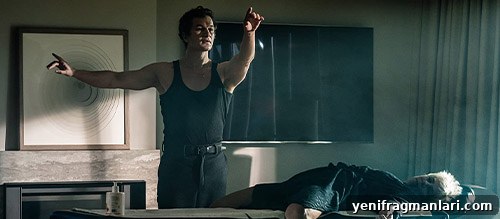
The film’s setting resembles an artificially immaculate, newly developed residential enclave on the outskirts of a Polish city. These homogenous streets and uniform houses evoke American-style suburban fantasies, yet the community here lives detached from ordinary worries about money or time. Into this insulated world arrives Zenia (Alec Utgoff), an immigrant from the Chernobyl-affected region of Ukraine. Zenia quickly becomes indispensable to the residents, offering services that both mend bodies and, more subtly, reorder the social atmosphere. His presence shifts the neighborhood dynamic in ways that are at once practical and mysterious.
There are clear tonal nods to Lars von Trier’s Dogville in the film’s pared-back conception of place and community. Like von Trier’s allegorical town, the suburb in Never Gonna Snow Again functions as a microcosm, defined by its social codes and the peculiar moral economy of its inhabitants. Yet the comparison only goes so far: Zenia is not a passive outsider. He exerts control, sometimes gently, sometimes more insistently—giving massages that seem to heal and, on occasion, manipulating the environment itself, dimming streetlights or guiding people into a trance-like stillness. These actions paint him as a quiet, enigmatic orchestrator rather than a simple beneficiary of the locals’ goodwill.
At times the film leans into the Western mythos: Zenia resembles a lone cowboy who rides into town and alters its course. His weapon is not a gun but his hands and an uncanny ability to influence others. This recasting of the hero archetype is clever and deliberate. By placing a supernatural figure in service of trivial, bourgeois needs, the film satirizes contemporary superhero cinema—films that often replicate Western genre templates while centering grandiose, world-saving narratives. Here, the powers are used for massages and small domestic comforts, exposing how private desire and class privilege shape the demand for miraculous intervention.
The movie’s most striking device is the way it depicts Zenia’s abilities. He manipulates electricity, moves objects without touching them, and induces a trance-like state that transports residents to a snowy forest—an otherworldly refuge the film returns to repeatedly. These forest sequences act as the film’s emotional and spiritual center: quiet, liminal spaces where characters are released from their anxieties. Rather than presenting spectacle, the film treats supernatural talent as a form of care, a tool that restructures the interior lives of people who have grown complacent in their insulated comfort. The humor that emerges from these interactions is often dry and absurd, underscoring the mismatch between the fantastical and the mundanely human.
Stylistically, Never Gonna Snow Again favors slow, deliberate camerawork and rhythmic editing that invite viewers to settle into its mood. Much of the film’s power comes from its restraint: small gestures, long takes, and a soundtrack that lingers after the credits. The use of Dmitri Shostakovich’s “The Second Waltz” as a recurring motif contributes to the film’s hypnotic quality, amplifying its melancholic charm and the strange comfort Zenia brings to the community.
As a piece of cinema, the film reads as both commentary and craft. It rewards viewers who recognize its cinematic references, but it also stands on its own as an exploration of class, longing, and the peculiar ways privilege seeks solutions. The film is less interested in blockbuster thrills or conventional emotional payoff than in provoking reflection about contemporary culture: who we turn to for healing, what we expect from those we elevate, and how power can be domesticated by the small comforts of daily life.
For some viewers this approach will feel challenging; for others it will prove quietly illuminating. Neither a broad commercial crowd-pleaser nor an opaque art-house puzzle, Never Gonna Snow Again occupies a thoughtful middle ground—a film that seeps into the mind and lingers because of its tone, its restrained humor, and its uneasy blend of the supernatural with the everyday.
16/24