
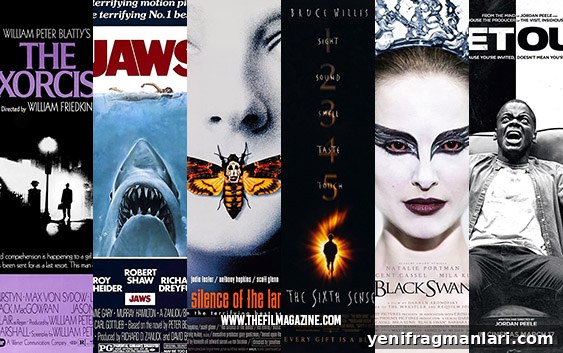
Horror remains one of cinema’s most influential genres. From German Expressionism in the 1920s through to the provocative work of modern A24 and Blumhouse productions, horror has repeatedly reshaped film language—introducing camera techniques, set design standards, makeup and visual effects innovations, and timeless monster archetypes. Despite over a century of boundary-pushing filmmaking, the Academy Awards have historically overlooked the genre: only six horror films have ever been nominated for Best Picture at the Oscars. Iconic titles such as Psycho, The Omen, Halloween, Alien and The Shining were passed over, while six others—two from the 1970s, two from the 1990s and two from the 2010s—managed nominations. Those six represent important moments in American horror, reflecting industry trends as much as individual artistic achievement.
In this edition of Ranked, we examine each Best Picture–nominated horror film, evaluating them for artistic quality, historical importance and audience longevity. The goal: rank the six and determine which is the best horror film ever nominated for Best Picture, and which ranks lowest among them.
Share your ranking in the comments and follow us on social media for more film discussion.
6. Black Swan (2010)
Darren Aronofsky’s psychological thriller blends body horror with an intense character study of ambition, obsession and identity. Natalie Portman’s Academy Award–winning performance drives the film, supported by striking cinematography and a pulsing score that heighten the sense of anxiety and fragmentation. As a horror-infused drama, Black Swan is a standout of the 2010s and its Best Picture nomination was well deserved.
However, when measured against the broader history of horror—its cultural reach and influence—there are numerous memorable horror films that did not receive Oscar Best Picture nominations, and several among these six that have had a larger long-term impact. Black Swan is an essential, elegant film, but comparatively it sits at the lower end of this particular list.
Recommended: Every Darren Aronofsky film ranked
5. Get Out (2017)
Jordan Peele’s feature debut burst onto the scene with sharp social commentary wrapped in inventive horror. Timely and allegorical, Get Out used genre conventions to address race, power and cultural appropriation in ways that connected with both mainstream audiences and critics. Its Best Picture nomination signaled a shift in how horror could be perceived by awards bodies.
Because it is relatively recent, assessing its long-term legacy is still an open question. Nevertheless, Get Out already ranks as a modern classic—an influential, conversation-starting film that helped re-define contemporary horror and broaden the genre’s cultural reach.
Recommended: 10 best horror movies of the 2010s
4. The Sixth Sense (1999)
M. Night Shyamalan’s breakout film became a cultural phenomenon with its atmosphere of creeping dread and a twist that entered the popular lexicon. Lines like “I see dead people” are recognized by even casual film viewers, and the film’s structure and emotional core helped launch Shyamalan’s career. Though later parodied and often referenced in pop culture—sometimes diminishing the original surprise—its craftsmanship in tension, mood and storytelling remains impressive.
As a piece of mainstream supernatural horror that crossed over to a general audience, The Sixth Sense holds an important place in genre history and earned its Best Picture nod through wide popularity and critical acclaim.
Recommended: M. Night Shyamalan films ranked
3. Jaws (1975)
Steven Spielberg’s Jaws reshaped the movie industry as the prototype of the modern summer blockbuster while delivering some of the most effective suspense and creature-based horror ever filmed. The film’s cultural impact was enormous: it sparked widespread fear of sharks, changed distribution and marketing strategies, and cemented Spielberg’s place as a major director.
Although Jaws is often regarded as a blockbuster first and a horror film second, it is undeniably a masterful piece of tension and pulp terror. Its Best Picture nomination reflected both popular and critical enthusiasm, and its influence on filmmaking and audience expectations remains profound.
Recommended: Why a good shark film is so hard to make
2. The Silence of the Lambs (1991)
Jonathan Demme’s film stands as one of the great examples of “real-life” horror, exploring the chilling psychology of human monsters. Anthony Hopkins’ chilling, controlled performance as Dr. Hannibal Lecter became an instantly iconic character introduction, while Jodie Foster’s portrayal anchors the story’s intelligence and moral complexity. The film balances character-driven drama with procedural tension and remains highly influential in how the industry depicts serial killers and forensic investigation.
The Silence of the Lambs combined artistry and mainstream appeal to become both a cultural touchstone and an award-winning film, earning its place near the top of this list.
Recommended: 10 best horror movies of the 90s
1. The Exorcist (1973)
The Exorcist review
William Friedkin’s The Exorcist remains the definitive example of horror as high art: a film that shocked and provoked intense public reaction while earning critical respect. Released at a time of cultural anxiety, the film’s depiction of demonic possession, loss of innocence and visceral imagery challenged audiences like few films before or since. Even if modern aggregations rate it lower than some peers, its historical impact and the depth of its craftsmanship are undeniable.
The Exorcist influenced generations of filmmakers and established new standards for intensity, special effects, sound design and the emotional weight a horror film can carry. It meets every criteria for this ranking: writing, performance, direction, cinematography, distribution and long-term influence. For those reasons, it stands as the greatest horror film ever nominated for Best Picture in Academy history.
Recommended: Highest-grossing horror films ranked
That completes our ranking: from Black Swan at six through to The Exorcist at number one. Each of these films earned a Best Picture nomination by expanding what horror can be on screen—whether through social commentary, psychological depth, blockbuster spectacle or cultural provocation. How would you order these six? Share your list in the comments and follow us on social media for more film rankings and reviews.