
The American President (1995)
Director: Rob Reiner
Screenwriter: Aaron Sorkin
Starring: Michael Douglas, Annette Bening, Martin Sheen, Michael J. Fox, Richard Dreyfuss
Aaron Sorkin has been a central figure in film and television for decades. He first gained recognition as a screenwriter working with directors such as David Fincher, Rob Reiner and Danny Boyle, then later moved into directing with films like Molly’s Game and The Trial of the Chicago 7. Before many of those later credits and before his long-running series work, Sorkin wrote The American President, a 1995 romantic-political drama that remains an engaging, if sometimes underrated, entry in his early career.
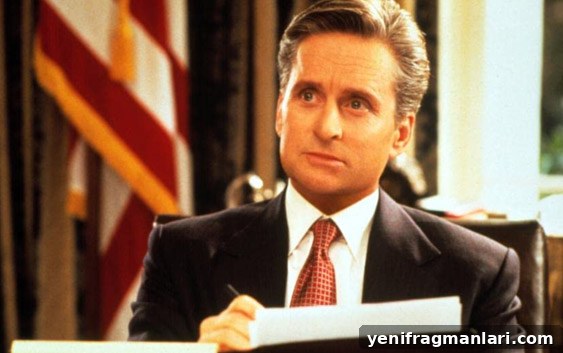
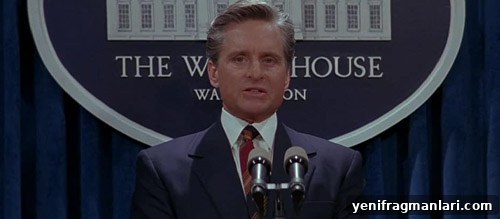
The American President blends romantic comedy with political drama around the figure of widowed President Andrew Shepherd (Michael Douglas), who is juggling the passage of an ambitious crime bill while managing intrusive media attention surrounding his blossoming relationship with environmental lobbyist Sydney Ellen Wade (Annette Bening). The film foregrounds themes—crime policy, environmental advocacy, political maneuvering and personal integrity—that continue to resonate in public discourse decades after the movie’s release.
The film’s cast is an obvious strength. Michael Douglas and Annette Bening provide warm, believable chemistry that anchors the story and gives the film its emotional core. Both actors strike a careful balance between the lightness of rom-com moments and the seriousness of political confrontation, allowing the relationship at the center of the movie to feel authentic rather than merely plot-driven. Martin Sheen offers steady support as A.J. MacInerney, the President’s longtime chief of staff and confidant, a role in which he brings gravitas and a lived-in warmth. Michael J. Fox appears as Lewis Rothschild, the President’s assistant on domestic policy, delivering one of his later prominent performances with an easy, witty presence.
By contrast, Richard Dreyfuss’s portrayal of Senator Bob Rumson—the film’s chief political antagonist—sometimes feels underdeveloped and edged toward caricature. While Dreyfuss is an accomplished performer whose name carries cinematic weight, the screenplay gives him limited room to evolve beyond a foil for Shepherd’s ideals. The result is a dynamic that occasionally flattens the political conflict into a more conventional good-versus-bad match-up instead of a textured policy debate.
Director Rob Reiner brings his experience in comedy and character-driven stories to the project, and his touch is evident in the film’s lighter beats and pacing. Reiner’s background with comedies that emphasize dialogue and relationships helps the movie avoid being weighed down by exposition, keeping scenes brisk and often witty. Yet that same lightness can sometimes work against the film: the tonal mix of romantic comedy and serious political drama never fully commits to one register, which leaves certain dramatic moments feeling less potent than they might have been under a more singular vision.
Compared with Sorkin’s later, more overtly political work, The American President is comparatively gentle in its approach. The script contains Sorkin’s signature verbal energy and points of political insight, but it also allows room for levity and human vulnerability. For viewers accustomed to Sorkin’s dense courtroom or legislative set pieces in projects that followed, this film offers a more accessible, lighter introduction to his voice—a melding of sharp dialogue and romantic sensibility rather than a narrow focus on institutional conflict.
The movie’s strengths lie in character-driven storytelling and performance. When the film leans into conversations—boardroom exchanges, press interactions and intimate, private moments between Shepherd and Wade—it shows an ability to merge personal stakes with political consequences. These scenes reveal why the film still holds appeal: it treats politics as both policy and human story, suggesting that leadership is shaped as much by relationships and principles as by soundbites and strategy.
On the other hand, the unevenness in tone and the occasional reliance on familiar genre beats prevent the film from reaching the same heights as some of Reiner’s top comedies or Sorkin’s later, more focused dramas. Still, it remains a well-acted ensemble piece that showcases early elements of Sorkin’s style and Reiner’s steady direction. For viewers interested in character-centered political films, or fans of the principal cast, The American President is a rewarding and watchable film that continues to feel relevant in its themes and appealing in its performances.
17/24