
Fugitive Dreams (2020)
Director: Jason Neulander
Screenwriter: Jason Neulander
Starring: April Matthis, Robbie Tann, Scott Shepherd, O-Lan Jones, David Patrick Kelly, Joey Hood, Soleil Patterson, Sean Avery Huber
The road movie has long been one of American cinema’s defining forms, a genre built around movement, hope, dislocation and the pursuit of something just out of reach. Fugitive Dreams belongs to that tradition but shifts it into a feverish, sometimes disorienting register. Jason Neulander’s film compresses a wandering narrative into a series of intense, often intimate set pieces, relying on strong performances and evocative imagery more than plot mechanics.
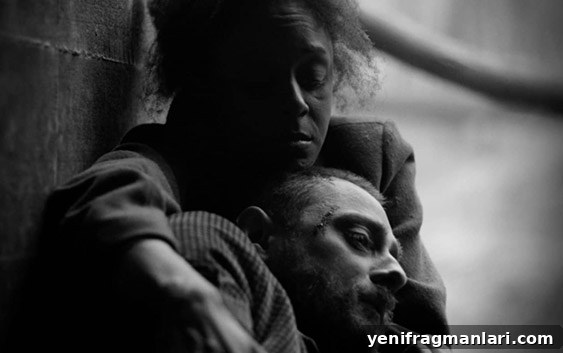
The film opens in stark black and white with a quietly disturbing tableau: a woman finds a shard of glass in the road, goes into a gas station restroom, sings to herself in the mirror and begins to cut her wrists, until she is interrupted by a visibly intoxicated man who stumbles in. From that moment Mary (April Matthis) and John (Robbie Tann) embark on an improbable partnership, one that quickly develops the mismatched chemistry central to many great road films. Mary is terse, guarded and haunted; John is reserved and occasionally childlike, a man more comfortable in reverie than in confrontation.
Their early exchanges establish the dynamic—a motormouth paired with a stoic companion—before the narrative introduces destabilizing forces. Scott Shepherd’s Israfel joins them as an intrusive third party, and O-Lan Jones plays a baffling, animalistic woman who communicates in baby-animal sounds and may be connected to Israfel. These newcomers alter the group’s balance, and the journey grows steadily more dangerous and strange.
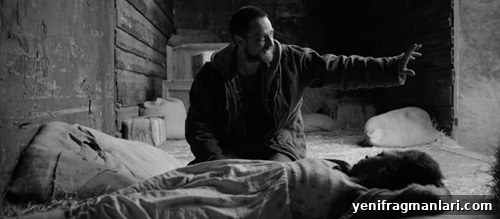
Much of the film unfolds almost like an unadorned stage play, particularly inside a rattling railway carriage where the actors are given room to inhabit their roles. In that confined space Neulander’s cast, led by Matthis and Tann, registers with naturalistic, often improvised-feeling performances. Moments of poetic dialogue punctuate the realism—lines such as “Some things aren’t right. You spend your whole life thinking they are, but they’re not”—and give the film an elegiac tone.
Fugitive Dreams intercuts the present with fragments of the characters’ pasts. These flashbacks reveal formative events that shaped Mary and John: John’s happiest memories are tinted with childhood movies at a drive-in, shown in Super-8 and color, while Mary’s history remains in bleak black and white, devoid of cinematic refuge. The film uses color strategically—John’s recollections and certain surreal present-day sequences appear in color, creating a visual contrast that hints at perception, memory and emotional truth.
Tonally the film shifts in the second half from contemplative and dreamlike to more unsettling and nightmarish. Surreal episodes—strange figures in the woods, baffling demands and ritualistic behavior—push the story toward allegory. Religious imagery, symbolic names and recurring motifs suggest a fable or parable, but the film resists tidy interpretation. Rather than offering clear-cut morals, it presents images and encounters that invite multiple readings.
There are powerful symbolic moments that linger: Mary wading into a moonlit pond as if seeking cleansing or rebirth; a young John watching a solar eclipse through a viewfinder beneath a tiny drive-in screen; color bleeding into monochrome until the film world seems to tilt into another realm. These sequences reward close attention and convey emotional truths about identity, trauma and longing without spelling everything out.
Physical and emotional scars recur throughout the story. A quiet, intimate scene where John asks to touch the scar tissue on Mary’s back becomes one of the film’s most sincere expressions of care. Both characters bear marks left by past abuse and neglect, and their fragile bond evolves into mutual dependence: she confides, he comforts; she protects, he witnesses. The film sensitively explores how trauma can be transferred or repeated, and how survivors sometimes seek refuge in one another.
Nathan Hamilton’s soundtrack complements the shifting tone, with gentle folk guitar at its core before diverging into carnival-like organ textures and eerie, theremin-tinged sounds. The music mirrors the film’s tonal lurches, becoming stranger as the characters’ perceptions fray.
Fugitive Dreams is deliberately challenging: it asks viewers to accept ambiguity and to sit with unresolved symbols. For those open to that experience, it is a richly layered work—a road movie that feels like a waking dream and a fable about damaged people trying to keep moving. The film’s strengths lie in its committed performances, the striking use of black-and-white and color, and images that stick in the mind long after the credits roll.
20/24