

Isle of Dogs (2018)
Director: Wes Anderson
Screenwriters: Wes Anderson, Roman Coppola
Starring: Bryan Cranston, Jeff Goldblum, Bill Murray, Tilda Swinton, Harvey Keitel, Greta Gerwig, Yoko Ono
After the critical and commercial success of The Grand Budapest Hotel, Wes Anderson returned in 2018 with the stop-motion animated feature Isle of Dogs. Building on his earlier animation work in 2009’s Fantastic Mr. Fox, Anderson crafted a visually distinctive, emotionally resonant film that blends his signature quirky style with a heartfelt story about loyalty, exile and friendship.
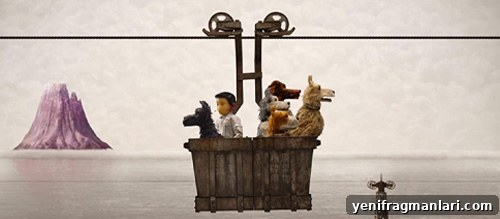
The film is set in the fictional Japanese city of Megasaki, where an outbreak of a canine-borne disease prompts Mayor Kenji Kobayashi to exile all dogs to a distant Trash Island. The story follows Atari Kobayashi, the mayor’s young nephew, who secretly travels to the island to find his guard dog, Spots. There he encounters a band of banished dogs — Chief, Duke, Rex, Boss and King — who survive by relying on one another. Their ragtag group, voiced by a standout ensemble cast led by Bryan Cranston, anchors the film’s emotional core.
Isle of Dogs was widely praised by critics and earned multiple awards nominations, including recognition in the Best Animated Feature category. Reviewers highlighted Anderson’s ability to adapt his meticulous visual and narrative style to stop-motion animation, noting the film’s balance of humor, warmth and melancholy. Some criticism arose around the film’s depiction of Japanese culture and questions of cultural representation, but the prevailing view among many critics and audiences was that Isle of Dogs is one of Anderson’s most accomplished projects.
The narrative structure alternates between the isolated lives of the dogs on Trash Island and the political machinations on the mainland. While Atari and Chief develop a tender bond during their search for Spots, the mainland plot reveals a government-coverup: the disease used to justify exiling dogs is fraudulent. Greta Gerwig’s character, Tracy Walker, an American exchange student, becomes a key figure in exposing the mayor’s lies and pushing the story toward a larger confrontation between truth and political manipulation.
Voice performances are a major strength. Bryan Cranston brings gravelly vulnerability to Chief, the once-wild dog who slowly learns trust and loyalty again. Jeff Goldblum’s Duke provides eccentric comic relief, while Bill Murray, Edward Norton and other veterans deliver textured supporting performances. Tilda Swinton gives a memorable turn as Oracle, a wise but unpredictable canine seer whose presence adds depth to the film’s tone.
Visually, the film emphasizes handcrafted detail: meticulously arranged sets, textured puppetry and careful cinematography that gives every frame an artisanal quality. Anderson’s production design creates a vivid, lived-in world on Trash Island, where debris and discarded objects become props in the dogs’ survival narrative. The stop-motion medium allows for intimate gestures and physical humor that complement Anderson’s precise staging and composition.
Alexandre Desplat’s score enhances the film’s emotional and cultural atmosphere. Drawing on traditional Japanese percussion and woodwind textures—highlighted by taiko-like rhythms—the soundtrack interweaves original motifs with occasional references that evoke classic cinema and orchestral works. Desplat’s music provides both momentum for action sequences and tenderness for quieter character moments, reinforcing the film’s balance of whimsy and sorrow.
Isle of Dogs is ultimately a story about community and redemption. Through its depiction of outcast animals forging bonds and a young boy’s determination to reclaim what was taken from him, the film explores themes of compassion, responsibility and the consequences of fear-driven politics. Anderson’s offbeat sensibility may not suit every viewer, but fans of his work will find familiar pleasures: deadpan humor, meticulous design, ensemble performances and an underlying emotional sincerity.
The film also represents a continued evolution in Anderson’s career, showing his willingness to experiment with form while preserving the personal hallmarks of his filmmaking. Isle of Dogs stands as a distinctive animated feature that combines craftsmanship, strong voice acting and a thoughtful story, leaving the door open for future animated projects from the director.
20/24