Licorice Pizza (2021)
Director: Paul Thomas Anderson
Screenwriter: Paul Thomas Anderson
Starring: Alana Haim, Cooper Hoffman, Bradley Cooper, Sean Penn, Tom Waits, Benny Safdie, Skyler Gisondo, Mary Elizabeth Ellis, John Michael Higgins, Christine Ebersole, Harriet Sansom Harris, Danielle Haim, Este Haim
Paul Thomas Anderson’s ninth feature, Licorice Pizza, is a warm, sunlit coming-of-age film set on the outskirts of Hollywood in 1973. The title—taken from a record store—may be unfamiliar to some viewers, but it immediately evokes a sense of youthful nostalgia and places this movie among Anderson’s most personal works. Rather than leaning into sentimentality, the film balances charm, humor, and bittersweet realism.
At the center of the story is fifteen-year-old Gary Valentine (Cooper Hoffman), an enterprising youngster who believes he has what it takes to be a businessman. He becomes infatuated with Alana Kane (Alana Haim), a high-school photographer and aspiring actor who makes it clear she only wants friendship. The pair nonetheless form a close partnership and launch a string of small ventures—most memorably selling waterbeds and pinball machines—while the San Fernando Valley around them grapples with an energy crisis and a spirited local election season.
Gary’s schemes are ambitious for a teenager. Rather than peddling candy or contraband, he attempts genuinely oddball enterprises from a corner of his mother’s office, often stretching the truth to stretch his profit margins. The waterbed craze, a peculiarly seventies phenomenon, becomes a focal point: Gary and Alana try marketing them with a bikini-clad model and Alana’s persuasive phone manner, only to see their supply chain disrupted by fuel shortages. This collision of adolescence, commerce, and the period’s practical realities grounds the film in a distinct time and place.
The age difference between Gary and many of the adults he encounters introduces a delicate tonal challenge. Anderson handles it with a light touch, reminiscent of other films that blend awkwardness and sweetness without becoming exploitative. Both Alana Haim and Cooper Hoffman make striking feature debuts, bringing spontaneous chemistry and believable comedic timing. Their rapport carries the movie through quieter stretches and keeps the emotional core resonant, even across a runtime that could feel indulgent at 133 minutes.
Tonally, the film shares affinities with warm-spirited period pieces such as American Graffiti while also echoing Anderson’s own earlier work, particularly in its portrait of the entertainment world. However, Licorice Pizza opts for gentler characters and smaller, more intimate stakes. Anderson populates his Los Angeles with recognizable figures and lightly fictionalized celebrity encounters, while also involving the Haim family—real-life collaborators with the director—who appear as themselves, adding a layer of affectionate authenticity to family scenes.
Comedy is a strong suit here. Several of the film’s best moments arise from the natural timing of Haim and Hoffman. A standout sequence has Gary coaching Alana to say “yes” to every question posed by a formidable talent agent—an approach that leads Alana to claim improbable skills like horseback riding, archery, and speaking Portuguese in the same breath, all to hilarious effect. These moments reveal both characters’ eagerness and naïveté in equal measure.
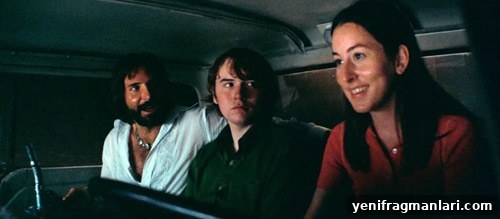
Beyond their entrepreneurial misadventures and Alana’s quest for identity, the screenplay unfolds as a series of loosely connected vignettes. Gary and Alana bump into a parade of eccentric, sometimes troubled Valley residents—each encounter adding texture to the period and deepening the protagonists’ understanding of the adult world. One of the film’s more memorable set pieces involves a fraught waterbed delivery to an emotionally unstable producer (Bradley Cooper). After damaging his house, the pair makes a precarious escape in a delivery truck with no fuel, relying on downhill momentum and Alana’s skillful maneuvering—a tense, funny sequence that showcases their resourcefulness.
Visually, Anderson and cinematographer Michael Bauman embrace 35mm to recreate the look of the era. The film often uses static, carefully composed shots to convey emotional states—moments of isolation, uncertainty, or quiet connection. Notable images include Alana silhouetted against a vivid yellow corridor and a suspended waterbed shot from above, where the two leads lie side by side: intimate, yet clearly platonic. These compositions intensify the film’s meditative quality and underscore its themes of growth and identity.
The film is not without flaws. A recurring joke that trades on a racist stereotype feels unnecessary and leaves an uncomfortable aftertaste; its repetition later in the movie undermines otherwise charming storytelling. Additionally, a subplot involving Sean Penn’s character—an older actor inspired by William Holden—feels less essential to the core narrative, despite strong performances by Penn and Tom Waits.
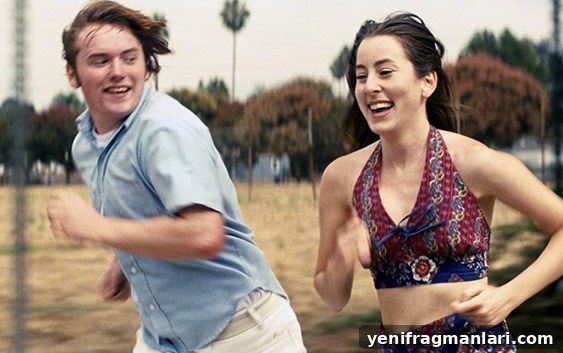
Despite these missteps, Licorice Pizza is an expansive, big-hearted portrait of coming of age and of finding one’s place amid the chaotic promise of youth. Its mix of humor, tenderness, and visual lyricism makes it an uplifting, reflective experience. Settle into the film’s leisurely rhythm and you may find yourself swept along by its hopeful momentum—running, in one extended tracking shot, toward an uncertain but brighter future.
21/24