

Cabaret (1972)
Director: Bob Fosse
Screenwriter: Jay Allen
Starring: Liza Minnelli, Michael York, Joel Grey, Helmut Griem, Fritz Wepper, Marisa Berenson, Elisabeth Neumann-Viertel, Helen Vita
When the musical Cabaret first appeared on stage in the late 1960s it shared the conventions of its genre, but Bob Fosse’s 1972 film adaptation transformed its cinematic approach. Fosse, an acclaimed choreographer and filmmaker, made the deliberate choice to confine nearly all musical numbers to the Kit Kat Klub’s stage, creating a striking separation between performance and reality that lends the film an unsettling authenticity. Fifty years on, Cabaret remains influential—both as a musical and as a historical drama—inviting viewers to “leave their troubles outside” as it unpacks a society on the brink of catastrophic change.
Set in 1931 Berlin, the film centers on Sally Bowles (Liza Minnelli), a brash and vulnerable American singer eking out a living at the seedy Kit Kat Klub. She meets Brian Roberts (Michael York), an English writer who moves into the cheap boarding house where Sally lives and begins teaching English. As their relationship develops, their lives intersect with an array of characters: the decadent aristocrat Maximilian (Helmut Griem), and two of Brian’s students, Fritz (Fritz Wepper) and Natalia (Marisa Berenson). Against the backdrop of rising political tension, the film traces how ordinary people are gradually drawn into the growing menace of National Socialism.
Fosse shifts the narrative emphasis toward Sally’s emotional journey, streamlining or altering some supporting roles from the stage musical to focus the story. The character of Cliff Bradshaw from the original stage version becomes Brian Roberts in the film, and certain subplots are reworked: the stage musical’s tragedy involving a Jewish fruit seller and a German landlady is replaced in the film by a tragic storyline involving a younger Jewish couple, one of whom passes as Protestant. These adjustments sharpen the film’s dramatic stakes and reinforce the historical urgency of its themes.
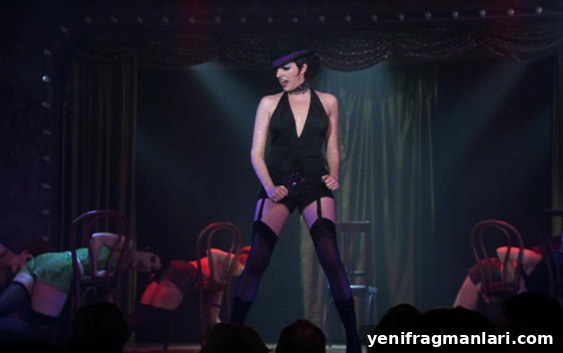
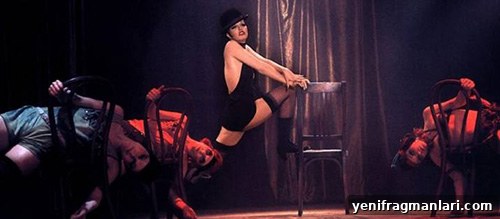
Musically, Cabaret is driven by memorable numbers that remain iconic: the commanding “Willkommen,” the brash “Money,” and the introspective “Maybe This Time,” Liza Minnelli’s signature moment in the film. Fosse keeps most performances inside the Kit Kat Klub, using them as performative commentaries that contrast with the film’s more realistic, narrative scenes. This choice deepens the film’s unsettling atmosphere, as the glamour and spectacle of the stage continually puncture the grim reality unfolding outside.
One of the film’s most chilling moments arrives roughly two-thirds in, during a seemingly bucolic scene at a country inn. A golden-haired teenage boy begins to sing, and the pastoral melody swells into “Tomorrow Belongs to Me.” As more bystanders join in—some with fervor that borders on fanaticism—the camera reveals the boy is in Hitler Youth uniform. The song’s rustic charm becomes an insidious rallying cry, a demonstration of how ordinary nationalistic sentiment can mutate into organized terror. This scene serves as a sharp tonal pivot: what previously felt like romantic or bohemian freedom becomes a prelude to violent oppression.
Fosse’s direction deliberately lets the iconography and behavior associated with the Nazis seep into the film incrementally—first in small background details, then in overt acts of street violence, and finally in how vulnerable characters must alter their lives to survive. Even the Kit Kat Klub, initially a refuge of decadence and escape, is not immune; by the film’s end the club’s safety has been eroded by the same forces encroaching on every other corner of society.
The Kit Kat Klub itself is rendered as a cramped, tawdry den of indulgence rather than a glamorous fantasy. The Emcee—Joel Grey’s unnerving, magnetic master of ceremonies—introduces performers with disquieting lines like “every one a virgin,” reducing people to commodities for the audience’s amusement. Instead of sanitizing the past for cinematic gloss, Cabaret embraces a gritty, lived-in aesthetic that amplifies the film’s emotional stakes.
The Emcee’s role has been interpreted in many ways across stage and screen: host, commentator, and a quasi-omniscient presence who watches history unfold. Joel Grey’s portrayal is simultaneously creepy and sympathetic, his face often like a ventriloquist’s puppet—funny, grotesque, and observant. Other performers in stage revivals have taken different approaches, revealing the character’s flexibility and symbolic weight.
While Michael York and the supporting cast provide solid grounding, the film belongs to Liza Minnelli. Her performance as Sally Bowles is electric—equal parts flamboyant performer and fragile human—and remains one of the most deserved Best Actress Oscar wins. Minnelli brings a rawness and emotional complexity to Sally that anchors the film’s blend of spectacle and drama.
Cabaret endures as a benchmark for diegetic, grounded musical filmmaking. By situating musical performances within the world of the story rather than as escapist interludes, Bob Fosse’s film captures a historical moment with striking immediacy. Its combination of unforgettable songs, stark visuals, and moral urgency continues to resonate: a reminder that entertainment can both distract from and illuminate the dangers unfolding around us. Auf Wiedersehen.
24/24