
Belfast (2022)
Director: Kenneth Branagh
Screenwriter: Kenneth Branagh
Starring: Jude Hill, Lewis McAskie, Caitriona Balfe, Jamie Dornan, Judi Dench, Ciarán Hinds
Kenneth Branagh’s Belfast is a personal, memory-tinged portrait of a Northern Irish childhood during The Troubles. The film frames the conflict through the eyes of a young boy, offering a family-focused account that emphasizes love, loss and resilience over politics and polemic. Shot in stark black and white, the picture often foregrounds small, intimate moments and the emotional toll of living amid unrest. While the performances are frequently excellent, and the film is visually striking, Branagh’s directorial choices sometimes pull the story toward sentimentality and mainstream spectacle, weakening its potential emotional impact.
One of the film’s most arresting sequences shows a child stranded in the middle of a street while a violent clash unfolds around him. The imagery—flames and explosions rendered in black and white—evokes archived footage of past conflicts, and yet the scene never quite acquires the raw immediacy it seeks. That tension—between authentic feeling and a more composed, cinematic presentation—runs through much of the film. Branagh presents scenes of terror and disruption but frequently frames them with the kind of visual polish and theatrical flourish that can feel removed from the grim reality it depicts.
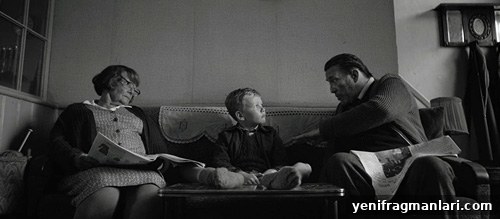
Branagh draws on his own memories to shape a narrative centered on a working-class family facing mounting uncertainty. The film values domestic detail: arguments over rent, the quiet endurance of a mother, and the protective instincts of grandparents. These elements give the story a human core and allow the audience to connect to the family’s struggles in an affecting way. Yet Branagh avoids taking a strong public stance on the wider political conflict. The result is a film that observes and mourns without interrogating the deeper causes or consequences of the violence surrounding the characters.
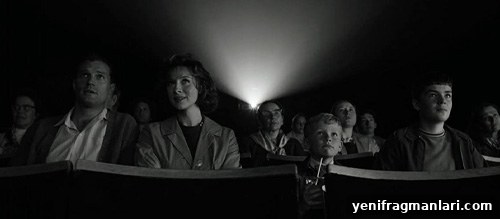
Stylistically, Branagh makes choices that will divide viewers. Occasional bursts of slow-motion and handheld camerawork aim to heighten tension but sometimes read as cinematic affectation rather than organic storytelling. Musical interludes scattered throughout the film attempt to lift the mood and show how people found joy amid fear, but they occasionally feel better suited to a stage production than to a grounded period drama. These tonal shifts—between domestic warmth, theatrical levity, and sudden violence—can be jarring. Some audiences will appreciate the emotional variety; others will find the transitions dissonant.
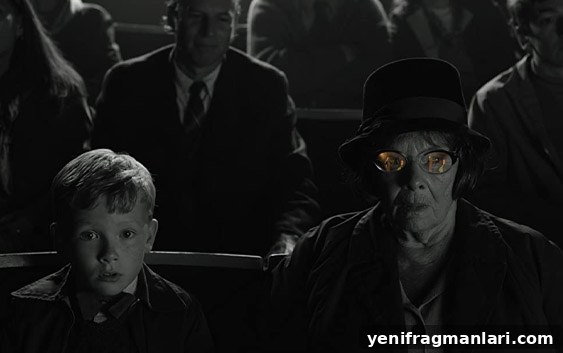
Where Belfast succeeds most confidently is in its performances. Young actor Jude Hill carries much of the film’s weight with a quietly compelling turn; his measured, observant presence anchors the story and communicates the bewilderment of a child caught between love and chaos. Judi Dench is a standout as the family matriarch, every line and expression amplified by the monochrome palette, delivering one of her most tender recent performances. Caitriona Balfe brings a lived-in anxiety and weary strength to the role of the mother, portraying the emotional labor of keeping a family together amid mounting danger. Ciarán Hinds adds depth as the grandfather, charting a believable arc from affectionate caretaker to a man visibly affected by trauma.
Despite these strong elements, the film’s reluctance to grapple with the politics of The Troubles leaves unanswered questions. Branagh’s focus on the household and the child’s perspective is heartfelt, but the narrative rarely ventures beyond anecdote into analysis. That restraint can be seen as a deliberate choice to keep the film intimate, yet it also limits the movie’s urgency. Violent episodes are staged with cinematic flourish rather than investigative attention, and the film ultimately feels more like a personal memoir than a commentary on the era.
Part of the film’s charm is its commitment to small human truths: gestures, domestic routines, sibling rivalries and the courage found in ordinary people. Those moments are often the film’s most affecting, precisely because they are specific and quietly observed. However, the production occasionally undercuts its sincerity with scenes that aim for crowd-pleasing emotion or cinematic spectacle, reminding viewers that they are watching a crafted product rather than living memory.
While Belfast garnered major award nominations and performed well at the box office, its legacy may hinge on how viewers value personal storytelling against more probing historical examinations. The movie offers a moving, performance-driven portrait that captures the tenderness and fear of upbringing under duress, but it rarely pushes beyond memoir into a broader conversation about the conflict itself. In short, Belfast is touching and well acted, visually elegant and sometimes moving, yet its measured approach and occasional theatrical touches prevent it from becoming the definitive cinematic reckoning with that tumultuous period.
10/24