
Turning Red (2022)
Director: Domee Shi
Screenwriters: Domee Shi, Julia Cho, Sarah Streicher
Starring: Rosalie Chiang, Sandra Oh, Ava Morse, Hyein Park, Maitreyi Ramakrishnan, Orion Lee, Wai Ching Ho, Tristan Allerick Chen, Lori Tan Chinn, James Hong
Turning Red, Domee Shi’s feature directorial debut following her Academy Award-winning short, is one of Pixar’s boldest and most visually distinctive films. Although it was released directly on a streaming platform rather than widely in cinemas, the film remains a warm, energetic experience that rewards attentive viewing on any screen. It’s a heartfelt story about family, friendship and the messy, surprising business of growing up.
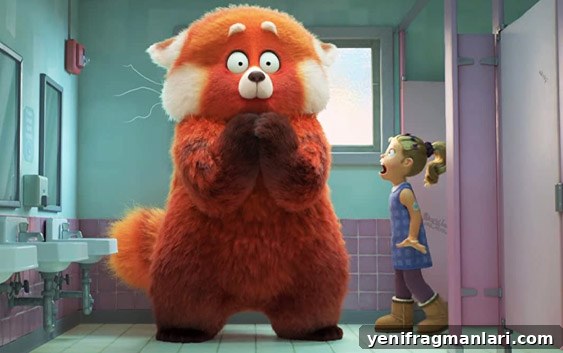
Set in early-2000s Toronto, the film introduces 13-year-old Meilin “Mei” Lee, voiced by Rosalie Chiang. Mei is a confident, high-achieving student who genuinely believes she has life under control: she excels at school, she is devoted to her family, and she shares an unshakable bond with her close circle of friends. But Mei’s life becomes complicated when she begins to transform into a giant red panda whenever her emotions run high. This fantastical change is treated with humor and empathy, and it becomes a vivid metaphor for puberty and the dramatic emotional shifts that accompany adolescence.
The film opens with a lively sequence in which Mei strides through her neighborhood, addressing the audience with the overenthusiastic energy of a kid who’s sure she’s winning at life. That confidence is both charming and telling: Mei’s self-assurance is genuine, but it also sets the stage for the upheaval that follows. The script balances comedy and sincerity, allowing Mei’s bright personality to shine even as she faces confusion and fear.
One notable strength of Turning Red is the creative team behind it. Many of the key roles on the production were filled by women, and their personal experiences helped shape Mei into a believable, layered protagonist. The film embraces imperfection and vulnerability, drawing on real emotions to build scenes that feel lived-in and honest.
Director Domee Shi has said the intent was to break conventions and make audiences laugh while telling a meaningful story. The film succeeds at both. It addresses puberty directly—using playful metaphors and plainspoken moments to depict the bewilderment of a girl experiencing sudden bodily and emotional change. That frankness is rare in family animation and feels refreshingly authentic.
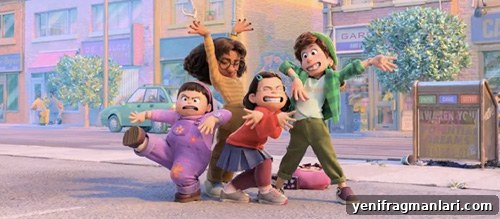
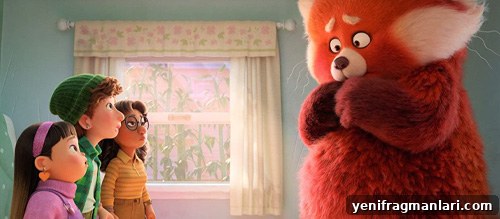
Mei’s friendships are another highlight. Her schoolmates Miriam (Ava Morse), Abby (Hyein Park) and Priya (Maitreyi Ramakrishnan) are distinct, funny and fiercely loyal. Their chemistry is convincing—partly because the young voice cast brings naturalistic, age-appropriate performances that feel spontaneous. The girls share an obsession with a pop boy band called 4*Town, and their camaraderie anchors many of the film’s best scenes. When Mei’s secret becomes public, her friends rally to support her, turning chaos into solidarity and even a clever school-savvy plan that mixes entrepreneurship with teenage ingenuity.
At the heart of the film is the mother-daughter relationship between Mei and Ming, played by Sandra Oh. Their dynamic is layered and emotionally rich: Ming’s love for her daughter is sincere but sometimes overbearing, and Mei’s struggle for independence is tenderly portrayed. These performances ground the film’s fantastical elements, ensuring that the story never loses its emotional center.
Domee Shi chose red pandas in part because of their expressive, sometimes solitary behavior, which she felt resonated with teenage awkwardness. Visually, the film leans heavily on anime-inspired techniques—exaggerated expressions, dynamic action sequences and stylized reactions. Rather than aiming for hyper-realism, the animation embraces expressiveness, allowing characters to convey large emotions through bold visual choices.
The soundtrack and score add another layer to the film’s identity. Composer Ludwig Göransson blends traditional East Asian instruments with contemporary beats to create music that feels both culturally specific and modern. The result is a lively sonic backdrop that complements Mei’s personality and the film’s emotional arcs.
The movie’s final act intensifies the stakes and delivers several powerful emotional moments. While a few story elements could feel more tightly organized, the conclusion still provides satisfying catharsis and memorable visuals. Like other Pixar films that explore inner life and identity, Turning Red resonates strongly with viewers who remember adolescence vividly, but its themes—friendship, family tensions and the search for self—are broadly relatable.
In short, Turning Red is a spirited, personal film that blends humor, culture and heartfelt storytelling. It celebrates the messy, joyful and sometimes painful transition to adulthood, reminding us that friendships and family—even when complicated—can help us navigate the most bewildering changes. For its originality, emotional honesty and warm portrayal of teenage life, the film stands out as a notable entry in Pixar’s catalog.
21/24