
Turning Red (2022)
Director: Domee Shi
Screenwriters: Domee Shi, Julia Cho, Sarah Streicher
Starring: Rosalie Chiang, Sandra Oh, Ava Morse, Hyein Park, Maitreyi Ramakrishnan, Orion Lee, Wai Ching Ho, Tristan Allerick Chen, Lori Tan Chinn, James Hong
Turning Red marks Domee Shi’s feature directorial debut following her acclaimed short work. It stands out as one of Pixar’s boldest and most visually distinctive films, blending heartfelt storytelling with playful, expressive animation. Although the movie was released directly to a streaming platform rather than enjoying a wide theatrical run, it retains a cinematic warmth and emotional intelligence that rewards viewers who discover it at home.
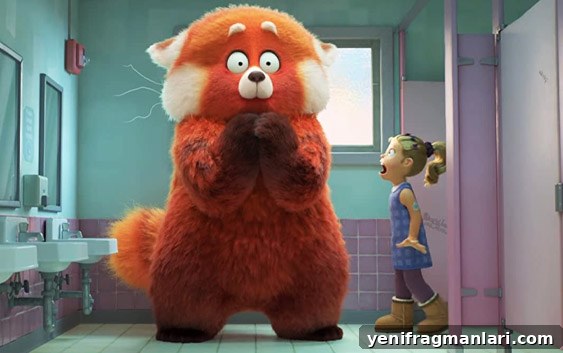
Set in early 2000s Toronto, the story follows 13-year-old Meilin “Mei” Lee (voiced by Rosalie Chiang), a bright, self-assured student who excels at school and enjoys a close bond with her parents and friends. Mei’s life begins to shift dramatically when she discovers that intense emotions trigger a startling transformation: she turns into an enormous red panda. The film uses this fantastic premise to explore the upheavals of adolescence—identity, family expectations, and the messy, exhilarating onset of puberty.
The film opens with an exuberant sequence in which Mei performs directly to camera, cheerfully announcing how in control she is of her life. That confidence reads as both funny and touching because it contrasts with the changes she soon faces. Mei’s role helping at her family’s shrine and her pride in her cultural heritage ground the character in a specific, lived experience that the filmmakers treat with affection and nuance.
A notable feature of Turning Red is the strong female creative presence behind it. Shi assembled a talented team, including artists and technicians whose personal experiences helped shape Mei into a believable, empathetic protagonist. Those lived experiences inform the film’s authenticity—its awkward moments, small humiliations, and the thrill of firsts are portrayed with honesty rather than sentimentality.
The movie breaks ground in its frank treatment of puberty within a family-oriented animated feature. It addresses physical and emotional changes with candor while balancing humor and sensitivity. Scenes that present adolescent concerns—body changes, mood swings, and shifting loyalties—are handled in a way that feels both natural and refreshing for mainstream animation.
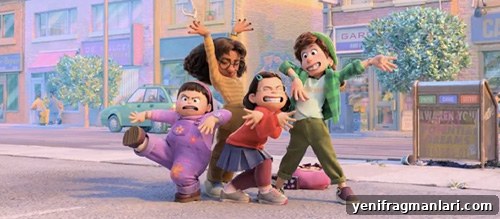
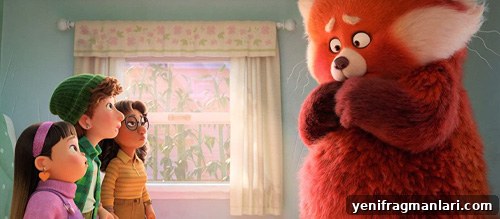
One of the film’s most joyful elements is its portrayal of friendship. Mei’s group—Miriam (Ava Morse), Abby (Hyein Park) and Priya (Maitreyi Ramakrishnan)—are written and voiced with naturalistic chemistry. Their shared passions, private jokes, and loyalty form the emotional core of the movie. The friendship feels authentic: the girls are allowed to be silly, vulnerable and wildly enthusiastic together, and they rally around Mei when she needs them most, even turning crises into creative solutions.
The mother-daughter relationship between Mei and her mother Ming (voiced by Sandra Oh) is at the heart of the film. Their bond, full of love, tension and misunderstanding, carries much of the story’s emotional weight. The performances beneath the animation bring nuance and depth to their dynamic, making the eventual reconciliation feel earned rather than tidy.
Why a red panda? The choice is charming and playful. Red pandas combine an appealing, expressive design with behaviors that can feel solitary and independent—traits the filmmakers noted as resonant with teenage moods. The animal form becomes a visual metaphor for Mei’s inner turmoil and burgeoning independence.
Visually, the film draws clear inspiration from anime. Exaggerated expressions, kinetic action beats, and sparkling musical sequences give it a fresh, energetic look distinct from more photorealistic animation. Rather than aiming for strict realism, the film embraces heightened expressiveness—faces, movement and timing are tuned to convey big emotions.
Composer Ludwig Göransson’s score further elevates the film, blending East Asian instruments with contemporary rhythms to create themes that reflect Mei’s cultural background and youthful spirit. The music supports both intimate moments and high-energy sequences, adding texture and emotional resonance throughout the runtime.
The third act leans into spectacle and emotional climax; while some viewers might find parts of it less tightly constructed than the film’s earlier character work, it still delivers memorable visuals and meaningful payoffs. Like several other recent animated features that resonate strongly with older viewers, Turning Red has a particular immediacy for adolescents and those who remember their own teenage years. At the same time, its themes of friendship, self-acceptance and family are universal.
Ultimately, Turning Red is a passionate, personal film from Domee Shi and her team. It celebrates the messy, exhilarating process of growing up and the lifesaving power of loyal friends and family. Panda or no panda, the movie is a warm, funny and emotionally honest portrait of adolescence that stands out in Pixar’s contemporary catalog.
21/24