
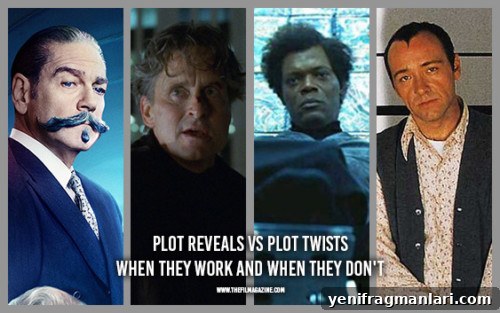
I recently rewatched David Fincher’s The Game (1997). The plot follows Michael Douglas’s character as he’s stalked through an elaborate “game” staged by an organisation with vast resources and an unnerving ability to anticipate his every move. The film’s ending prompted me to think about one of the most debated elements in storytelling: the plot twist. I don’t claim to be the supreme authority on narrative technique, but I’ll outline what, in my view, makes a twist work or fail.
Warning: because of the nature of the discussion below, there are spoilers.
First, a working distinction between two commonly confused devices: the reveal and the twist.
A reveal supplies new information that redirects the characters’ choices from that moment forward. A twist, however, forces us to reinterpret what has already happened; it changes our understanding of the past events in the story.
To illustrate, consider two well‑known films: Seven (1995) and The Usual Suspects (1996).
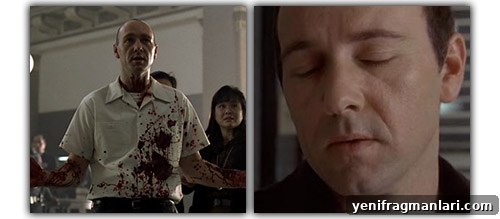
In Seven, the discovery that a particular character is the killer is a reveal: it dramatically alters the protagonists’ immediate course, but it doesn’t force us to reinterpret every prior scene. By contrast, The Usual Suspects includes a revelation that retroactively reshapes our understanding of the entire narrative; the story we’d been following turns out to be a fabrication, and the past must be reconstructed in light of that new reality.
These distinctions matter because people often call both devices “plot twists,” and that conflation hides important differences. One device changes expectations going forward; the other changes our entire comprehension of what has already occurred.
Primal Fear (1998) provides an instructive example that contains both devices.

Midway through Primal Fear, Edward Norton’s character exhibits a sudden behavioural shift that is revealed as an alternate personality. That element functions as a reveal. Later, however, the film concludes by overturning our assumptions: the supposed “original” personality was a performance, and the alternate persona was the true self the whole time. This ending forces the audience to reassess every prior scene, exposing deliberate manipulation and new motive—a genuine twist.
A strong twist should feel both surprising and, in retrospect, plausible. Ideally, the audience could have detected it from clues scattered earlier in the story; the information is present, even if subtly hidden. When a twist retroactively makes sense, viewers enjoy the process of mentally reassembling the narrative and discovering the lines they missed.
These two requirements—changing our understanding of the past, and providing enough earlier evidence that the audience could, conceivably, have anticipated the turn—need careful craftsmanship to avoid disappointment.
This explains why classic whodunits don’t always qualify as “twists” in the stricter sense. Sherlock‑Poirot‑style reveals point to a culprit using accumulated clues; we’ve always assumed there was a killer, and the reveal simply identifies that person. Some works combine both reveal and twist—for example, a mystery that leads you to assume there is only one perpetrator, and then flips that assumption on its head (as in Murder on the Orient Express, where the revelation that many characters share culpability reshapes your understanding of events).
When a reveal is marketed as a twist but lacks supporting evidence or retroactive coherence, audiences feel cheated. Forced twists—those that introduce an unforeseeable mastermind or a last‑minute explanation with no breadcrumbs—tend to provoke anger. Viewers want to feel included in the puzzle, not manipulated by a deus ex machina designed to shock rather than enlighten.
Imagine a franchise where a villain killed in the first film reappears in the third. There are three basic approaches:
1) Simply reveal they’re alive again, with no deeper implication. This is a straightforward reveal and can register as a surprise but not a satisfying twist.
2) Have them suddenly reappear and claim they were secretly orchestrating events all along, with no prior clues. This is the least satisfying approach: it feels contrived and robs the audience of meaningful engagement.
3) Show how clues across the earlier films point to their continued influence, and then reveal the full picture so the audience can see how they were misled. This is the most satisfying option—a true twist that rewards careful viewing.
Category 2 is what fuels the most frustration online: writers inserting “clever” surprises that, in truth, lack structural support. These moments aim to elicit a cheap “gotcha,” but they don’t invite the audience to reconstruct the plot or appreciate the craft behind the deception.
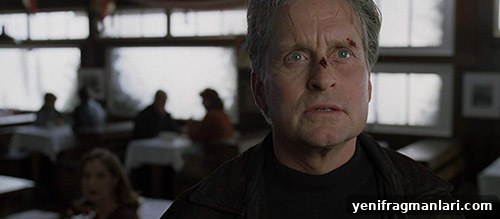
Returning to The Game: the final beat—revealing the entire ordeal as an elaborate birthday present—feels hollow because, in any realistic sense, the audience had no way to anticipate it. Throughout the film, viewers endure a string of false endings and escalating threats; by the time the explanation arrives, any resolution would have seemed plausible. In that context, the tidy “birthday party” explanation undercuts the emotional payoff rather than enhancing it.
Similarly, watching Unbreakable (2000) for the first time, I found the final revelation that Elijah orchestrated the accidents to be underwhelming as a twist. It changes our perception of Elijah’s character, but it doesn’t fundamentally alter the protagonist’s arc—the emotional and narrative heart of the film—so it reads more as character exposition than a twist that reshapes the entire story. Because the film introduces new footage to support the revelation, it suggests the audience wasn’t meant to anticipate the turn, which weakens the feeling of narrative satisfaction.
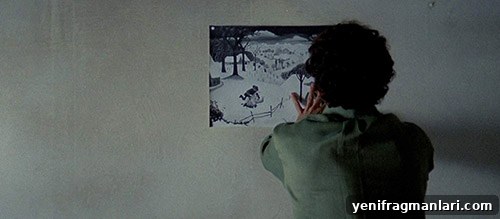
My favourite example of a perfectly executed twist comes from giallo director Dario Argento’s debut, The Bird with the Crystal Plumage (1971). The protagonist repeatedly recalls seeing a man in a black coat trying to stab a woman in a closed shop. The twist reveals the entire scene has been misunderstood: during the knife struggle, the woman was the assailant and the man was fighting to save himself. Flashbacks shown earlier provide all the material we need, and the protagonist’s admission that he “missed something” primes the audience to suspect there’s more. When the truth emerges, it flips the investigation and forces us to reassess every prior encounter with the suspected figures. It’s a simple, well‑crafted reversal that rewards close attention and plays brilliantly on our assumptions.
That kind of twist—a moment that makes you stop, reimagine the story from a new angle, and appreciate the craftsmanship behind the misdirection—is the gold standard. Film writers: learn from examples like this. Aim for revelations that feel earned and twists that invite the audience to look back and see, with fresh clarity, how the plot led to that moment.