
This article was originally published to SSP Thinks Film by Sam Sewell-Peterson.
Doctor Strange (2016)
Director: Scott Derrickson
Screenwriters: Jon Spaihts, C Robert Cargill, Scott Derrickson
Starring: Benedict Cumberbatch, Chiwetel Ejiofor, Rachel McAdams, Tilda Swinton, Benedict Wong, Mads Mikkelsen, Michael Stuhlbarg, Benjamin Bratt, Scott Adkins
Marvel’s challenge in launching new heroes is that many comic-book origin stories follow familiar beats: an arrogant figure humbled by circumstances who then grows into a selfless protector. Doctor Strange shares surface similarities with other MCU protagonists—an initially egotistical genius forced to confront weakness and change—but Scott Derrickson’s film distinguishes itself through daring visuals and inventive world-building that refresh the usual template.
The plot centers on Stephen Strange (Benedict Cumberbatch), a brilliant but conceited neurosurgeon whose life is upended after a car crash leaves his hands badly damaged. Desperate for a cure and frustrated by conventional medicine, Strange travels to Tibet and discovers the Ancient One (Tilda Swinton), who leads a hidden order of sorcerers tasked with defending reality from interdimensional threats. Strange must learn to set aside his pride and master the mystic arts in time to confront the renegade sorcerer Kaecilius (Mads Mikkelsen), who seeks to open a doorway to the destructive “Dark Dimension.”
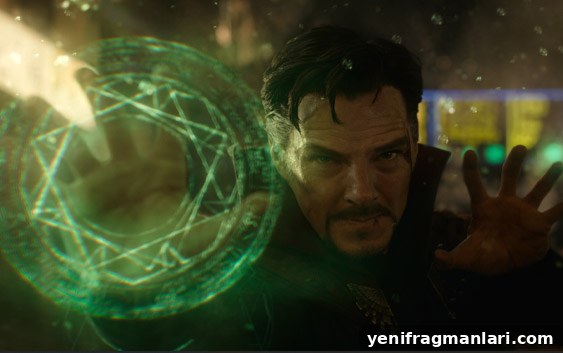
From the opening sequence—a visually striking magical heist through London—Derrickson signals that Doctor Strange will be a different kind of MCU installment. The film revels in kaleidoscopic, reality-bending imagery: cityscapes fold and flip, fragments of space intrude into the frame, and entire set pieces invert expectations with inventive use of perspective and time. These effects create a psychedelic, almost hallucinatory atmosphere that sets the film apart from more grounded superhero fare. In doing so, Doctor Strange joins a lineage of films that explore warped reality, while contributing a distinctly colorful and meticulous visual vocabulary of its own.
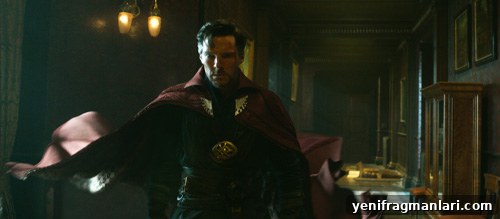
Casting plays a crucial role in selling this blend of arrogance, vulnerability and wonder. Benedict Cumberbatch brings a sharp, almost Sherlockian edge to Strange that balances vanity with an underlying capacity for growth. He starts as an inept magician in training and gradually earns the audience’s sympathy as he learns humility and responsibility. Chiwetel Ejiofor’s Mordo is quietly complex, hinting at moral conflict beneath a composed exterior. Mads Mikkelsen gives Kaecilius a dry, unsettling confidence, while Rachel McAdams grounds the story with a relatable performance as Dr. Christine Palmer, reacting to Strange’s transformation in human terms rather than plot convenience. Tilda Swinton’s Ancient One provides an enigmatic and authoritative presence, reinterpreting the comic-book archetype in a way that fits the film’s broader tone.
The film benefits from a lighter touch where appropriate. Small moments of humor—such as recurring jokes about the formidable librarian Wong (Benedict Wong) and Strange’s clumsy early attempts at sorcery—help maintain balance and prevent the film from becoming oppressively serious. Even during intense action set pieces, Derrickson allows for comic relief that humanizes characters and keeps the stakes relatable.
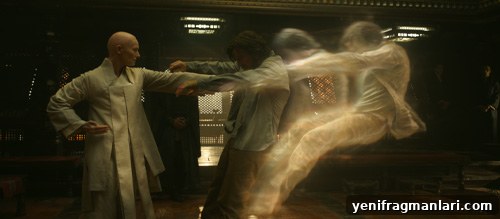
That visual intensity is also the film’s most significant risk. Scenes that cram layers of kaleidoscopic effects, especially in the Mirror Dimension, can challenge viewers’ ability to process everything on screen. While the opening and final set pieces succeed through confident staging and spectacle, some sequences grow so busy that they demand repeated viewing to appreciate fully. Still, the ambition is notable: the film pushes visual effects toward a more imaginative, artful place rather than relying solely on conventional spectacle.
Doctor Strange is not primarily a philosophical or deeply thematic film; instead, it excels as a display of creativity and cinematic personality. It offers a vivid, escapist experience built on strong design, charismatic performances and a willingness to expand the MCU’s visual and narrative possibilities. The film also opens narrative avenues for future stories, introducing magic and alternate dimensions into the universe in ways that create new tensions and potential conflicts. In the broader context of the MCU, Strange’s introduction broadened the franchise’s scope and proved that supernatural elements could coexist with established cosmic threats without diminishing dramatic stakes.
19/24