
Doctor Strange in the Multiverse of Madness (2022)
Director: Sam Raimi
Screenwriter: Michael Waldron
Starring: Benedict Cumberbatch, Elizabeth Olsen, Xochitl Gomez, Rachel McAdams, Benedict Wong, Chiwetel Ejiofor, Michael Stuhlbarg
Sam Raimi once snuck a joke into his Spider-Man movie about the name “Doctor Strange.” Eighteen years later he finally made that joke real, bringing his distinct, slightly twisted sensibility to the Marvel Cinematic Universe. Doctor Strange in the Multiverse of Madness blends Raimi’s penchant for dark humor, sudden scares and grotesque imagery with the superhero spectacle expected from a flagship franchise entry.
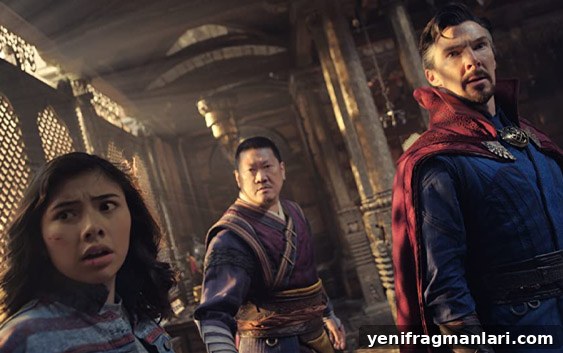
The story follows Doctor Stephen Strange (Benedict Cumberbatch) as he becomes protector and reluctant guide to America Chavez (Xochitl Gomez), a teenager with the rare ability to travel between realities. A malevolent force is hunting America for that power, and Strange must navigate shifting realities, alternate versions of allies and enemies, and escalating threats to keep her alive.
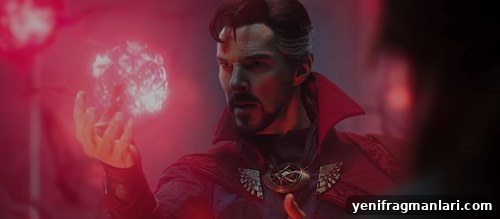
Raimi’s visual trademarks—rapid camera moves, comic-book framing and moments of body horror—stand out amid the polished, effects-heavy MCU environment. Scenes that could have been conventional action beats are enlivened by sudden, almost horror-movie jolts: dismemberment, grotesque creatures and giddy, macabre humor appear alongside gravity-defying fights. Those elements make the film feel less like studio product and more like a director with a clear, personal voice shaping the material.
There are several sequences that showcase Raimi’s strengths. A New York street battle pits the heroes against a tentacled cyclops and is staged with kinetic clarity; a magical duel becomes an inventive, unexpectedly musical set piece; and a tense sequence in the Mirror Dimension highlights Raimi’s ability to choreograph complex action while keeping spatial relationships comprehensible. These set pieces are memorable because the director cares about staging and the physical rules of each moment.
The film is a multiverse story, but it uses that device selectively. Many alternate realities the characters visit are variations on familiar locales rather than wholly new worlds, and a dazzling montage of stylistically altered universes—animation, painted figures and other visual experiments—feels too brief. The movie prefers to keep momentum and spectacle at the forefront rather than spending time building an overarching multiverse mythology that will reshape the MCU long term.
Notable Moments and Fan Service
About halfway through, the film delivers a big moment of fan service: the live-action debut of a secretive assemblage of powerful heroes. The sequence is thrilling in its initial reveal, but it doesn’t linger; the film clearly signals that not everything seen will permanently alter the franchise’s status quo. That brevity deflates some of the potential impact, yet the moment still registers as a bold, crowd-pleasing beat.
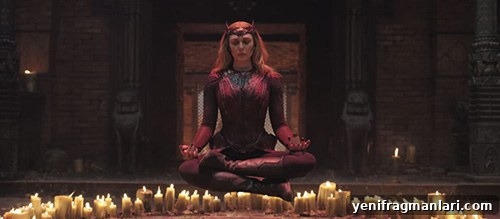
The story also leans on viewers’ familiarity with recent Marvel television series to fully understand key character arcs, particularly Wanda Maximoff’s (Elizabeth Olsen) evolution introduced in the show that preceded this film. The screenplay by Michael Waldron continues threads established on television, and to get the fullest experience a degree of prior knowledge helps. Still, Olsen delivers a committed, emotionally charged performance that anchors the film’s most contentious moments.
Benedict Cumberbatch gives a layered performance as Strange, playing multiple iterations of the character who have lived different lives and made different choices. Xochitl Gomez is an impressive discovery, offering warmth, humor and vulnerability as America Chavez, and Rachel McAdams is more active in this entry, contributing to the emotional stakes as well as the action.
Not every sequence lands perfectly. Some dialogue becomes expositional, explaining rather than showing, and a middle stretch loses a little focus. These structural issues may stem from the film’s shifting placement within the MCU timeline during pandemic-era reshuffles, but they are minor blemishes on an otherwise visually inventive and energetic entry.
At its core, Raimi’s film is as much about emotional motivation as it is about spectacle. While it rarely aspires to philosophical depth, it commits to bold visual choices and a sentimental throughline that keeps the human stakes clear. The result is a flashy, occasionally disturbing, frequently entertaining blockbuster that capitalizes on Raimi’s particular strengths.
Is it a perfect multiverse epic? No. It favors immediate thrills and character beats over long-term franchise restructuring. But as a standalone piece of genre filmmaking—one that fuses Raimi’s horror-comic energy with large-scale superhero storytelling—it delivers memorable moments and strong performances that will satisfy many audiences.
Overall, Doctor Strange in the Multiverse of Madness is a visually bold, occasionally unsettling entry in the MCU that highlights Sam Raimi’s unique voice. It’s entertaining, at times surprising, and anchored by strong work from its leads—even if its multiverse promises are mostly used to fuel immediate spectacle rather than long-term change.
Score: 17/24
Recommended for you: Marvel Cinematic Universe Villains Ranked