

For decades, filmmakers have used the body as a battleground—rejecting patriarchal expectations and transforming the human form from a warm, familiar vessel into something that resists hormonal upheaval. Coming-of-age stories frequently merge with horror to dramatize and purify the violent, confusing changes adolescence can bring, as seen in films like Julia Ducournau’s Raw (2016) and Karyn Kusama’s Jennifer’s Body (2009). Horror’s power lies in stripping away social certainties to reveal monstrous rebirths. Lisa Brühlmann’s body-horror coming-of-age film Blue My Mind (2017) fuses the cisgender female body with visceral unease, redefining what it means to be “other” and revisiting the flow of the monstrous feminine.

Creature features—particularly mermaids and sirens—draw attention because they symbolize biological anomaly. Tails, scales, webbed hands and fins feel unfamiliar, provoking a mix of fascination and revulsion. When these abject traits appear alongside an already changing adolescent body, a powerful spectacle of attraction and dread emerges.
Blue My Mind follows Mia (Luna Wedler), a teenage girl who slowly transforms into a mermaid as she questions her identity. We first meet Mia in a state of subdued loneliness—peering out the window of her family’s new house at a construction site, visibly removed from her surroundings. On her first day at a new school she encounters the petty hierarchies and performative bravado of teenagers. Gianna (Zoë Pastelle Holthuizen), a bold, self-assured girl, stands out: her presence fascinates Mia and awakens an appetite for a new, unsettling ideal of femininity.

Adolescent change is deeply entangled with abjection—those sensations of disgust and awe that make taboos compelling to watch. Mia’s first encounters with Gianna provoke subtle but irrevocable shifts. After a brief moment of tension and attraction, Mia returns home enraged and lashes out at her mother with surprising strength. She no longer plays the obedient “daddy’s little girl.” Instead she finds herself strangely drawn to the family’s fish tank, a hint of what will come.
Mia’s induction into Gianna’s clique accelerates her transformation. A dangerous game of choking that initially seeks to intimidate Mia instead reveals her capacity to surrender to sensation: she blacks out for a moment longer than expected, impressing Gianna and establishing a bond that blurs friendship and desire. From this point the film aligns coming-of-age with otherness: Mia’s body becomes a weapon against normative expectations as she experiments with sex, theft, alcohol, and drugs under Gianna’s influence.

Her escalating urges culminate in a moment of abject violence: Mia plunges her fist into the fish tank, eats a live goldfish and then vomits it back up—an act that signals both revulsion and relief. Physically she begins to change: toes fuse into webbing, painful bruises and scales appear. The female body in folklore often becomes a cautionary site—bleeding, secreting, aching—punished for transgression. Mia’s menstruation and sexual awakening are woven into this metamorphosis, but Brühlmann avoids reductive moralizing. The film treats these changes as complicated, sometimes painful steps toward selfhood, not simply triggers for homicidal rage.
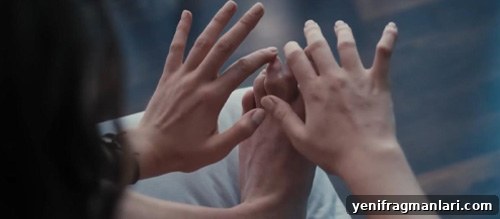
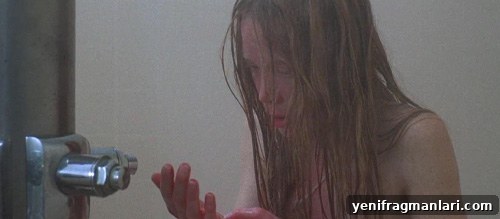
Classic monstrous-feminine cinema—films like The Hunger (1983)—often link female desire to danger and destruction. In those stories the woman’s body becomes a weapon that disrupts the symbolic order. Yet Brühlmann’s approach differs: Mia’s transformation is less an externalized rampage and more an inward reclamation. Whereas Carrie’s menarche in Brian De Palma’s film becomes a direct path to carnage, Mia’s changes lead to internal conflict, moments of self-harm and self-isolation, and ultimately a different kind of resolution.
Coming-of-age dramas have long explored awkwardness, identity and social exclusion—films such as Fish Tank (2009) and Eighth Grade (2018) handle these themes in grounded ways. Horror has often exploited adolescent anxiety for spectacle, but that attention doesn’t always equal accurate representation. Blue My Mind fills a gap, presenting the hormone-fueled, imperfect teenage body in ways that feel truthful and raw, using horror to amplify emotional realities rather than merely to shock.
Mia’s descent into alcohol, drugs, and risky behavior is neither glamorized nor dismissed. These coping mechanisms are portrayed intimately as attempts to numb pain. As her transformation progresses, she sheds skin to reveal scales, a physical allegory for losing one identity and assuming another. The more she seeks relief in debauchery, the more her body betrays her with disfigurement—an endless cycle of torment that’s presented with empathy, not moral panic.
Gianna’s relationship with Mia becomes central. Initially the one with status, Gianna grows dependent on Mia’s increasingly otherworldly nature. A pivotal scene sees Gianna nearly drown in a lake; Mia rescues and kisses her—an act that is both a rescue and an awakening. Later, at a party where Mia is drugged and nearly assaulted by a group of men, her condition is exposed: webbed toes, gills, and scales provoke disgust in the men who planned to exploit her, turning their predatory gazes to revulsion. This public exposure accelerates Mia’s metamorphosis and severs the last pretense of human normalcy.

Brühlmann deliberately avoids equating menstruation directly with monstrosity. Mia’s period is not the defining factor of her transformation; instead, interactions with men—instances of emotional or physical violation—appear to catalyze her physical changes more rapidly. The film therefore locates some of the pressure and violence of becoming a woman not in biology alone but in the social dynamics and gendered power structures that shape a young woman’s life.

Blue My Mind occupies a modern corner of monstrous-horror cinema that softens the genre’s old rules: promiscuity is not punished with death as in classic slashers, and female sexuality is not automatically framed as catastrophic. Brühlmann’s film belongs alongside contemporary works—such as Raw, Excision (2012), and Teeth (2007)—that reclaim female-led horror, presenting protagonists who are sexual, vulnerable, and powerful without reducing them to stereotypes. Mia’s intimacy with Gianna is tender and authentic, not staged to gratify male viewers. The film treats same-sex affection with warmth and seriousness, resisting objectifying impulses of the male gaze.
Culture often pressures filmmakers into portraying women within narrow binaries: sexualized or robotic, hysterical or stoic. Blue My Mind rejects such limitations. Mia and Gianna are complex: flirtatious yet strong-willed, capable of saying no while pursuing desire. Brühlmann revives the monstrous feminine for a contemporary audience—honoring femininity while diving into explicit body horror—and asks the viewer to reconsider how gender and power are portrayed on screen.
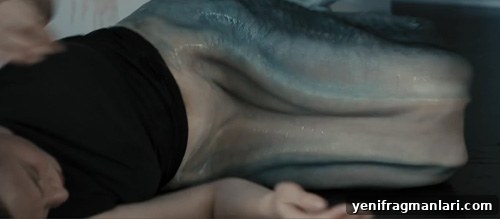
In the film’s closing sequence, the relationship between Mia and Gianna is sealed: the party incident forces Gianna to share Mia’s otherness, binding them together. The morning after, Mia awakens to discover her legs fused into a full mermaid tail. Her house floods; she can no longer walk. Gianna helps her into a car and drives her to the sea. Rather than erupting in violent revenge, Mia chooses a different ending—returning to the element that feels like home. The ocean becomes a place of rebirth and refuge, a symbol of purity and solitude rather than doom.

Instead of reinforcing the damaging idea that female transformation must culminate in catastrophe, Blue My Mind presents metamorphosis as a complex, sometimes liberating resolution. Mia’s decision to embrace her monstrous form is not framed as vengeance against others but as an inward, honest response to a world that misunderstood and constrained her. Brühlmann’s film blurs the line between fantastical horror and real adolescent experience, inviting viewers to empathize with the isolation and confusion of growing up.
Ultimately, the monstrous feminine in Blue My Mind functions as social commentary. The monster terrifies because it defies prescribed behavior, and these narratives reflect the harsh judgment women face when they deviate from expectations. Brühlmann’s mermaid is not simply a curse—she embodies a powerful, peaceful otherness that allows for escape rather than destruction. Blue My Mind joins contemporary female-driven horrors that interrogate representation—films like In My Skin, American Mary, A Girl Walks Home Alone at Night, Prevenge, The Love Witch, and Revenge—challenging the discriminatory portrayals of women in genre cinema.
Mia’s departure into the sea is not a violent finale; it is a reclamation of self and a refusal to inflict harm upon others simply because she is different. The film reframes the teenage monster as ambiguous, complex, and capable of tenderness. By doing so, Blue My Mind opens a fresh, compassionate window onto coming-of-age horror and offers a moving new vision of what it means to become a young woman in a world that so often misunderstands her.
Written by Grace Britten
Support Grace Britten:
Blog – Film9Online
Instagram – @film_overload_