
Where The Crawdads Sing (2022)
Director: Olivia Newman
Screenwriter: Lucy Alibar
Starring: Daisy Edgar-Jones, Taylor John Smith, Harris Dickinson, Michael Hyatt, David Strathairn
The path from bestselling novel to big-screen adaptation often follows a predictable template: a substantially long book, elements of mystery or thriller, a sympathetic female protagonist who has endured hardship or injustice, male characters who frequently disappoint or harm her, a smattering of romantic interludes, and a neat, emotionally satisfying conclusion. When a novel catches fire with readers, studios move quickly to secure adaptation rights. Where the Crawdads Sing fits many of those familiar patterns, and as a result the film will feel comfortably recognizable to anyone familiar with contemporary literary-to-film fare.
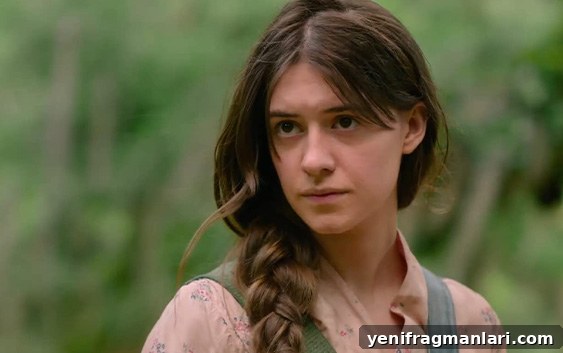
At its core the film tells the story of Kya, portrayed by Daisy Edgar-Jones, who becomes the center of a murder investigation. The narrative oscillates between Kya’s isolated upbringing in the marshlands and the legal repercussions that follow the death of a local man. The plot hinges on how Kya’s traumatic past and solitary life shape perceptions of her and influence the courtroom’s assessment of guilt and innocence.
Daisy Edgar-Jones delivers a quietly effective performance and is the film’s emotional anchor. She brings nuance to Kya, conveying resilience, vulnerability, and a palpable sense of otherness that the script often hints at but does not always explore in depth. The supporting cast largely manages to elevate thin or schematic characters into recognizable human beings, with several moments of credible subtlety that prevent the film from descending into pure melodrama.
Where the film falters most is in its pacing and editorial choices. The opening half hour, which should establish atmosphere and allow the marshland setting to breathe, is undercut by rapid-fire cutting that frequently robs scenes of emotional weight. Shots are frequently trimmed before they can settle, preventing the slow, immersive tone the story needs. This editing approach creates a dissonance between the material’s contemplative potential and the film’s visual rhythm, which at times feels better suited to a brisker genre picture.
The direction by Olivia Newman and Lucy Alibar’s adaptation work capture many of the novel’s broad strokes, but the film struggles to build sustained tension or mystery. When the pacing finally eases and characters have room to inhabit scenes, the plot’s twists and resolutions often feel telegraphed rather than surprising. The result is a movie that reaches its two-hour runtime without developing a compelling sense of momentum or urgency, leaving several sequences to feel prolonged rather than earned. A lengthy coda further extends the film’s conclusion when tighter trimming might have yielded a more satisfying finish.
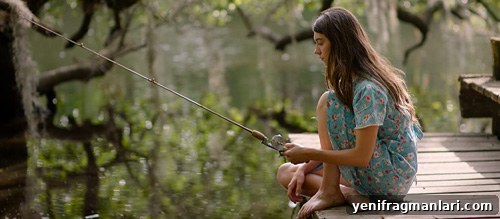
Musically and visually, the film does offer moments of genuine beauty. The marsh environments are photographed with care, and there are instances where the cinematography captures the wild, quiet majesty of the setting. The soundtrack supports mood without drawing undue attention to itself, though it seldom adds interpretive depth to the narrative. Where the film speaks most coherently is in its reverence for the natural world and the solitude that shapes Kya’s identity, but those ideas are sometimes expressed more as sentiment than as sharpened thematic insight.
One persistent issue is that the movie’s moral and emotional claims are sometimes underdeveloped. The film gestures toward themes of abandonment, resilience, and the consequences of community prejudice, but it rarely interrogates those ideas with the specificity they deserve. At moments the story feels content to rely on familiar tropes—wronged woman, predatory men, courtroom spectacle—without probing their complexities or offering a distinct point of view.
For viewers drawn to literary adaptations, evocative settings, and a strong central performance, Where the Crawdads Sing delivers enough to be watchable. Yet for those seeking a tightly constructed mystery or a film that fully realizes its thematic ambitions, it may come across as uneven and overly familiar. The production’s intentions are honest, and there are empathetic performances that lend the film warmth, but stylistic and structural choices limit its impact.
Score: 9/24