
Martyrs (2008)
Director: Pascal Laugier
Screenwriter: Pascal Laugier
Starring: Mylène Jampanoï, Morjana Alaoui, Catherine Bégin, Patricia Tulasne, Robert Toupin
Pascal Laugier’s Martyrs (2008) is a brutal, unsettling film that refuses to provide easy comfort. It pushes into a deliberately uncomfortable zone—one where extreme violence is used not as spectacle but as a vehicle to explore trauma, suffering, and the human compulsion to know what lies beyond death. The film’s shocking imagery lingers long after the credits roll, but it does so in service of a grim, uncompromising examination of pain and consequence rather than mere provocation.
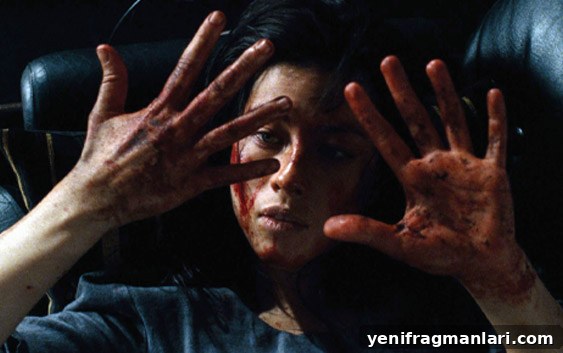
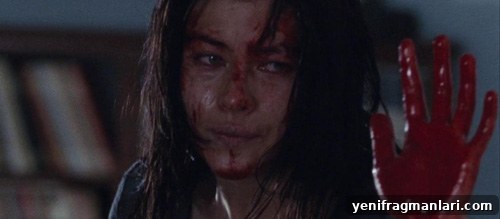
The story centers on Lucie (Mylène Jampanoï), who, having escaped years earlier from a dungeon-like captivity, returns to the home of her abusers to exact vengeance. She is joined by Anna (Morjana Alaoui), a friend she met at the orphanage after her escape. Lucie’s violent assault on the Belfonds family leaves a scene of carnage and horror, but killing her captors does not end her torment. Lucie is psychologically fractured and dependent on Anna for care and support. When Anna discovers that the Belfonds are part of an organized group pursuing a grotesque form of “research” into the afterlife—by inflicting unbearable pain on victims until they either die or reach some transcendent state—the film’s stakes deepen. The cult’s goal is less about cruelty for its own sake and more about a pathological, pseudo-scientific desire to map suffering as a doorway to knowledge.
Since the mid-2000s, the label “torture-porn” has been used to condemn films that foreground extreme bodily harm. That reaction obscures the way horror often reflects broader social anxieties. In the wake of traumatic global events and political upheaval, audiences and filmmakers alike have turned to grimmer narratives as a way of processing fear and helplessness. Martyrs exists in that lineage: it shares aesthetic extremes with contemporaneous works, but Laugier’s intent is focused on suffering as an existential problem rather than shock alone. He wants the film to interrogate pain and the consequences of pursuing revelation through inflicted agony.
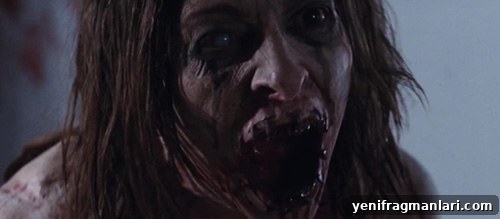
The film opens in a deceptively ordinary domestic setting. The Belfonds present themselves as a normal, comfortable family before Lucie’s sudden, brutal attack shatters the illusion. Laugier stages this central act of revenge with cold efficiency. But the true horror is psychological as much as physical. Lucie is haunted by visions of a nightmarish figure—naked, battered, and malformed—who embodies her guilt and the trauma she carries. This apparition functions as a recurring motif: it externalizes inner torment and suggests that even when the perpetrators are dead, the wounds they created can persist in monstrous form.
Laugier uses formal devices to sustain discomfort. A pummeling score, fast editing, and a jittery camera style keep viewers on edge, refusing to allow emotional respite. The sound design and music—often aggressive and metallic—work in tandem with the cinematography to make moments of violence feel immediate and inescapable. These techniques are not gratuitous ornamentation; they underscore the film’s thematic insistence that trauma reverberates across the senses and refuses easy closure.
The film’s structure complicates expectations. At roughly the midpoint, it seems to reach a conventional conclusion: revenge delivered, monster confronted. But Laugier subverts that closure by shifting the narrative into darker, more ambiguous territory. The second half reveals the cult and their ritualized cruelty, and the story pivots from individual retribution to institutionalized torment. The cult members are outwardly respectable—wealthy, socially integrated—yet they orchestrate systematic suffering behind closed doors. That contrast between surface normality and hidden barbarism intensifies the film’s critique: violence can be organized and sanitized, cloaked as inquiry or faith.
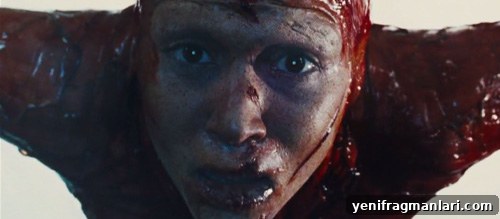
Anna’s journey is central to the film’s moral complexity. Her compassion drives her to help Lucie and stay by her side, but that empathy proves tragically insufficient. Laugier positions her as an everyperson figure whose good intentions collide with forces beyond her control. The film insists that neither bravery nor kindness guarantees survival or meaning in a world that can be cruel by design. The cult’s belief that martyrdom can reveal cosmic truth is presented with chilling rationalism; their methods are framed as clinical, even scientific, which makes their acts all the more monstrous.
The final act resists tidy explanation. Laugier declines to provide catharsis or a definitive answer about the nature of suffering or the afterlife. Instead, he leaves viewers with an ambiguous, devastating conclusion that emphasizes the film’s central thesis: some kinds of knowledge, and some kinds of pain, cannot be purged or understood through violence. The violence in Martyrs is designed to unsettle and to force reflection rather than to titillate.
As an exercise in extreme cinema, Martyrs is uncompromising. It is crafted to provoke strong reactions—revulsion, sorrow, and ethical unease—while prompting questions about the limits of empathy and the destructive pursuit of enlightenment. Laugier’s film is not easy to watch, nor is it meant to be. Its power lies in the way it uses brutality to interrogate the human condition, leaving a lasting, uncomfortable impression.
Score: 20/24
Written by Grace Britten
You can support Grace Britten in the following places:
Blog – Film9Online
Instagram – @film_overload_