

Jordan Peele has quickly established himself as one of the most inventive and influential directors working today. Blending sharp humor with unsettling horror, Peele builds films that entertain while sparking conversation about deeply relevant social issues. Whether it’s extraterrestrial phenomena over Southern California or murderous doppelgängers wielding golden scissors, Peele’s films have already become modern cultural touchstones.
Longtime fans may remember Peele from his days on Mad TV, where he honed his comedic instincts before leaving the show in 2008. He later co-created and starred in the acclaimed Comedy Central sketch series Key and Peele, which remains one of the network’s signature programs. Those years in comedy sharpened Peele’s timing, character work, and satirical eye—skills he would later repurpose into a striking directorial voice.
When Peele made the leap from comedy to horror as a writer-director, many were curious if his sensibility would translate. He answered that question emphatically. In a relatively short time, Peele wrote and directed a string of films that have reshaped contemporary horror, blending genre thrills with incisive social critique. His filmography may be concise, but each release showcases bold choices, memorable performances, and a willingness to tackle complex themes. Below we rank Jordan Peele’s feature films from good to great—three distinctive works that collectively define his impact as a filmmaker.
3. Us (2019)
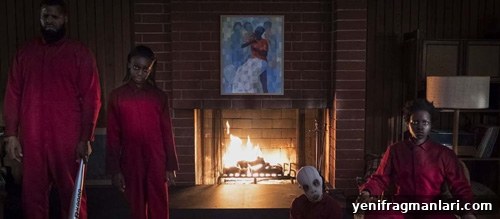
Us Review
Placing Us third on this list is not a slight so much as an acknowledgement of how high the bar is for Peele’s work. The film follows Adelaide (Lupita Nyong’o) and her family on a trip to Santa Cruz, a seaside town that should be idyllic but that instead reawakens a traumatic childhood memory for Adelaide. Their vacation spirals into terror when four mysterious strangers—identical to each family member—appear on their doorstep with malevolent intent.
Us may not be as tightly symbolic as some of Peele’s other films, but it stands out for its kinetic energy and bold ideas. The opening act is a relentless sequence of jolting scares that establishes a tone of escalating dread. At the same time, Peele’s dark humor keeps the story grounded, offering moments of disarming levity amid the horror. Lupita Nyong’o delivers a powerhouse performance, fluidly shifting between tender vulnerability and terrifying intensity.
Where Us falters slightly is in its labyrinth of symbolism. The film builds toward a resonant conclusion, yet certain narrative threads and metaphorical elements feel underdeveloped, leaving some questions unresolved. That said, the movie’s ambition is one of its strengths; even with imperfections, Us remains an inventive and entertaining entry in Peele’s catalog, and it rewards repeat viewings with new discoveries.
2. Nope (2022)

Nope Review
Nope centers on siblings and ranch owners OJ (Daniel Kaluuya) and Emerald (Keke Palmer), who, after the mysterious death of their father, begin to notice an unnerving presence in the skies above their property. As they investigate the phenomenon, a neighboring theme park owner (Steven Yeun) sees an opportunity to exploit the spectacle for profit. The film mixes elements of science fiction, Westerns, and creature features while interrogating our culture’s appetite for spectacle.
Nope excels with layered symbolism and meticulously placed metaphors. Each viewing reveals new details and hidden references, making the film richly rewatchable. Peele tackles themes of exploitation, spectacle, childhood trauma, and systemic racism with a deft, contemporary edge. While the movie places significant weight on its ideas, it also delivers two of the most visceral, terrifying set pieces in Peele’s body of work—scenes that linger long after the credits roll.
Unlike films that prioritize cheap shocks, Nope asks viewers to engage intellectually and emotionally. It balances empathy, dread, and stark violence in a way that feels both original and provocative. The result is a multilayered science-fiction thriller that rewards close attention and repeat viewings.
1. Get Out (2017)

Get Out Review
Jordan Peele’s directorial debut, Get Out, is a landmark film—both as a piece of genre filmmaking and as a cultural touchstone in conversations about race. The story follows photographer Chris (Daniel Kaluuya) on a weekend trip to meet his girlfriend Rose’s (Allison Williams) parents. From the outset, Chris notices subtle and not-so-subtle microaggressions that hint at something deeper and more sinister beneath the surface.
Get Out is infused with razor-sharp social commentary and memorable symbolism. The term “the sunken place” has entered broader discourse as a result of the film’s influence, illustrating how Peele’s work transcended the theater to inform political and academic conversations. The movie exposed the complexities of liberal racism in a way that felt timely and necessary.
At the same time, Get Out is a tightly constructed horror film. Daniel Kaluuya delivers a nuanced, award-worthy performance that anchors the movie’s mounting tension. Peele’s use of humor, atmosphere, and escalating dread creates a claustrophobic, unnerving experience. With its combination of social relevance and cinematic craft, Get Out is essential viewing for horror fans and anyone interested in contemporary portrayals of race and power.
Jordan Peele is a dynamic director whose work has already reshaped modern horror. Even with a relatively small filmography, he demonstrates masterful control of tone, strong visual storytelling, and a commitment to embedding social critique within genre narratives. His films vary in focus—some emphasize spectacle, others symbolism—but each reflects an original voice that challenges and excites audiences.
Which Jordan Peele film resonates most with you? Share your thoughts below. Follow the author and publication for more curated film essays and rankings.
Written by Emi Grant
Support Emi Grant:
Instagram – @emi.grant
Portfolio – grantemi.portfolio.com
Twitter – @emii_grant