
The Second World War has been a rich subject for filmmakers for decades, appearing in documentaries, sprawling epics and intimate dramas. Yet despite the abundance of war films, certain aspects—especially cinematic treatments of the Holocaust—were long underrepresented in mainstream Hollywood. The difficulty of portraying such horrors with the necessary respect and emotional clarity, combined with commercial concerns, left many studios reluctant to tackle the subject. Two directors, however, used their distinct voices and cinematic influence to address this gap: Steven Spielberg and Quentin Tarantino.
Schindler’s List
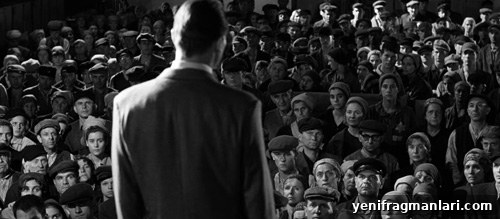
Steven Spielberg spent years developing a screen adaptation of Thomas Keneally’s novel, originally titled Schindler’s Ark, before Schindler’s List reached screens in 1993. Earlier attempts to bring Oskar Schindler’s story to film had faltered, often because studios feared commercial failure or felt unequipped to handle the subject. As an established creative force in Hollywood, Spielberg was uniquely positioned to secure backing for a film that would require both restraint and moral seriousness.
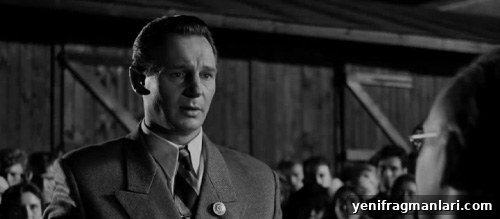
Presented in stark black and white—shot by Janusz Kamiński—Schindler’s List follows Oskar Schindler (Liam Neeson), an opportunistic industrialist and Nazi Party member who gradually becomes determined to save the lives of his Jewish workers. The film’s documentary-inflected visual style and careful use of light and shadow heighten the realism and emotional weight of its scenes, creating a persistent sense of witness rather than spectacle.
One of the film’s most iconic images, the girl in the red coat, punctuates a largely monochrome picture with a moment of heartbreakingly specific humanity. Spielberg reserves color sparingly and deliberately, using it to mark a shift in Schindler’s conscience and to emphasize the individual lives threatened by mass violence. The film also makes a sustained point about names and identity: throughout the narrative, personal names and lists are foregrounded, countering the Nazi project of erasing memory and dignity.
Spielberg’s own Jewish background and family history informed the project, and his approach sought to honor survivors’ stories without exploiting them. The result is a film that balances documentary urgency with cinematic craft, avoiding sensationalism while still delivering profound emotional impact. Schindler’s List earned widespread acclaim, multiple Academy Awards including Best Picture and Best Director, and enduring recognition as one of the most important films about the Holocaust in mainstream cinema.
Inglourious Basterds
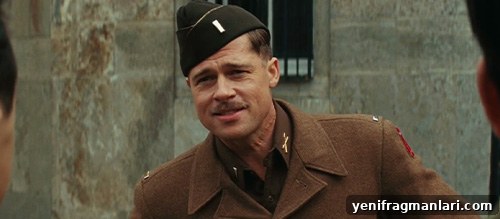
Quentin Tarantino’s approach to World War II is deliberately different: rather than reconstructing historical events with documentary fidelity, he rewrites and reimagines them. After the mixed reception of his Grindhouse-era work, Tarantino returned to the war genre with Inglourious Basterds, a bold, genre-savvy film that blends revenge fantasy with cinematic metafiction.
The film follows two parallel plots: a group of Jewish-American soldiers—the Basterds—conducting brutal guerrilla missions against the Nazis, and Shosanna Dreyfus (Mélanie Laurent), a Jewish cinema owner in occupied France who plans a dramatic act of vengeance. Central to Tarantino’s design is a film-within-the-film, a propaganda picture entitled Nation’s Pride. Co-written and staged as a faux propaganda piece, it becomes both bait and weapon in a plot that culminates in cinema literally consuming the occupiers.
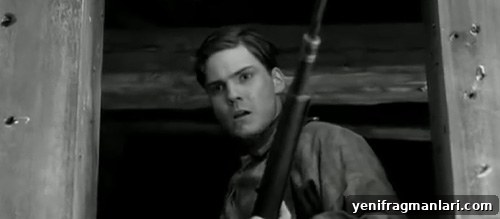
Tarantino’s film explores the power—and danger—of cinema. Characters like Frederick Zoller, the fictional screen hero within Nation’s Pride, embody how film can be harnessed for ideology, while others, such as Lieutenant Archie Hicox (Michael Fassbender), illustrate cinephilia used in resistance. Tarantino layers these ideas within long, tension-filled sequences that transform dialogue and performance into weapons. The director’s stylistic influences range from Soviet montage to classic Hollywood thrillers, but he filters them through his distinctive blend of dark humor, heightened violence and revisionist storytelling.
The film’s climax, in which Shosanna sets a projector-fed inferno in motion, is a literal and symbolic reclaiming of the medium: film becomes both the instrument of spectacle and of justice. Inglourious Basterds is unapologetically cathartic, rewriting history to deliver a fantasy of consequences that reality denied. It also showcases Tarantino at his most disciplined and theatrical, combining meticulous staging, sharp dialogue and potent performances—most notably Christoph Waltz as Colonel Hans Landa, a performance that won global acclaim.

Conclusion
Although Spielberg’s Schindler’s List and Tarantino’s Inglourious Basterds are radically different in tone and method, both films recognize cinema’s role as a historical document and cultural force. Schindler’s List uses cinematic realism to memorialize and humanize victims of atrocity, insisting on names, faces and individual stories. Inglourious Basterds interrogates the medium itself, exposing how film can be used for manipulation and then imagining a cinematic form of retribution.
Each film is a landmark of its era: one a solemn, survivor-focused testament woven into mainstream cinema; the other a provocative exercise in revisionist fantasy that reclaims film’s power for the oppressed. Together they demonstrate how popular filmmaking can confront the most terrible chapters of history, either by bearing witness or by reshaping narrative catharsis. Both titles remain touchstones in contemporary cinema—examples of how the medium can illuminate, indict and ultimately influence how we remember the past.
By Robert Mitchell